

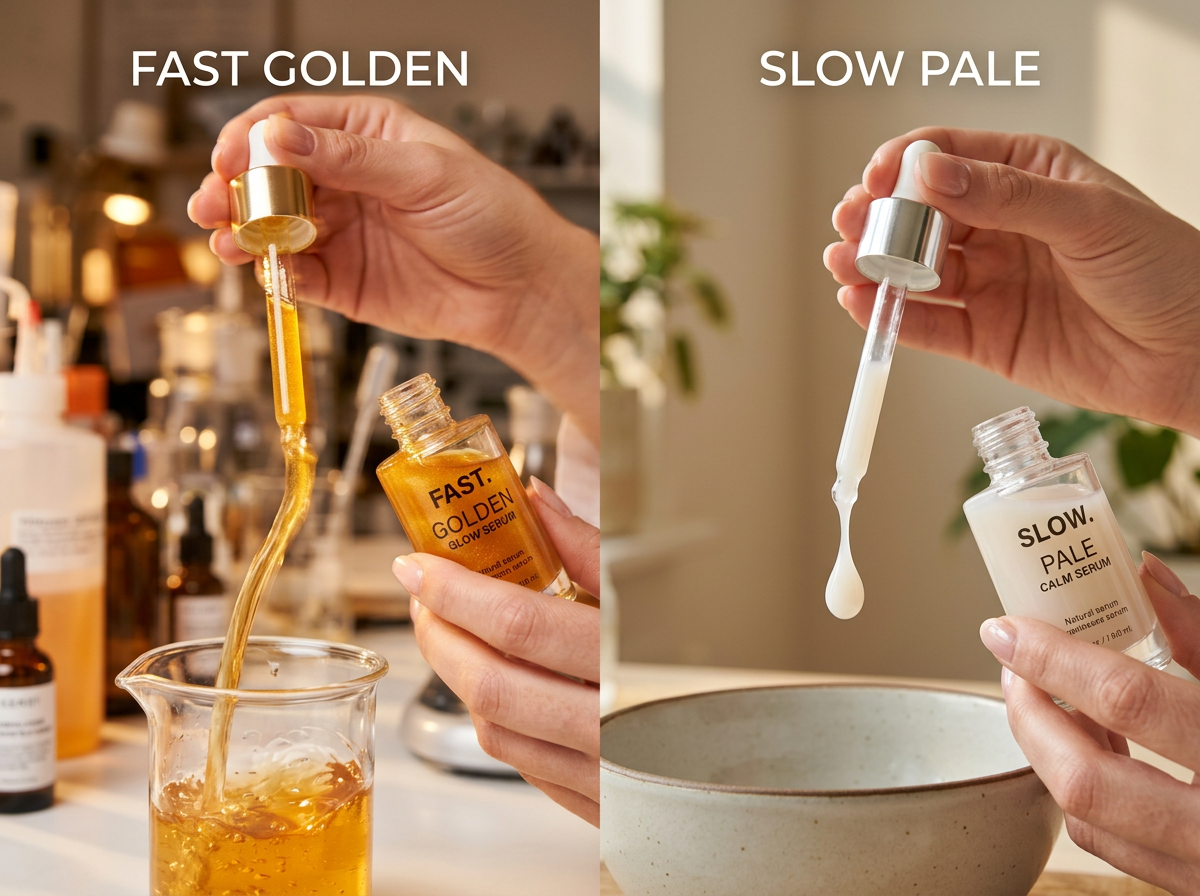
Navigating the choice between retinal (retinaldehyde) vs. retinol is one of the most transformative decisions you can make for your evening skincare routine. While both belong to the vitamin A family and are celebrated for their unmatched ability to accelerate cell renewal, smooth fine lines, and clarify uneven skin texture, they do not perform identically. Retinaldehyde acts up to 11 times faster than traditional retinol while offering unique antibacterial benefits that make it exceptionally effective for both aging and breakout-prone skin.
Understanding the cellular conversion ladder is the key to unlocking maximum retinoid benefits without triggering barrier disruption, peeling, or persistent flushing. In this comprehensive head-to-head guide, we break down the biochemistry of vitamin A derivatives, contrast speed and irritation profiles, compare active conversion steps, map out a direct decision matrix, review top recommended formulations, and explain how to safely integrate retinal or retinol into your 4-night skin cycling schedule.
- 1. The Vitamin A Conversion Ladder Explained
- 2. Deep Dive: What Is Retinol & How Does It Work?
- 3. Deep Dive: What Is Retinal (Retinaldehyde) & How Does It Work?
- 4. Direct Feature Comparison Matrix
- 5. The Antibacterial Edge: Retinal for Blemishes & Post-Acne Marks
- 6. Top Recommended Retinoid Products Reviewed
- 7. How to Layer Retinoids Safely in Your Skin Cycling Routine
- 8. Frequently Asked Questions (FAQs)
- 9. Final Verdict & Next Steps for Your Skincare Routine
1. The Vitamin A Conversion Ladder Explained
To understand why retinal works faster than retinol, you must examine how skin cells process topical vitamin A. Your skin cells can only bind and utilize the bio-active form of vitamin A, known as retinoic acid. Every over-the-counter precursor must undergo metabolic conversion within the skin to reach this active state:
Step 1: Retinyl Esters (e.g., Retinyl Palmitate) ➔ Requires 3 conversion steps to become active retinoic acid. Very mild, but slow performance.
Step 2: Retinol ➔ Requires 2 conversion steps (Retinol ➔ Retinaldehyde ➔ Retinoic Acid). Standard over-the-counter benchmark.
Step 3: Retinaldehyde (Retinal) ➔ Requires ONLY 1 conversion step directly into retinoic acid. Delivers near-prescription speed with superior barrier tolerance.
2. Deep Dive: What Is Retinol & How Does It Work?
Retinol is the most widely researched and established over-the-counter retinoid. Once absorbed into the skin, enzymes convert retinol into retinaldehyde, which is then converted into retinoic acid. Because this two-step enzymatic process takes time, retinol delivers a slow, steady release of active vitamin A.
- Gradual Collagen Stimulation: Promotes cellular renewal and collagen production over a sustained 8-to-12-week timeline.
- Widely Formulated: Available in vast concentration ranges (0.1% to 1.0%) buffered with soothing ceramides and plant oils.
- Potential Retinization Phase: Can trigger temporary redness, flaking, and dryness during the initial 2 to 4 weeks of adaptation. Read our Skin Barrier Repair Guide.
3. Deep Dive: What Is Retinal (Retinaldehyde) & How Does It Work?
Retinal (retinaldehyde) sits just one direct biochemical conversion step away from retinoic acid. Clinical studies show that retinal converts to retinoic acid up to 11 times faster than retinol, making it exceptionally efficient at lower concentrations (such as 0.05% to 0.1%).
1. Fast-Acting Renewal: Delivers rapid visible improvements in micro-texture, fine lines, and skin firmness within 4 to 6 weeks.
2. Remarkably Low Irritation: Because retinal converts efficiently without requiring excessive enzymatic processing in skin tissue, it often causes less surface stinging and peeling than high-percentage retinol.
3. Direct Antibacterial Activity: Retinal is the only retinoid precursor that possesses direct antibacterial properties against acne-causing bacteria.
4. Direct Feature Comparison Matrix
Compare how retinal vs. retinol match up across key performance parameters:
| Attribute | Retinol | Retinal (Retinaldehyde) |
|---|---|---|
| Conversion Steps to Active State | 2 Steps (Retinol ➔ Retinal ➔ Acid) | 1 Step (Retinal ➔ Retinoic Acid) |
| Relative Speed of Results | Moderate (8 to 12 weeks) | Fast (4 to 6 weeks) |
| Standard Effective Strength | 0.25%, 0.5%, to 1.0% | 0.05% to 0.1% |
| Antibacterial Action | None (indirect cellular turnover) | Direct antibacterial property against C. acnes |
| Best Skin Match | Retinoid beginners & normal skin | Experienced users, sensitive skin & adult acne |
5. The Antibacterial Edge: Retinal for Blemishes & Post-Acne Marks
One of retinal’s most remarkable advantages over retinol is its direct action against acne-causing micro-organisms. Retinaldehyde exhibits inherent antibacterial properties against Cutibacterium acnes (the primary bacteria behind inflammatory breakouts).
By pairing rapid cell turnover with direct antibacterial clearing, retinal simultaneously targets active congestion, smooths bumpy texture, and fades post-inflammatory hyperpigmentation (PIH). For readers dealing with adult blemishes or post-acne dark marks, retinal offers a dual-action advantage that traditional retinol cannot match. Read our Azelaic Acid & Hyperpigmentation Guide.
6. Top Recommended Retinoid Products Reviewed
We evaluated top-tier retinol and retinal treatments formulated with encapsulated delivery systems and barrier-soothing lipids:
Top Recommended Retinol & Retinal Formulas
CeraVe Resurfacing Retinol Serum
An outstanding starter retinol featuring slow-release encapsulated technology. Formulated with 3 essential ceramides and soothing niacinamide, it refines pores and smooths post-acne marks without destroying fragile moisture barriers.
✗ Cons: Gentle concentration requires consistent application over 8 to 12 weeks for full results.
Beauty of Joseon Revive Eye Serum: Ginseng + Retinal
A cult-favorite K-beauty serum that combines liposome-encapsulated retinaldehyde with antioxidant-rich ginseng root extract. Designed for delicate eye areas and full-face renewal, it delivers rapid smoothing without stinging.
✗ Cons: Gentle 0.02% retinal strength; advanced retinoid users may eventually want a 0.05% or 0.1% serum.
As an Amazon Associate, I earn from qualifying purchases. Recommendations are based on independent formulation analysis.
7. How to Layer Retinoids Safely in Your Skin Cycling Routine
Whether you choose retinal or retinol, the secret to avoiding peeling and redness is proper routine orchestration. Retinoids should be reserved exclusively for Night 2 in a structured 4-night rotation schedule:
If your skin is prone to stinging when starting a retinoid, apply a thin layer of a panthenol or ceramide moisturizer first, let it absorb for 5 minutes, apply a pea-sized amount of your retinal or retinol serum, and seal with a second layer of moisturizer. Read our Skin Cycling Master Guide.
8. Frequently Asked Questions (FAQs)
Surprisingly, no! Because retinal (retinaldehyde) converts cleanly into active retinoic acid in just 1 direct step, it requires lower total active percentages (e.g., 0.05% retinal vs. 0.5% retinol) to achieve results, often resulting in less surface peeling and irritation for sensitive skin.
It is best to start slowly. Use retinal 1 to 2 times per week initially or integrate it into a 4-night skin cycling schedule (Exfoliate ➔ Retinoid ➔ Recovery ➔ Recovery) to protect your moisture barrier.
Do not apply Vitamin C (L-Ascorbic Acid) and retinoids at the same time in your evening routine. Use Vitamin C in the morning to defend against UV pollution and save your retinal or retinol for nighttime application.
Yes! Test a small pea-sized drop on your jawline for 24 hours prior to full-face use to monitor for redness or contact sensitivity. Read our How to Patch Test Skincare Guide.
9. Final Verdict & Next Steps for Your Skincare Routine
Both retinal and retinol are gold-standard ingredients for skin renewal, but retinal offers a clear performance edge. With its 1-step conversion process, fast-acting cell renewal, low irritation profile, and unique antibacterial benefits, retinaldehyde is the superior choice for readers seeking rapid results for fine lines, firmness, and post-acne marks. If you are new to retinoids, start with a low-strength encapsulated formula, buffer with ceramides, and protect your skin daily with broad-spectrum SPF!
To continue building your personalized routine across Beauty Cares Inc, explore these related guides:
- Prevent retinoid irritation: Skin Cycling Routine 4-Night Rotation Guide.
- Recover from barrier breakdown: How to Repair a Damaged Skin Barrier Guide.
- Buffer retinoids with soothing B5: Panthenol Barrier Hydration Guide.
- Pair with dark spot fading actives: Azelaic Acid & Niacinamide Layering Guide.
- Protect your skin daily: Best Sunscreens for Sensitive Skin.
Leave a Reply