

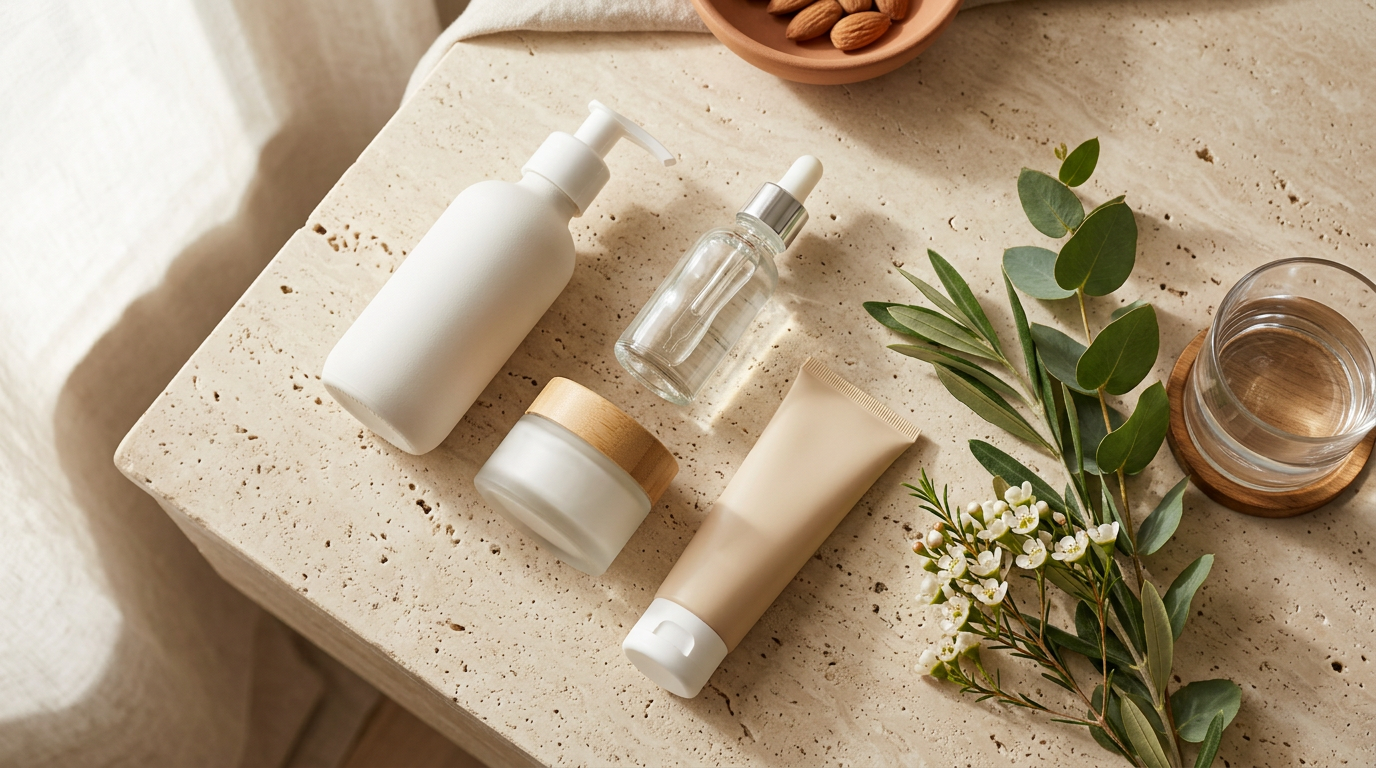
While an evening skincare routine focuses on deep cleansing, chemical exfoliation, and cellular tissue repair, your morning skincare routine serves a completely different biological purpose: protection and hydration. Throughout the day, your skin faces environmental aggressors, including solar ultraviolet (UV) radiation, atmospheric pollution, free radical oxidative stress, and blue light.
Layering your morning products in the correct molecular sequence ensures maximum active absorption while shielding your epidermal barrier. In this clinical guide to the ideal AM skincare order, we break down every essential step—from gentle morning cleansing to eye care, antioxidant Vitamin C pairing, barrier hydration, and broad-spectrum sun protection—so you can achieve a healthy, glowing canvas every single day.
1. AM vs. PM Skincare: Protection vs. Cellular Repair
Understanding the physiological difference between day and night skin needs is critical for building an effective regimen:
Focuses on lightweight hydration, antioxidant defense (neutralizing free radicals), and UV shielding to prevent photoaging, dark spots, and collagen breakdown.
Focuses on double cleansing away makeup and pollutants, applying potent actives like Retinol or exfoliating acids, and using rich barrier creams. Read our Night Skincare Routine Guide.
2. The Ideal Morning Skincare Routine Order (Step-by-Step)
The universal rule for layering skincare products is thinnest molecular viscosity to thickest texture. This guarantees that lightweight active serums penetrate deep into the epidermis before heavier creams seal the surface:
3. Step 1: Gentle Cleansing (To Wash or Water Rinse?)
In the morning, your skin does not have environmental dirt, makeup, or SPF to break down (unlike your evening routine, where you should follow a proper Double Cleansing Method). Therefore, morning cleansing should be mild:
- Oily & Acne-Prone Skin: Use a gentle, low-foaming pH-balanced cleanser to remove excess overnight sebum accumulation without stripping natural lipids.
- Dry & Sensitive Skin: A lukewarm water rinse is often sufficient to preserve your natural moisture barrier while preparing skin for hydrating serums.
4. Step 2: Hydrating Toners & Essences
Modern toners are no longer astringent, alcohol-filled drying liquids. In K-Beauty routines, hydrating toners and essences act as “damp sponges,” prepping the stratum corneum to absorb subsequent active ingredients far more efficiently.
- Hyaluronic Acid & Glycerin: Binds water molecules to plump skin cells and smooth fine dehydration lines.
- Centella Asiatica (CICA) & Heartleaf: Soothes overnight redness and calms sensitive barriers.
- Polyhydroxy Acids (PHAs): Delivers ultra-gentle, non-stinging surface hydration. Read our PHA Skincare Guide.
5. Step 3: Antioxidant Serums (Vitamin C & Peptides)
Morning is the absolute best time to apply potent antioxidant serums. Sunlight and pollution generate **free radicals**—unstable oxygen molecules that destroy skin collagen and trigger hyperpigmentation. Antioxidants neutralize these free radicals before they can cause cellular damage.
L-Ascorbic Acid (pure Vitamin C) or stable derivatives like Sodium Ascorbyl Phosphate work synergistically with your sunscreen. Applying Vitamin C under broad-spectrum SPF dramatically boosts protection against UV-induced oxidative stress, fades dark spots, and brightens overall skin tone.
If your skin is sensitive to Vitamin C, substitute or pair it with tissue-repairing serums like Medicube PDRN Pink Peptide Serum to boost elasticity and calm barrier inflammation.
6. Step 4: Morning Eye Care & Puffy Eye Protocol
The skin around the eyes is the thinnest on the entire body (roughly 0.5mm thick) and lacks oil glands, making it particularly vulnerable to morning fluid retention and dehydration:
During sleep, lying flat causes lymphatic fluid to pool in the delicate eye tissue, resulting in morning puffiness. Apply a lightweight caffeine or peptide eye gel right after your antioxidant serum using your ring finger with gentle outward tapping motions to stimulate lymphatic drainage before applying your facial moisturizer.
7. Step 5: Barrier Moisturizer & Hydration Locking
A morning moisturizer reinforces your lipid barrier, preventing transepidermal water loss (TEWL) throughout the day while creating a smooth canvas for makeup or sunscreen.
- Oily Skin: Opt for lightweight, oil-free gel-creams formulated with Niacinamide and Hyaluronic Acid.
- Dry Skin: Choose nourishing barrier creams containing Ceramides, Squalane, and Fatty Acids. Read about barrier health in How to Repair a Damaged Skin Barrier.
8. Step 6: Broad-Spectrum Sunscreen (The 3-Minute Dry-Down Rule)
Sunscreen is the single most important anti-aging step in any morning routine. Up to 80% of visible facial aging (wrinkles, sagging, and brown spots) is caused by daily, cumulative UV exposure.
- Use Broad-Spectrum SPF 30 or Higher: Protects against both UVA rays (aging/wrinkles) and UVB rays (sunburn).
- Apply the Two-Finger Rule: Squeeze two full lines of sunscreen onto your index and middle fingers to cover your face and neck adequately.
- The 3-to-5 Minute Dry-Down Rule: Always wait 3 to 5 minutes after applying sunscreen before stepping outdoors or applying makeup. This allows the film-forming polymers in the emulsion to set into an even, uninterrupted UV protective shield.
9. 3 Critical Morning Skincare Mistakes to Avoid
- Mixing Serums Directly into Your Sunscreen: Never mix Vitamin C or moisturizers directly inside your palm with SPF. This breaks the chemical emulsion matrix and drastically lowers your actual UV protection rating.
- Rushing Sunscreen Dry-Down: Applying foundation immediately over wet sunscreen disrupts the protective polymer film, creating uneven UV gaps.
- Using Photosensitizing Actives: Avoid applying high-strength AHAs or retinoids in the AM, as they increase sun sensitivity and barrier vulnerability under solar exposure.
10. Customizing Your AM Routine for Oily, Dry & Sensitive Skin
| Skin Concern | Recommended AM Strategy | Key Ingredients to Look For |
|---|---|---|
| Oily & Congested Skin | Lightweight, pore-clearing hydration | Salicylic Acid (BHA), Niacinamide, Gel Formulations |
| Dry & Dehydrated Skin | Rich humectants & lipid locking | Hyaluronic Acid, Ceramides, Squalane, Vitamin C |
| Sensitive & Rosacea-Prone | Gentle barrier shielding & non-stinging acids | Centella Asiatica (CICA), PHA, PDRN (Salmon DNA) |
11. Dermatologist-Approved Morning Skincare Picks
Featured Formulations for AM Protection & Glow
CeraVe AM Daily Facial Moisturizer with SPF 30
Dermatologist-recommended daily moisturizer with ceramides, hyaluronic acid, niacinamide, and broad-spectrum SPF 30 protection.
CeraVe Ultra-Light Moisturizing Lotion SPF 30
Lightweight, oil-free matte-finish sunscreen lotion with hyaluronic acid and ceramides that leaves zero greasy residue.
As an Amazon Associate, I earn from qualifying purchases. Recommendations are based on independent formulation analysis.
12. Frequently Asked Questions (FAQs)
No. Retinol and retinoids break down when exposed to solar ultraviolet rays, rendering them ineffective while increasing skin photosensitivity. Save Retinol exclusively for your evening skincare routine.
Yes! If you have oily or combination skin, using a hydrating, broad-spectrum sunscreen with added ceramides or hyaluronic acid can serve as both your moisturizer and sun protection step.
No. Double cleansing (using an oil cleanser followed by a water cleanser) is designed for evening routines to remove makeup and water-resistant sunscreen. A single gentle wash or water rinse is ideal for mornings.
13. Final Verdict: Consistency and Sun Protection
A high-performing morning skincare routine does not require dozens of complicated products. By focusing on a gentle wash, an antioxidant defense serum, targeted eye gels, barrier moisture, and a broad-spectrum sunscreen, you protect your skin against daytime aging and maintain a glowing complexion.
To master complete 24-hour skincare routines, explore these related guides:
- Master your evening active layering in our Night Skincare Routine Guide.
- Learn how to alternate weekly active serums in our Skin Cycling Routine Guide.
- Compare gentle surface exfoliants in our PHA Skincare Guide for Sensitive Skin.
Leave a Reply