

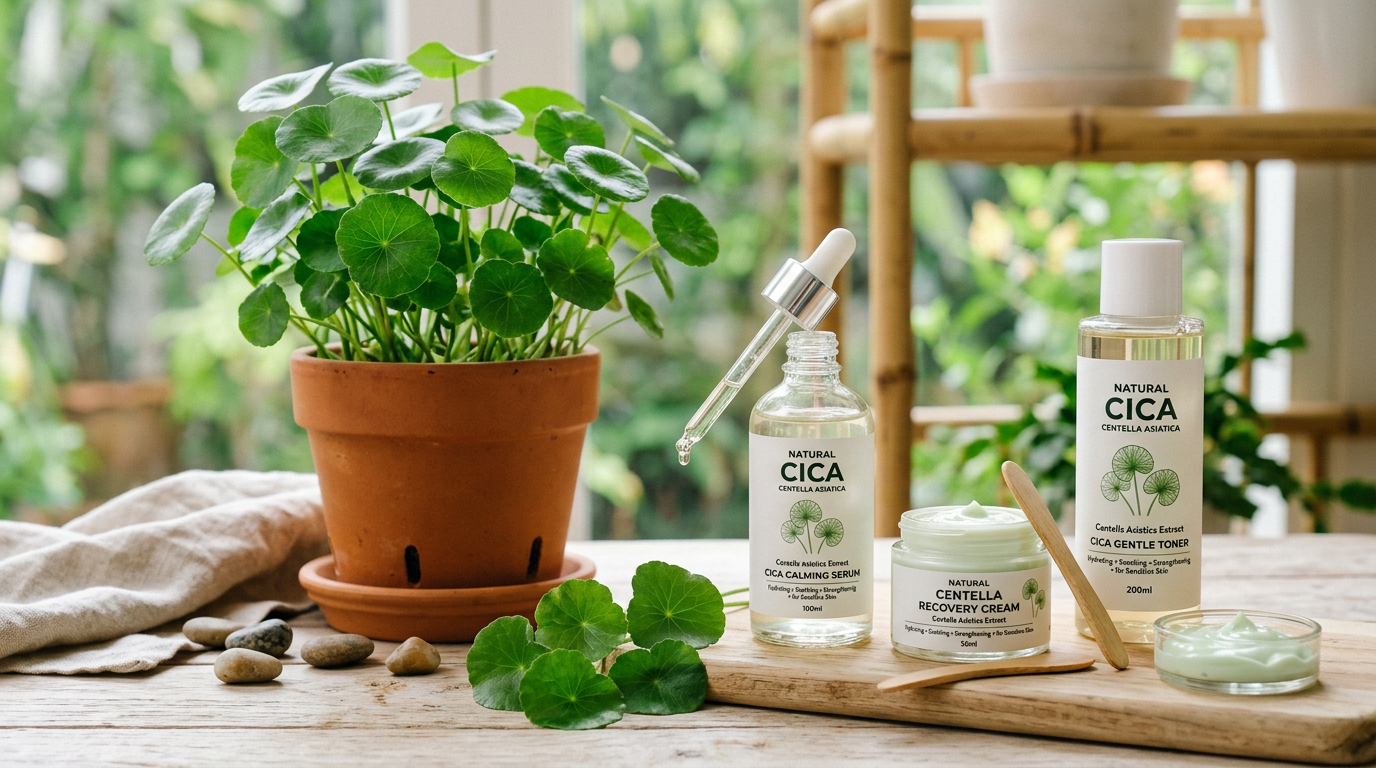
When your skin barrier feels over-exfoliated, tight, or visibly flushed, few botanical ingredients restore comfort as reliably as Centella Asiatica (Cica). Revered for centuries across traditional Asian herbal traditions and known colloquially as “Tiger Grass,” Centella has become the cornerstone of modern Korean skin-soothing formulations. Whether you are recovering from strong active acids, environmental exposure, or daily stress, Centella extracts deliver immediate relief and long-term barrier protection.
At the heart of Centella’s restorative performance are four active triterpenoid compounds: Madecassoside, Asiaticoside, Madecassic Acid, and Asiatic Acid. These bioactive phytochemicals work together to calm surface irritation, support cellular hydration, and reinforce the lipid matrix of the stratum corneum. In this complete guide, we examine the cosmetic science of Centella Asiatica in skincare, compare its core active derivatives, review top Cica formulations, and detail how to integrate this soothing hero into your daily regimen.
1. The Cosmetic Science: The Four Triterpenoid Powerhouses
Understanding why Centella Asiatica is considered the ultimate barrier recovery botanical requires looking at its primary bioactive isolates:
Madecassoside: The most celebrated isolated saponin in Cica. Madecassoside provides profound surface-soothing benefits, neutralizes free radicals, and helps reduce visible redness caused by environmental stress or aggressive chemical exfoliants.
Asiaticoside: Works synergistically to support surface elasticity and skin moisture retention. It helps maintain the integrity of the extracellular matrix, leaving skin feeling firm and resilient.
Madecassic & Asiatic Acids: These aglycone compounds reinforce skin barrier lipid stability, smooth micro-roughness, and prevent trans-epidermal water loss (TEWL) for long-lasting hydration.
2. Key Aesthetic Benefits: Redness Soothing & Barrier Recovery
Integrating Centella-infused serums, ampoules, or barrier creams into your regimen delivers distinct visual and textural improvements:
- Calms Visible Surface Redness: Quickly cools flushed or reactive skin, making it an essential recovery step post-peel or post-retinoid. Read our Green Tea & Redness Soothing Guide.
- Accelerates Barrier Comfort: Fortifies moisture retention alongside Ceramides & Lipids for a smooth, supple texture.
- Soothes Dry, Tight Skin: Provides lightweight, non-greasy hydration that comforts compromised stratum corneum layers.
- Complements Advanced Bio-Actives: Pairs seamlessly with Medicube PDRN, Copper Peptides, and Marine Seaweed Extracts.
3. Centella Asiatica vs. Green Tea vs. Seaweed
Here is how Centella Asiatica compares against other leading botanical hydrators in cosmetic formulations:
| Botanical Active | Primary Bioactive Profile | Key Aesthetic Focus | Best Routine Alignment |
|---|---|---|---|
| Centella Asiatica (Cica) | Madecassoside, Asiaticoside, Triterpenes | Barrier recovery, redness relief & deep calming | Sensitive, compromised & reactive skin types |
| Green Tea (Camellia Sinensis) | EGCG Polyphenols, Tannins, L-Theanine | Antioxidant defense, oil balance & cooling | Oily, combination & shine-prone skin |
| Seaweed (Marine Algae) | Marine Polysaccharides, Alginates, Minerals | Plumping hydration, mineral replenish & bounce | Dehydrated, dull & fine-line-prone skin |
4. At-a-Glance Cica Product Comparison Matrix
Compare our top-rated Centella Asiatica formulas across active focus, texture finish, and best routine role:
| Product Name | Active Formula Base | Texture & Finish | Best Routine Role |
|---|---|---|---|
| SKIN1004 Madagascar Centella Ampoule | 100% Centella Asiatica Extract | Watery Fluid | Weightless Soothing Hydration | First-step soothing ampoule for reactive skin |
| La Roche-Posay Cicaplast Baume B5+ | Madecassoside + 5% Panthenol & Tribioma | Rich Occlusive Balm | Protective Comfort Shield | Targeted spot-treatment or overnight barrier balm |
| ETUDE SoonJung 2x Barrier Cream | Madecassoside + Panthenol & Shea Butter | Velvety Cream | Soft Balanced Moisture | Daily moisturizing cream for barrier maintenance |
5. In-Depth Product Reviews & Formulations
We evaluated each Centella formula based on active extract concentration, supporting lipids, texture aesthetics, and skin feel:
Top Recommended Centella Asiatica Formulations
SKIN1004 Madagascar Centella Ampoule
Hero Actives: 100% Centella Asiatica Extract (from Madagascar)
Finish & Texture: Ultra-Light Watery Fluid | Non-Sticky Fresh Finish
A minimalist K-beauty masterpiece formulated with 100% pure Madagascar Centella Asiatica extract. It absorbs instantly into skin, delivering raw triterpenoid nutrients that calm redness, balance oil-water ratios, and restore immediate comfort without leaving any heavy residue.
✗ Cons: Very watery, requiring a rich sealing cream for drier skin types.
La Roche-Posay Cicaplast Baume B5+
Hero Actives: Madecassoside, 5% Panthenol (Vitamin B5), Zinc, Manganese, Shea Butter
Finish & Texture: Rich Protective Balm | Nourishing Occlusive Shield
The ultimate rescue balm for compromised skin. By pairing isolated Madecassoside with 5% Panthenol and mineral chelates, Cicaplast Baume creates an occlusive protective seal over raw or over-exfoliated skin, drastically accelerating barrier recovery overnight.
✗ Cons: Heavy occlusive texture; best suited for nighttime or targeted spot application rather than daytime under makeup.
ETUDE SoonJung 2x Barrier Intensive Cream
Hero Actives: Madecassoside, Panthenol, Sunflower Seed Oil, Shea Butter
Finish & Texture: Velvety Moisturizing Cream | Soft Hydrated Glow
A staple in sensitive skincare routines. Formulated with a low-pH, hypo-allergenic base, it features “Panthensoside” (Panthenol + Madecassoside) to strengthen the moisture barrier while keeping skin supple, soft, and balanced throughout the day.
✗ Cons: Contains shea butter, which may feel slightly rich for extremely oily skin in humid climates.
As an Amazon Associate, I earn from qualifying purchases. Recommendations are based on independent formulation analysis.
6. How to Layer Centella Formulations in Your Routine
Because Centella Asiatica is non-acidic, soothing, and highly barrier-supportive, it can be seamlessly combined with virtually any active ingredient in your routine:
- Perfect Buffer for Strong Actives: Apply a Centella ampoule before or alongside Retinol, AHA/BHA exfoliants, or L-Ascorbic Acid to minimize potential stinging and surface irritation.
- Post-Exfoliation Soothing: Follow up chemical exfoliation treatments (like Lactic Acid) with a Madecassoside cream to quickly calm skin.
- Pairs Great with Conductive Gels: Watery Centella ampoules provide soothing slip when using cosmetic devices like the Medicube AGE-R Booster Pro.
- Safe for Daily AM and PM Application: Cica does not cause sun sensitivity, making it an ideal choice for twice-daily barrier maintenance.
7. Frequently Asked Questions (FAQs)
Centella Asiatica delivers bioactive triterpenes (like Madecassoside and Asiaticoside) that calm surface redness, accelerate moisture barrier recovery, and protect against environmental stress.
Cica is the nickname for the entire Centella Asiatica plant extract, whereas Madecassoside is one specific, purified bioactive compound isolated from the plant that provides targeted soothing.
Yes! Centella is non-acidic and barrier-supportive, making it an ideal ingredient to layer alongside active retinoids or Vitamin C to prevent redness and dryness.
Yes. Centella provides lightweight, non-greasy hydration that soothes reactive skin without clogging pores, making it excellent for sensitive, oily, and combination skin types.
8. Final Verdict: Restoring a Balanced, Resilient Barrier
Incorporating Centella Asiatica into your daily routine is one of the single best ways to protect and maintain a healthy skin barrier. Powered by bioactive triterpenes like Madecassoside and Asiaticoside, Cica calms visible redness, restores moisture stability, and buffers skin against harsh daily stressors. Whether you choose a pure 100% ampoule like SKIN1004 or a nourishing barrier cream like ETUDE SoonJung, Centella is a timeless staple for smooth, resilient skin!
To explore more botanical and barrier-repair guides on our website, check out these related reads:
- Explore soothing antioxidants: Green Tea in Skincare: EGCG & Sebum Guide.
- Learn about traditional botanicals: Ginseng in Skincare: Hanbang Beauty Guide.
- Explore marine hydration: Seaweed in Skincare: Marine Algae Guide.
- Master lipid recovery: Ceramides vs. Cholesterol Barrier Guide.
- Repair a damaged moisture barrier: Damaged Skin Barrier Recovery Plan.
Leave a Reply