

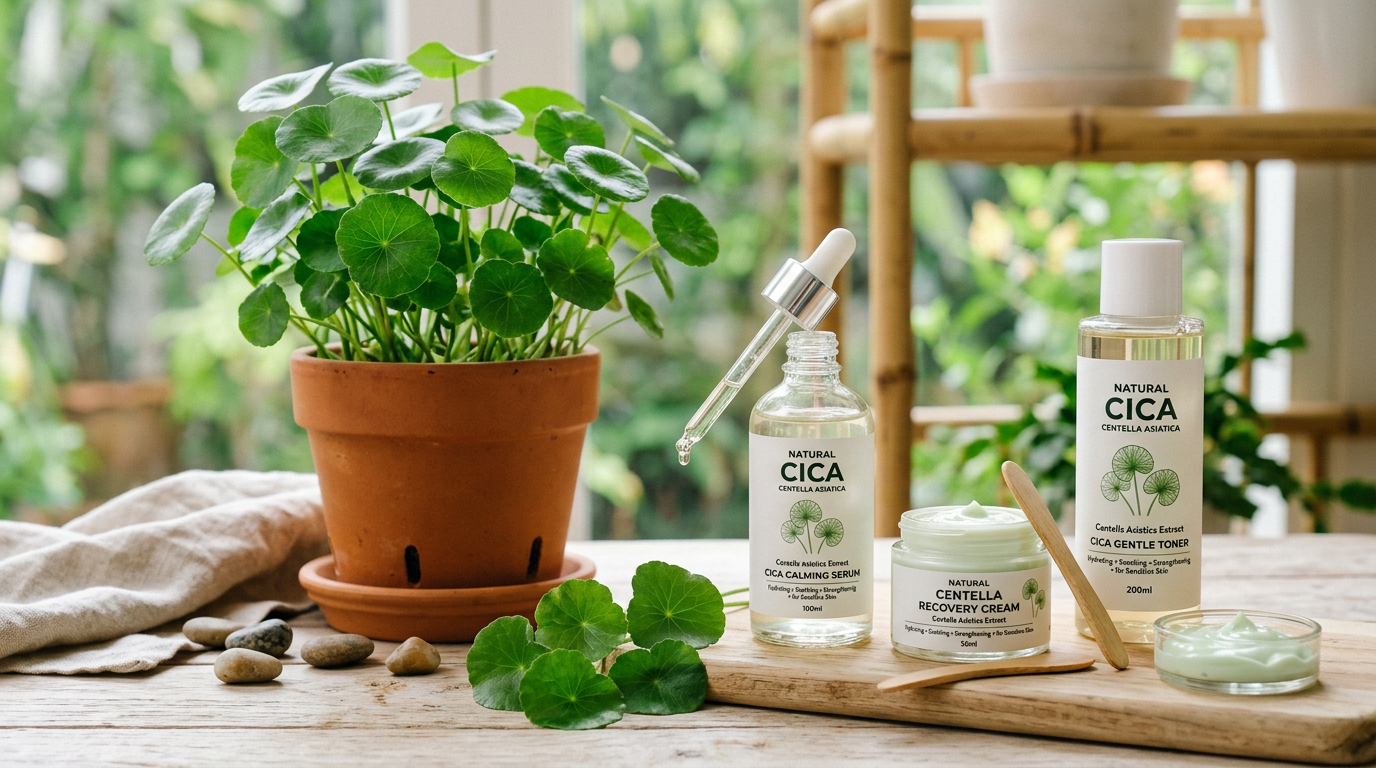
If your skin barrier is suffering from over-exfoliation, stinging from direct acids, or flushing from persistent erythema, standard surface moisturizers are often not enough—you need targeted biological anti-inflammatory intervention. Known historically as “Tiger Grass” and chemically as Centella Asiatica, Cica has evolved from a traditional wound-healing herb into a staple of modern dermatological barrier repair. Unlike occlusives that simply trap moisture, active Cica extracts—specifically isolated pentacyclic triterpenoids like Madecassoside and Asiaticoside—downregulate pro-inflammatory cytokines, stimulate Type I collagen synthesis, and accelerate re-epithelialization. This master guide breaks down the biochemistry of Centella Asiatica, how it calms redness at the cellular level, and how to integrate it into your routine alongside active exfoliants and retinoids.
1. The Active Chemistry: Triterpenoids of Centella Asiatica
While crude botanical plant extracts vary in quality, the therapeutic efficacy of Centella Asiatica relies on four bio-identical pentacyclic triterpenoids. These active compounds work synergistically to repair dermal tissue and suppress inflammatory signaling pathways:
| Triterpenoid Compound | Key Biological Mechanism | Primary Skincare Benefit |
|---|---|---|
| Madecassoside | Suppresses IL-1β and TNF-α pro-inflammatory cytokines; inhibits UV-induced melanin synthesis. | Calms burning, reduces erythema, and fades post-inflammatory hyperpigmentation. |
| Asiaticoside | Stimulates Type I collagen synthesis in dermal fibroblasts; accelerates angiogenesis (blood vessel formation). | Speeds up micro-wound recovery, acne scar healing, and structural skin remodeling. |
| Madecassic Acid | Inhibits iNOS (inducible nitric oxide synthase) to decrease vascular swelling and inflammation. | Reduces facial flushing, soothing reactive and rosacea-prone skin profiles. |
| Asiatic Acid | Boosts glycosaminoglycan (GAG) production and enhances structural cell-wall integrity. | Improves skin firmness, plumps hydrated layers, and reinforces the extracellular matrix. |
2. How Cica Calms Redness & Repairs the Skin Barrier
When the stratum corneum is damaged by over-cleansing or chemical exfoliants, keratinocytes release alarm signaling molecules that trigger vasodilation—causing visible redness, warmth, and swelling. Cica intervenes through three distinct biological pathways:
- Downregulation of Inflammatory Cytokines: Madecassoside directly blocks NF-κB transcription factors, stopping the overproduction of inflammatory markers like Interleukin-6 (IL-6) and Tumor Necrosis Factor-alpha (TNF-α).
- Fibroblast Activation & Collagen Remodeling: Asiaticoside binds to membrane receptors on dermal fibroblasts, prompting them to synthesize fresh Type I collagen and fibronectin to repair damaged extracellular matrix tissue.
- Antioxidant & Microvascular Stabilization: Cica’s natural flavonoids neutralize free radicals generated during inflammation, while Madecassic acid strengthens micro-capillary walls to reduce transient flushing and rosacea flare-ups.
3. Structural Comparison: Cica vs. Ceramides vs. Panthenol
Barrier repair products often combine these three soothing ingredients. Understanding how they differ helps you select the right formula for your specific skin needs:
- Cica (Anti-Inflammatory & Wound Soother): Operates as a biological calming agent. It shuts down active stinging, reduces flushing, and accelerates cellular repair inside irritated tissue.
- Ceramides (Structural Lipid Mortar): Operates as a physical barrier lipid. Ceramides fill the spaces between skin cells to create a seal that prevents water loss. Read our full guide in The Ceramides Barrier Repair Guide.
- Panthenol / Vitamin B5 (Tissue Regenerator & Humectant): Operates as a deep humectant that converts into pantothenic acid inside the skin, boosting cell proliferation and drawing water into dry layers.
4. Pairing Cica with Actives (Retinoids, BHAs & Vitamin C)
One of Cica’s greatest strengths in modern skincare is its ability to reduce irritation caused by strong active ingredients without neutralizing their clinical benefits:
- Cica + Salicylic Acid (BHA): Deep-pore clearing with Salicylic Acid can sometimes cause mild drying or redness. Applying Cica immediately after calms follicular inflammation while keeping pores clear.
- Cica + Retinoids (Retinol / Tretinoin): Using Cica creams as a buffering layer reduces retinoid-induced flaking and erythema during the initial retinization phase.
- Cica + Vitamin C: Low-pH L-Ascorbic Acid formulas from The Vitamin C Hyperpigmentation Guide can cause mild stinging on sensitive skin. Cica calms this contact acidity while its antioxidants work alongside Vitamin C to fade dark spots.
5. How to Layer Cica in Your Daily Skincare Routine
To maximize soothe-and-repair performance, integrate Cica products into this simple daily protocol:
- Cleanse Gently: Wash with a low-pH, non-stripping cleanser and lukewarm water.
- Hydrate (Water Phase): Apply a humectant serum containing Amino Acids and Glycerin or Natural Moisturizing Factors (NMFs).
- Target & Calm (Active Layer): Apply a 100% Centella Asiatica ampoule or pair with a gentle Azelaic Acid 10% Serum to target persistent redness.
- Seal & Protect (Lipid Layer): Apply a rich Cica balm or a 3:1:1 lipid cream from The Ceramides Repair Guide. For lightweight sealing, press 2–3 drops of Rosehip Oil or Squalane Oil over dry areas.
- Protect Daily (AM Step): UV radiation triggers inflammatory cytokines that worsen redness. Finish every morning with broad-spectrum physical protection from The Best Sunscreens Guide.
6. Frequently Asked Questions
Q: Is Cica safe for active acne and congested pores?
Yes. Pure Cica extracts (like Madecassoside and Asiaticoside) are non-comedogenic water-soluble active compounds. They help soothe the inflammatory redness surrounding acne breakouts and reduce post-acne marks (PIE).
Q: How fast does Cica work to calm skin redness?
High-concentration Cica serums and balms can reduce acute surface stinging and heat within 15 to 30 minutes of application. Structural barrier repair and redness reduction typically show visible progress within 3 to 7 days of consistent use.
Q: What is the difference between Centella Asiatica and Cica?
They refer to the same plant. “Centella Asiatica” is the botanical name, while “Cica” is an abbreviated industry term derived from both Centella and the French word cicatrisation (meaning wound healing).
7. Final Verdict: Achieving Rapid Soothing & Repair
Centella Asiatica is an extraordinary botanical active for calming active inflammation, reducing facial flushing, and accelerating skin barrier recovery. By pairing Cica’s biological soothing properties with structural Ceramides, NMFs, and daily SPF protection, you build a resilient, healthy skin barrier.
Explore our complete network of barrier repair and active ingredient guides:
- Rebuild intercellular lipids with The Ceramides Repair & 3:1:1 Lipid Guide.
- Restore intracellular moisture using The Natural Moisturizing Factors (NMFs) Guide.
- Soothe redness and PIE with The Azelaic Acid Guide.
- Exfoliate safely using The Salicylic Acid BHA Guide.
- Explore botanical active oils in The Rosehip Oil Science & Renewal Guide.
- Shield brightened skin daily with The Best Sunscreens Guide.
Leave a Reply