

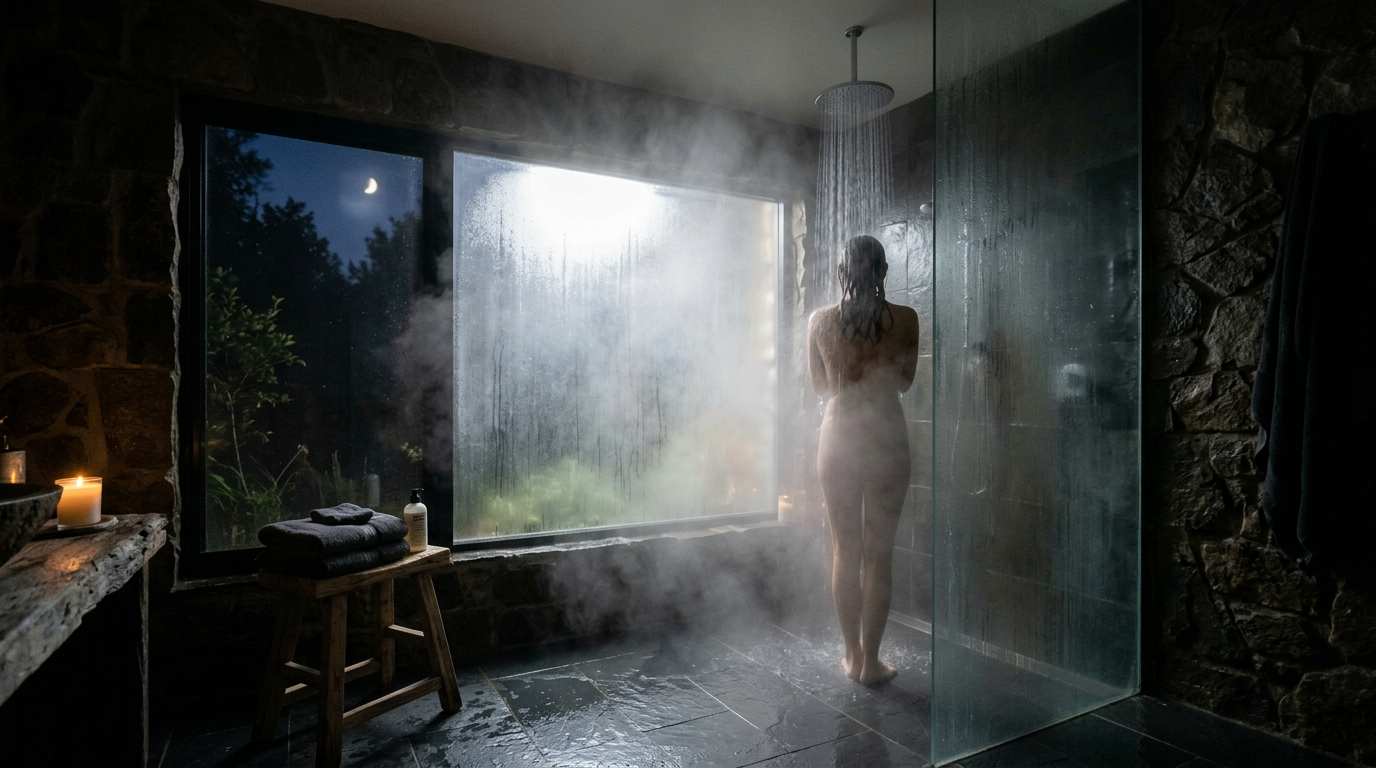
An intentional **night shower routine** is more than just basic hygiene—it is an essential bridge between daytime environmental exposure and your evening skincare repair cycle. Beyond washing away sweat, pollution, and body SPF, warm evening showers induce vasodilation and trigger a drop in core body temperature that signals to your circadian rhythm that it is time for deep sleep.
However, common shower habits like using scalding hot water, using harsh sulfate cleansers, or applying body products out of order can strip your lipid barrier, cause transepidermal water loss (TEWL), and trigger back acne (bacne). In this step-by-step clinical guide, we break down the ideal evening shower sequence, explain the science of damp-skin moisture sealing, and show you how to seamlessly connect your shower routine to your evening facial skincare layering.
1. The Dermatology Science: Water Temp & Barrier Lipid Defense
Showering at night offers distinct physiological advantages, but only if you respect your skin barrier’s natural lipid structure:
🌡️ The Water Temperature Rule
Water hotter than 102°F (39°C) melts away the stratum corneum’s intercellular ceramides, fatty acids, and cholesterol. Always shower with lukewarm water to preserve moisture while still rinsing away daytime sweat.
🌙 Circadian Thermoregulation
Showering 60 to 90 minutes before sleep warms your hands and feet, prompting your core internal temperature to vent heat outward. This natural temperature drop signals your brain to release endogenous melatonin.
2. The Ultimate Step-by-Step Night Shower Sequence (Steps 1–5)
Executing your evening shower in the correct top-to-bottom order prevents hair conditioner residues from clogging pores on your back, shoulders, and jawline:
- Step 1: Hair Care First (Shampoo & Rinse): Wash your scalp and hair first so that lather rinses downward before you cleanse your body.
- Step 2: Apply Conditioner & Clip Up: Apply conditioner or hair masks, then clip hair up off your back while it penetrates.
- Step 3: Thoroughly Rinse Hair Down & Away: Lean forward or clip hair back while rinsing conditioner to keep heavy silicones and quaternary ammonium agents off your shoulders and back (a primary cause of bacne).
- Step 4: Body Cleansing (Top-to-Bottom): Cleanse your body after rinsing hair products using a nourishing, pH-balanced wash. Read our formulation breakdown in our Method Body Wash Analysis.
- Step 5: First-Step Facial Cleanse (Optional): If you prefer oil cleansing in the shower, apply your cleansing balm onto dry/damp skin to melt sunscreen before stepping out. Learn more in our Cleansing Oil vs. Balm Guide.
3. The 3-Minute Damp Skin Rule: Layering Body Lotions & Oils
The single most important step for maintaining soft body skin occurs within 180 seconds of turning off the tap:
Damp Body Layering Sequence:
Towel Pat Dry ➔ Water-Based Body Lotion / Cream ➔ Occlusive Body Oil Seal
When you step out of the shower, your skin is fully saturated with surface water. If left unsealed, that moisture rapidly evaporates through flash evaporation, taking your skin’s natural moisture with it. By applying body creams or occlusive plant oils onto damp skin within 3 minutes, you trap that water directly inside the stratum corneum. Read the full science behind lipid sealing in our guide on Why Body Oil Is Essential for Hydration.
4. How to Transition from Showering to Facial Skincare
Your night shower sets the baseline for your facial skincare sequence. Once you step out of the shower, transition immediately into your regular nighttime routine:
- Avoid Direct Hot Shower Streams on the Face: The pressure and temperature of standard showerheads can dilate facial capillaries and strip delicate cheek barrier lipids. Wash your face at the sink using lukewarm water instead.
- Apply Facial Hydrators Immediately: Apply watery toners or essences onto damp skin right after drying off. Learn about pH restoration in our Daily Face Wash Routine Guide.
- Proceed to Night Active Layering: Follow with your active treatment serums, retinoids, or ceramide night creams as outlined in our master Night Skincare Routine Layering Guide.
Top Recommended Formulations for Evening Shower Care
These gentle body washes, barrier lotions, and nourishing oils cleanse thoroughly without stripping your lipid barrier.
Method Body Wash (Pure Peace)
Naturally derived, plant-based cleanser infused with peony, rosewater, and sweet pink salt that cleanses without drying.
Neutrogena Sesame Body Oil
Lightweight sesame oil formula that absorbs instantly into damp post-shower skin to lock in deep hydration.
CeraVe Daily Moisturizing Lotion
Formulated with 3 essential ceramides and Hyaluronic Acid to rebuild protective skin lipids overnight.
As an Amazon Associate, I earn from qualifying purchases. Recommendations are based on independent formulation analysis.
🛒 Need body washes, ceramide lotions, and body oils delivered fast? Get free 2-day shipping on top dermatologist picks with an Amazon Prime 30-Day Free Trial or sign up for the Prime Young Adult 6-Month Trial if you’re a student!
6. 4 Common Night Shower Mistakes That Damage Skin
- Rinsing Hair Conditioner Over Your Back: Letting heavy hair conditioners run down your spine fills hair follicles with comedogenic fatty alcohols and quats, triggering severe back acne (bacne). Always rinse hair forward or wash your body after hair care.
- Scrubbing Every Night with Loofahs or Scrubs: Mesh loofahs harbor bacterial colonies and create micro-tears in skin tissue. Use your bare hands or clean silicone scrubbers instead.
- Waiting Until Skin Is Completely Dry Before Moisturizing: Waiting more than 3 minutes post-shower allows trapped water to evaporate, leaving skin drier than before your shower. Apply oils or lotions while still damp.
- Showering Right Before Jumping Into Bed: Taking a hot shower immediately before sleep raises core body temperature, delaying the natural melatonin surge required for restful sleep. Shower 60 to 90 minutes before bedtime.
7. Frequently Asked Questions (FAQs)
Night showers are superior for skin health because they wash away accumulated daytime environmental pollution, allergens, and body SPF before you sleep, preventing bed linen contamination and clogged pores.
Apply body lotion first to deliver water hydration into the skin cells, then apply body oil second as an occlusive seal to lock that hydration inside the stratum corneum.
Yes. Hot water melts away surface lipids (ceramides and cholesterol) that bind skin cells together, leading to increased transepidermal water loss (TEWL), dry flaking, and itching.
8. Final Takeaway: Optimizing Evening Hygiene for Sleep & Skin
An intentional night shower routine serves as the ultimate transition between daytime stress and evening cellular repair. By keeping water lukewarm, rinsing hair conditioner away from your body, applying lotions and body oils onto damp skin within 3 minutes, and transitioning smoothly into your facial skincare, you preserve skin barrier health while preparing your body for deep, restorative sleep.
To continue building your body care and night routine architecture, explore our Method Body Wash Review, learn how to lock in post-shower hydration in our Body Oil Guide, or master nighttime facial skincare in our Night Skincare Routine Layering Guide.
Leave a Reply