Tag: hydration

  • Olay Regenerist Review: The “Power Duo” Secret to Firmer, Smoother Skin

    Olay Regenerist Review: The “Power Duo” Secret to Firmer, Smoother Skin

    Finding skincare that actually lives up to the hype—without costing a small fortune—can feel like an impossible mission. We’ve all seen those “miracle” creams priced at hundreds of dollars, but here’s the truth: effective science doesn’t have to come with a luxury price tag. This is exactly why Olay Regenerist has such a legendary reputation. Best known for its iconic “Red Jar,” this collection has spent decades proving that you can get professional-grade firming and smoother skin on a real-world budget.

    So, how does Olay do it? Their secret is a “skin-first” philosophy. Instead of chasing every TikTok trend, Olay sticks to a research-backed power duo: Amino-Peptides and Niacinamide.

    In this guide, we’re breaking down the different “colors” of the Regenerist family. We’ll explain why this science is a game-changer for mature skin and help you pick the perfect formula to get that firm, radiant glow you’ve been looking for.

    1. The Core DNA: Why Niacinamide and Peptides are the Perfect Pair

    Every product in the Olay Regenerist line is built on a shared scientific foundation that dermatologists call “Cellular Signaling.” While many products just sit on the surface, Olay is designed to “talk” to your skin. This is achieved through a synergy of two essential ingredients that act as the Signal and the Shield for your face.

    The Signal (Amino-Peptides): These are tiny protein fragments that act like a “Work Order” for your skin. They trick your skin cells into thinking it is time to build more collagen and elastin, which are the building blocks of firm skin.

    The Shield (Niacinamide): Also known as Vitamin B3, this is the architect that protects the construction site. It strengthens your [healthy skin barrier], calms redness, and ensures your skin stays hydrated enough to produce that new collagen.

    The Result: By combining the signal to build with the shield to protect, Olay helps restore the “bounce” and volume that we naturally lose as we age.

    2. Navigating the Roadmap: Which Olay Color Is Right for You?

    Olay has organized its collection into specialized “Color Silos.” Each line takes the core Peptide/Niacinamide base and adds a third active to solve a specific problem.

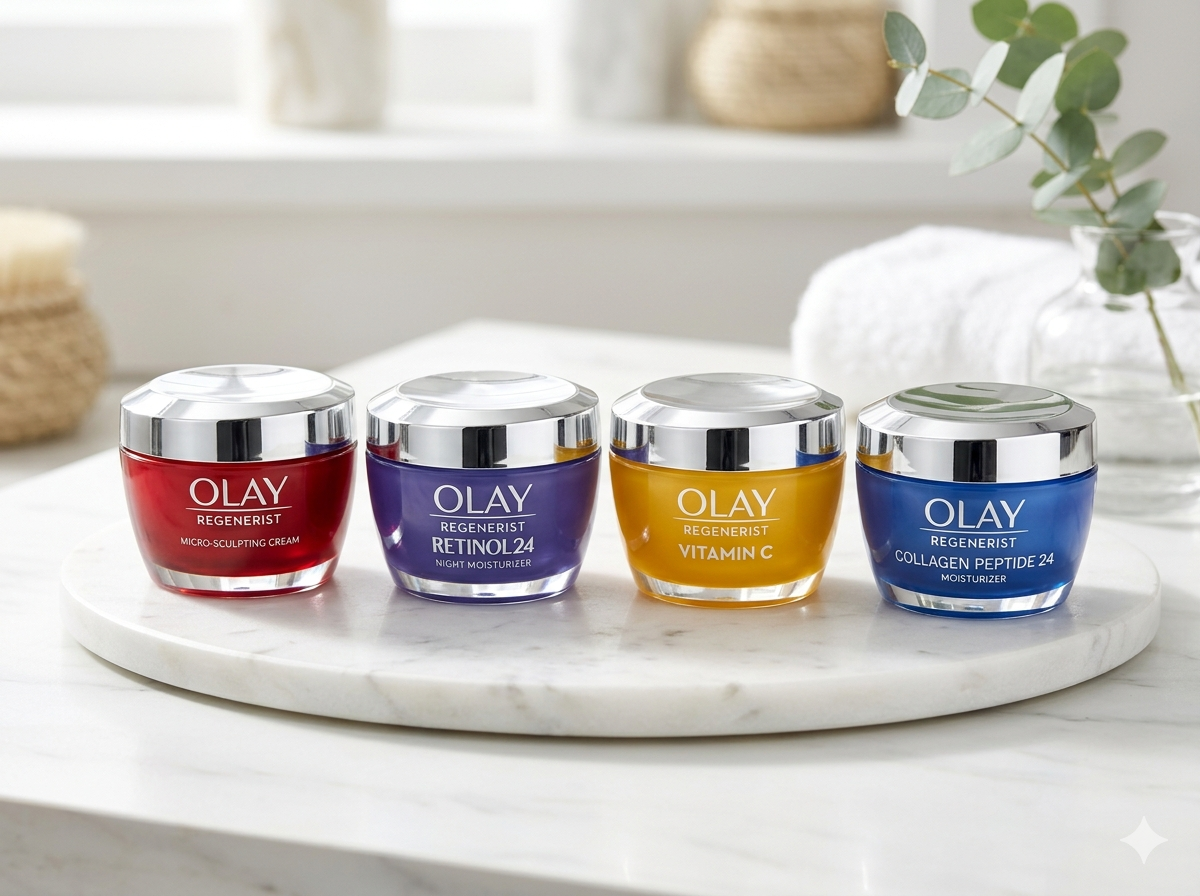
    The Red Line (Original Regenerist): The classic choice for skin firming. It focuses on deep hydration and structural lifting. Best for those concerned about sagging and jowls.

    The Purple Line (Retinol24): Olay’s “Nightly Renovation” kit. It adds a potent Retinoid complex to speed up cell turnover. It is the best choice for smoothing deep wrinkles and clearing [clogged pores].

    The Yellow Line (Vitamin C + Peptide 24): The “Radiance Booster.” It uses stable Vitamin C to fight dullness and provide daily antioxidant protection for a Glass Skin glow.

    The Blue Line (Collagen Peptide 24): The “Hydration Plumper.” It is a lighter, fragrance-free line that focuses on immediate volume and 24-hour moisture for dehydrated skin.

    3. The Value Verdict: Olay vs. High-End Prestige Brands

    One of the biggest questions readers ask is: “Can a drugstore cream really work as well as a $200 luxury brand?” The scientific answer is Active Ingredient Equivalency. When you strip away the designer labels and heavy glass jars, the actual peptides and vitamins used to stimulate collagen are often identical.

    The Purity Standard: Olay uses high-purity actives that are stabilized to ensure they don’t lose power on your shelf.
    The Formulation Advantage: Because Olay is such a large brand, they can afford the clinical testing required to prove their products actually work, which is something many smaller “luxury” brands skip.
    The Verdict: If you prioritize skin health and results over fancy packaging, Olay provides professional-grade anti-aging at an unbeatable value.

    4. Building Your Routine: How to Layer Your Olay Products

    Consistency is the most important part of an anti-aging routine. To see real results in your fine lines, you should follow a simple AM/PM split.

    Morning (Protect): Cleanse, apply your Vitamin C serum, and use the Olay Micro-Sculpting Cream followed by SPF 30 or higher.

    Evening (Repair): Use The Art of Double Cleansing to remove the day’s grime, apply your Retinol24 serum, and seal it with the night moisturizer.

    The Final Seal: For extra-dry skin, press 2 drops of Squalane Oil over your Olay cream to lock in the repair work while you sleep.

    5. FAQs: Pro-Tips for Better Results

    Q: Can I use the “Red Jar” and the “Purple Jar” together?
    A: Yes, but at different times. Use the Red Jar (Micro-Sculpting) in the morning for firming and the Purple Jar (Retinol24) at night for renewal. This covers every angle of repair.

    Q: Does Olay Regenerist cause breakouts?
    A: Most Olay products are non-comedogenic, meaning they are designed not to clog pores. If you have very oily skin, choose the “Whip” version of the creams for a lighter finish.

    Q: How long until I see my skin getting firmer?
    A: You will feel the hydration immediately. For structural changes like less sagging or smoother wrinkles, it takes about 4 to 8 weeks of daily use for the new collagen to mature.

    6. Conclusion: Investing in Your Skin’s Future

    Olay Regenerist has remained a global favorite for one reason: it respects the science of the [skin barrier]. By focusing on the proven synergy of Peptides and Niacinamide, the line provides an effective, accessible path to achieving a smoother, firmer, and more radiant complexion. Start with the color that matches your primary concern, be consistent with your routine, and enjoy the confidence of skin that looks and acts years younger.

    [Call to Action Button]

    Shop The Best Olay Regenerist Products and Sculpting Tools Now!

  • Unlock Glowing Skin: The Essential Benefits of Day Cream and How to Use It Like a Pro

    Unlock Glowing Skin: The Essential Benefits of Day Cream and How to Use It Like a Pro

    A jar of hydrating day cream on a bright background, symbolizing a fresh start to a morning skincare routine for radiant skin.
    A quality day cream is a non-negotiable cornerstone of your morning skincare ritual.

    In the relentless quest for a healthy, luminous complexion, your morning skincare routine acts as your first line of defense and beautification. While cleansers effectively purify and serums deliver potent targeted treatments, one product stands as a daily guardian and hydrator: the indispensable day cream. Far more than just a simple facial moisturizer, a well-chosen day cream is your skin’s steadfast ally, working diligently from sunrise to sunset to keep it looking and feeling its best.

    But what exactly elevates a day cream to essential status? And with a seemingly endless array of options, how do you pinpoint the best day cream tailored to your unique skin health requirements and concerns? Let’s embark on a comprehensive exploration into the world of daytime hydration, protection, and ultimate skin radiance.

    What Exactly is a Day Cream (And Why It’s Not Your Night Cream)?

    A day cream is a specialized moisturizer meticulously formulated for daytime application. Its core objectives are threefold:

    1. Hydration: To diligently replenish moisture lost during the night and sustain optimal skin hydration levels throughout the demands of the day.
    2. Protection: To act as a barrier, shielding your delicate skin from a barrage of environmental aggressors such as urban pollution, damaging UV rays (often through integrated SPF), and cell-disrupting free radicals.
    3. Primer: To create a smooth, even canvas, allowing for flawless makeup application and enhanced longevity.

    Unlike richer, more emollient night creams, which are engineered for intensive repair and cellular regeneration while you sleep, day creams typically boast:

    • Lighter textures: Ensuring comfortable wear, especially under makeup, and preventing any undesirable greasy or heavy sensation.
    • Rapid absorption: Allowing you to swiftly proceed with your makeup routine or confidently face the day without delay.
    • Protective fortifications: Enriched with ingredients like antioxidants and, frequently, a sun protection factor (SPF) to combat daily environmental stressors.

    Consider this analogy: your night cream is the dedicated overnight repair crew, while your day cream is the vigilant daytime security detail, focused on defense and maintaining the integrity of your skin barrier, keeping it strong, supple, and resilient.

    The Unbeatable Benefits of Integrating a Day Cream Daily

    Incorporating a suitable day cream into your AM routine is far more than a mere suggestion; it’s a fundamental pillar of proactive and intelligent skincare. Here’s a compelling breakdown of why:

    1. Deep, Sustained Hydration: Day creams deliver crucial moisture, visibly plumping skin cells, diminishing the appearance of fine lines and dehydration wrinkles, and imparting that coveted healthy, dewy glow. Superstar ingredients like hyaluronic acid and glycerin are renowned hydration powerhouses.
    2. Potent Environmental Shield: Many premium day creams are brimming with antioxidants (such as Vitamin C, Vitamin E, and Niacinamide). These potent compounds neutralize harmful free radicals generated by pollution and UV exposure, thereby preventing premature aging, photodamage, and maintaining overall skin vitality.
    3. Essential Sun Protection (Often Included): This is a significant advantage! A large number of day creams are formulated with broad-spectrum SPF (typically ranging from SPF 15 to SPF 50), offering a vital first line of defense against the sun’s damaging UVA and UVB rays – primary culprits in skin aging, sunspots, and increased skin cancer risk. However, for prolonged or intense sun exposure, layering a dedicated sunscreen product over your day cream is highly recommended.
    4. Creates a Flawless Canvas for Makeup: A well-hydrated, smooth, and prepped skin surface allows foundation, concealer, and other makeup products to glide on effortlessly, blend seamlessly, and adhere better for extended wear. Say goodbye to cakey or patchy makeup!
    5. Soothes, Calms, and Balances: Ingredients like aloe vera, chamomile, calendula, or ceramides can significantly help to soothe sensitive or irritated skin, reduce redness and inflammation, and promote a more balanced, even skin tone.
    6. Targets Specific Skin Concerns Proactively: Whether your primary concern is persistent dryness, excess oiliness and breakouts, visible signs of aging (like wrinkles and loss of firmness), or a lackluster, dull complexion, there’s a specialized day cream formulated to address your specific skin type and effectively tackle those concerns.
    7. Promotes Long-Term Skin Health: Consistent use helps maintain the skin’s natural barrier function, preventing trans-epidermal water loss (TEWL) and protecting against irritants, leading to healthier, more resilient skin over time.

    Choosing Your Perfect Day Cream Companion: A Buyer’s Guide

    Navigating the bustling skincare aisle, whether physical or virtual, can often feel overwhelming. Here’s your roadmap to finding the day cream that will make your skin truly sing:

    Identify Your Skin Type Accurately:

    • Dry Skin: Prioritize richer, creamier formulations packed with emollients like shea butter, jojoba oil, squalane, and skin-identical ceramides. Hyaluronic acid is also a non-negotiable for its exceptional moisture-binding capabilities.
    • Oily Skin: Opt for lightweight, oil-free, or non-comedogenic (formulated not to clog pores) lotions, fluids, or gel-creams. Ingredients such as salicylic acid, tea tree oil, or niacinamide can assist in regulating sebum production and minimizing shine.
    • Combination Skin: Look for a balancing lotion or light cream that adequately hydrates drier areas (like cheeks) without exacerbating oiliness in the T-zone (forehead, nose, and chin). Gel-creams or lightweight lotions often strike the right balance.
    • Sensitive Skin: Diligently choose fragrance-free, alcohol-free (specifically drying alcohols like SD alcohol or denatured alcohol), and hypoallergenic formulas. Seek out soothing and repairing ingredients like aloe vera, centella asiatica (cica), oat extract, or ceramides. Always patch test new products!
    • Mature Skin: Seek out day creams specifically formulated with anti-aging benefits. Key ingredients include peptides (to support collagen production), retinol (though often preferred for nighttime use, some day formulas contain gentler, encapsulated versions or bakuchiol as a natural alternative), potent antioxidants, and robust broad-spectrum SPF.
    • Normal Skin: You have more flexibility! Focus on maintaining hydration and protection. A lightweight lotion or cream with antioxidants and SPF should suffice.

    Key Ingredients to Look For (and Some to Be Wary Of):

    • Must-Have Hydrators (Humectants): (e.g., Hyaluronic Acid, Glycerin, Sodium PCA, Panthenol) – These ingredients draw moisture from the air and deeper skin layers to the surface.
    • Barrier Builders (Emollients & Occlusives): (e.g., Ceramides, Squalane, Fatty Acids, Shea Butter, Petrolatum in moderation for very dry skin) – These smooth, soften, and create a protective seal to prevent moisture loss, reinforcing the skin barrier.
    • Powerful Protectors (Antioxidants): (e.g., Vitamin C & E, Niacinamide, Ferulic Acid, Green Tea Extract, Resveratrol) – These neutralize free radicals and protect against environmental damage.
    • Essential Sun Defenders (SPF): Aim for broad-spectrum protection of at least SPF 30 for effective daily defense against damaging UV rays. Look for mineral (zinc oxide, titanium dioxide) or chemical filters, depending on your preference and skin sensitivity.
    • Consider Avoiding (Especially for Sensitive Skin):
      • Fragrance (Parfum): Synthetic fragrances are common irritants. Natural essential oils can also be sensitizing for some.
      • Drying Alcohols: Such as SD alcohol, denatured alcohol, isopropyl alcohol, which can strip the skin.
      • Harsh Sulfates: More common in cleansers, but can sometimes appear in other products.
      • Certain Preservatives: While necessary, some like formaldehyde-releasers can be problematic for sensitive individuals. Look for reputable brands that use safer preservative systems.

    Consider Your Climate, Lifestyle, and Personal Preferences:

    • Humid Climates: May call for ultra-light, gel-based, or fluid formulas that absorb quickly without feeling heavy.
    • Dry or Cold Climates: May necessitate richer, more emollient creams to combat environmental dryness and protect against harsh weather.
    • Active Lifestyles: If you sweat a lot or spend significant time outdoors, prioritize water-resistant formulas and a higher SPF, with reapplication as needed.
    • Texture Preference: Skincare should be enjoyable! Choose a texture (gel, lotion, cream, balm) that you love applying every day.
    A collage displaying different textures of day creams - gel, lotion, and rich cream - suitable for various skin types like oily, dry, and combination skin.
    The right day cream texture makes all the difference for your skin type and daily comfort.

    How to Apply Day Cream for Maximum Impact: The Right Technique

    Application isn’t just about slathering it on; technique matters for optimal absorption and benefits! Follow these simple steps:

    1. Cleanse Thoroughly: Begin with a gentle cleanser appropriate for your skin type to remove impurities, excess oil, and any leftover nighttime products.
    2. Tone (Optional): If you incorporate a toner into your routine, apply it after cleansing to balance pH and prep the skin.
    3. Serum Application (If Used): Apply your targeted treatment serum(s) – like Vitamin C or hyaluronic acid – and allow a minute or two for them to fully absorb.
    4. Dispense the Right Amount of Day Cream: Typically, a pea-sized to dime-sized amount is sufficient for the face and neck. Using too much can lead to pilling or a greasy feel.
    5. Warm and Distribute: Warm the cream slightly between your fingertips. This helps it spread more easily. Dot the cream onto your forehead, cheeks, nose, and chin.
    6. Gentle Massage Application: Gently massage the cream into your skin using upward and outward strokes. This technique aids absorption, stimulates circulation, and can provide a mini lymphatic drainage massage.
    7. Don’t Neglect the Neck and Décolletage: These often-forgotten areas are just as susceptible to dryness, sun damage, and signs of aging. Extend your application downwards.
    8. Allow for Full Absorption: Give your day cream at least 1-2 minutes to fully absorb into the skin before proceeding with sunscreen (if your day cream doesn’t contain adequate SPF, or if you require extra protection) and makeup application.

    Watch: The Correct Order to Apply Your Skincare Products for Best Results

    (Video example: Replace with a relevant, high-quality video demonstrating skincare application order.)

    Common Day Cream Mistakes to Avoid

    Even with the best intentions, a few common slip-ups can prevent you from reaping the full benefits of your day cream:

    • Using the Wrong Formula for Your Skin Type: A rich cream on oily skin can lead to breakouts, while a light gel might not be enough for dry skin. Accurate skin type assessment is key.
    • Applying to Dry Skin: Moisturizers, including day creams, work best when applied to slightly damp skin as this helps to lock in moisture. Consider applying after a hydrating toner or essence, or lightly misting your face.
    • Skipping SPF (or Relying Solely on Low SPF in Day Cream): If your day cream has less than SPF 30 or you’ll be outdoors for extended periods, you need a separate, dedicated sunscreen. The Skin Cancer Foundation emphasizes daily use.
    • Using Too Much or Too Little Product: Too little won’t provide adequate hydration or protection; too much can feel heavy, pill, or interfere with makeup.
    • Forgetting the Neck and Chest: These areas show signs of aging just like the face and need the same care.
    • Inconsistent Use: For best results, day cream needs to be applied every single morning as part of your consistent daily skincare regimen.
    • Not Giving it Time to Absorb: Rushing to apply makeup immediately can cause pilling and reduce the efficacy of both your day cream and foundation.

    Day Cream Layering: Getting It Right in Your Routine

    The general rule for skincare layering is to go from the thinnest consistency to the thickest. Here’s where your day cream typically fits:

    1. Cleanser
    2. Toner/Essence (Optional)
    3. Eye Cream
    4. Serums (e.g., Vitamin C, Hyaluronic Acid)
    5. Spot Treatments (If needed, allow to dry)
    6. Day Cream
    7. Facial Oil (Optional, can be mixed with day cream or applied over for very dry skin)
    8. Sunscreen (If your day cream is SPF 20 or less, or for extended sun exposure)
    9. Makeup Primer (Optional)
    10. Makeup

    Allow each layer a moment to absorb before applying the next for optimal performance.

    Day Cream vs. Moisturizer vs. Sunscreen: Clearing Up Any Confusion

    • Moisturizer: This is an umbrella term for any product designed to hydrate and moisturize the skin. It can include lotions, creams, gels, ointments, etc.
    • Day Cream: This is a specific type of moisturizer that is formulated for daytime use. It’s typically lighter than a night cream and often includes protective elements like antioxidants and SPF to combat daytime environmental stressors.
    • Sunscreen: This product’s primary and most crucial function is to protect your skin from the harmful effects of UV radiation (UVA and UVB rays). While many day creams contain SPF, a dedicated sunscreen product is often formulated for more robust, longer-lasting protection and is essential for adequate defense, particularly during prolonged or direct sun exposure. Even if your day cream has SPF, if you’re spending the day outdoors, reapplication of a dedicated sunscreen is key.

    Frequently Asked Questions (FAQs) About Day Cream

    1. Can I use my night cream during the day?

    While you technically can, it’s generally not recommended. Night creams are often richer, heavier, and may contain ingredients like retinol that can increase sun sensitivity. They also typically lack SPF. Day creams are formulated to be lighter for daytime wear and provide protection against daily aggressors.

    2. Do I still need sunscreen if my day cream has SPF?

    It depends. If your day cream has broad-spectrum SPF 30 or higher and you’re only getting incidental sun exposure (like a short walk to your car), it might be sufficient. However, for extended periods outdoors, or if your day cream has lower SPF, it’s crucial to apply a separate, dedicated sunscreen and reapply it regularly. Most people don’t apply enough day cream to get the full SPF protection stated on the label.

    3. How long does a jar of day cream typically last?

    This depends on the size of the product and how much you use. A standard 50ml (1.7 oz) jar, used once daily with a pea-to-dime-sized amount, can last anywhere from 2 to 4 months.

    4. Can day cream cause breakouts?

    If a day cream is too heavy for your skin type, contains comedogenic ingredients, or isn’t properly cleansed off at night, it can potentially contribute to breakouts. Choosing a “non-comedogenic” formula suited to your skin type, especially if you have oily or acne-prone skin, is important.

    5. At what age should I start using a day cream?

    It’s generally a good idea to start a basic skincare routine, including a light moisturizer and sun protection, in your early teens when hormonal changes can affect the skin. The specific type of day cream (e.g., anti-aging) can be adapted as your skin’s needs evolve over time.

    The Takeaway: Embrace and Maximize the Power of Your Day Cream

    A high-quality, well-suited day cream is far more than just a perfunctory, feel-good step in your daily skincare regimen; it represents a significant and proactive investment in your skin’s immediate comfort and its long-term health, resilience, and youthful radiance. By diligently understanding your skin’s specific needs, carefully selecting the right formulation with beneficial ingredients, and applying it correctly, you can ensure your complexion is optimally hydrated, robustly protected, and perfectly prepped to confidently face whatever challenges and opportunities the day may bring.

    So, make that well-deserved space on your bathroom shelf or vanity! Your transformative journey towards a consistently radiant complexion, a fortified and healthy skin barrier, and truly vibrant skin begins with the conscious choice and consistent application of the right day cream. Make it an indispensable part of your morning ritual – your future skin will thank you.


    Ready to Find Your Perfect Day Cream?

    Explore our top-rated day creams and find the ideal match for your skin type and concerns!

    Shop Day Creams Now

    Have More Skincare Questions?

    Dive deeper into skincare science and routines on our blog, or ask our experts in the comments below!

    Read More Skincare Tips

    Share your favorite day cream tips in the comments below!

  • Finding the Perfect Hydrating Moisturizer: A Guide for All Skin Types

    Finding the Perfect Hydrating Moisturizer: A Guide for All Skin Types

    It’s the cornerstone of every skincare routine, the comforting embrace after cleansing, and the final seal for all your precious serums. We’re talking about **moisturizer**. But with a dizzying array of lotions, creams, gels, and balms promising everything from “intense hydration” to “matte finish,” how do you cut through the noise and find the **perfect hydrating moisturizer** for *your* unique skin? It’s a common dilemma that can leave your complexion feeling less than its best.

    The right moisturizer is essential for more than just surface comfort; it’s vital for maintaining your **skin barrier health**, preventing **transepidermal water loss (TEWL)**, and ensuring **lasting hydration**. Whether you battle persistent dryness, unexpected dehydration, or manage the complexities of oily, acne-prone, or **sensitive skin**, this guide is your roadmap to selecting the ideal formula that delivers profound **moisture retention** and unlocks your natural, radiant **dewy glow**.

    This comprehensive guide will demystify the science of moisturizers, break down their key components, help you understand what your specific **skin type** needs, and equip you with the knowledge to make an informed choice for ultimate **skin health**.

    A variety of hydrating moisturizers for different skin types, emphasizing choice and personalized skincare.
    Discovering your perfect hydrating moisturizer is key to healthy, radiant skin.

    What Exactly is a Moisturizer? Why It’s Crucial for Skin Health

    At its core, a **moisturizer** is a cosmetic formulation designed to maintain and restore the skin’s moisture content, providing an **occlusive barrier** that helps prevent **transepidermal water loss (TEWL)**. It’s the essential final step in most **skincare routines** because it:

    • **Seals in Hydration:** Locks in all the beneficial serums and treatments applied underneath.
    • **Supports Skin Barrier:** Provides essential lipids and protective layers to reinforce your **skin barrier integrity**.
    • **Protects Skin:** Acts as a physical shield against environmental aggressors.
    • **Softens & Smooths:** Improves **skin texture** and **skin suppleness**, reducing dryness and roughness.

    Understanding its role in preventing **TEWL** is key. For more on this, see: What is TEWL? Understanding Transepidermal Water Loss and How to Prevent It. For a broader view on overall skin hydration, explore our pillar post: The Ultimate Guide to Hydrate Skin: Achieving a Lasting, Dewy Glow.

    The Key Components of a Hydrating Moisturizer: The Triple Threat

    The most effective **hydrating moisturizers** don’t just add a single ingredient; they strategically combine three categories of ingredients that work synergistically:

    1. Humectants: The Water Magnets

    • **Function:** These **water-binding ingredients** actively attract water from the environment and deeper skin layers, drawing it into the epidermis. They are crucial for true **deep skin hydration**.
    • **Key Ingredients:** **Hyaluronic Acid (HA)**, **Glycerin**, Urea, Sodium PCA, Lactic Acid (at low conc.), Betaine, Amino Acids.
    • **How they work:** They act like sponges, plumping up skin cells and providing a reservoir of moisture.

    For a detailed exploration of these water-binding powerhouses: Humectants Beyond Hyaluronic Acid: Exploring Glycerin, Urea, Sodium PCA, and More.

    2. Emollients: The Smoothers & Softeners

    • **Function:** These smooth, soften, and condition the skin, filling in the microscopic gaps between skin cells. They help restore the skin’s surface and improve its texture.
    • **Key Ingredients:** **Ceramides**, Fatty Acids, Cholesterol, Squalane oil, Jojoba oil, Shea Butter, Coconut Oil (use with caution for acne-prone skin), plant oils (Sunflower, Safflower).
    • **How they work:** They mimic natural skin lipids, creating a soft, supple feel and helping to repair the **skin moisture barrier**.

    For more on the building blocks of your barrier: The Role of Fatty Acids & Cholesterol in Skin Barrier Health (Beyond Ceramides).

    3. Occlusives: The Moisture Sealers

    • **Function:** These form a physical barrier on the skin’s surface, creating a protective film that traps moisture underneath and prevents **transepidermal water loss (TEWL)**.
    • **Key Ingredients:** Petrolatum (Vaseline), Mineral Oil, Lanolin, Dimethicone, Zinc Oxide, Titanium Dioxide, waxes (beeswax), thicker plant oils.
    • **How they work:** They provide a physical seal, ensuring all the humectants and emollients stay put and perform their best for **moisture retention**.
    Infographic illustrating humectants, emollients, and occlusives working together in a moisturizer for skin hydration.
    The best moisturizers combine humectants, emollients, and occlusives for comprehensive hydration.

    Choosing by Skin Type: Your Personalized Moisturizer Guide

    The “perfect” moisturizer isn’t one-size-fits-all. It’s about matching the formulation to your specific **skin type** and its needs:

    For Dry Skin: Rich & Nourishing

    • **Needs:** High levels of emollients to provide lipids (oils) that dry skin lacks, and strong occlusives to prevent **TEWL**.
    • **Look for:** Rich creams or balms. Key ingredients include **ceramides**, **fatty acids**, **cholesterol**, shea butter, Squalane oil, petrolatum, mineral oil, and plenty of **Glycerin** or **Hyaluronic Acid**.
    • **Why:** These provide intensive **dry skin relief** by rebuilding the lipid barrier and deeply nourishing the skin.

    Shop Best Ceramide Moisturizers for Dry Skin

    For Oily & Acne-Prone Skin: Lightweight & Balancing

    • **Needs:** Hydration without clogging pores or feeling greasy. Formulas that help regulate **sebum production**.
    • **Look for:** Lightweight lotions, gel-creams, or fluid moisturizers labeled **”non-comedogenic”** and “oil-free.” Ingredients like **Glycerin**, **Hyaluronic Acid**, **Squalane oil**, and **Niacinamide** are excellent.
    • **Why:** These provide essential **skin hydration** without contributing to excess oil or breakouts. Niacinamide and Squalane can actually help balance **oily skin relief**.

    Shop Squalane for Acne-Prone Skin

    For Combination Skin: Versatile & Zone-Specific

    • **Needs:** A moisturizer that balances hydration – hydrating dry areas without making oily areas greasier.
    • **Look for:** Medium-weight lotions or gel-creams that absorb well. Many formulations with a balance of humectants and lighter emollients work well. You might even use different moisturizers for different zones (e.g., lighter gel on T-zone, richer cream on cheeks).
    • **Why:** Provides tailored hydration, addressing the varied needs across your face.

    For Sensitive & Reactive Skin: Gentle & Soothing

    • **Needs:** Minimal ingredients, **fragrance-free**, dye-free formulas that focus on **skin barrier repair** and calming.
    • **Look for:** Products labeled “hypoallergenic” and “dermatologist-tested for sensitive skin.” Key ingredients include **Glycerin**, **Hyaluronic Acid**, **ceramides**, colloidal oatmeal, panthenol, and **Niacinamide** for **redness reduction**.
    • **Why:** These formulations reduce the risk of irritation and actively work to soothe and strengthen a **compromised skin barrier**. (See: Glycerin for Sensitive Skin: Soothing Benefits).

    For Aging Skin: Restorative & Plumping

    • **Needs:** Richer formulas that combat age-related dryness and provide ingredients for **skin elasticity** and **fine lines and wrinkles**.
    • **Look for:** Moisturizers with a strong lipid profile (**ceramides**, fatty acids, cholesterol), potent humectants, and additional anti-aging ingredients like peptides, antioxidants (**Vitamin C**), and **Niacinamide**.
    • **Why:** Addresses age-related **skin dehydration**, loss of lipids, and supports collagen.
    A selection of moisturizers categorized by skin type: dry, oily, sensitive, aging, highlighting their textures and ingredients.
    Tailor your moisturizer choice to your unique skin type for optimal results.

    Other Factors to Consider When Choosing

    • **Climate & Season:** Your skin needs can change. A lighter lotion might suffice in humid summers, while a richer cream is essential for dry winters.
    • **Complementary Ingredients:** Look for moisturizers that include other beneficial ingredients like **Niacinamide** for **sebum regulation** or **hyperpigmentation**, or antioxidants for environmental protection. (See: Comparing Barrier Boosters: Ceramides vs. HA vs. Niacinamide).
    • **SPF (for daytime):** While a separate SPF is recommended, many daytime moisturizers include SPF, which can be convenient for basic daily protection. However, always ensure it’s a broad-spectrum SPF 30+.
    • **Packaging:** Jars can expose ingredients to air and light, potentially degrading some active ingredients over time. Tubes and pump bottles are generally more hygienic and preserve product stability.

    Explore All Hydrating Moisturizers

    How to Apply Your Hydrating Moisturizer for Maximum Benefit

    Even the **perfect hydrating moisturizer** needs proper application to work its magic:

    1. **To Damp Skin:** Apply your moisturizer immediately after applying serums, while your skin is still slightly damp. This helps to lock in hydration and ensures humectants have water to bind to.
    2. **Layer Correctly:** Moisturizer is typically the final step before SPF (in the morning) or a facial oil (at night). Apply it after your thinner serums. For a complete guide on **skincare routine order**, see: Skincare Layering: The Right Routine Order for Maximum Hydration & Skin Health.
    3. **Use Enough:** Don’t skimp. Apply a generous, even layer to your face and neck.
    4. **Pat, Don’t Rub:** Gently press or pat the moisturizer into your skin for optimal absorption and to avoid pulling.
    5. **Consistency:** Use both morning and night for continuous **moisture retention** and **skin barrier support**.

    Watch: A dermatologist guides you through choosing and applying the right moisturizer. (Replace with actual video title)

    FAQs: Hydrating Moisturizers

    Q1: Can an oily skin type skip moisturizer?

    A: No! **Oily skin** still needs **skin hydration**. Skipping moisturizer can paradoxically lead to increased **sebum production** as your skin tries to compensate for perceived dryness, potentially worsening breakouts. Choose a **lightweight, non-comedogenic** moisturizer that balances hydration without adding greasiness.

    Q2: How much moisturizer should I use?

    A: Generally, a pea-sized amount for lotions, or a nickel-sized amount for creams, is a good starting point for the face and neck. Adjust based on your skin’s needs – if it still feels tight or dry, apply a bit more. The goal is comfortable coverage without feeling sticky or heavy.

    Q3: What’s the difference between a moisturizer and a hydrating serum?

    A: A **hydrating serum** (often rich in **humectants** like **Hyaluronic Acid**) is primarily designed to *add water* to the skin. A **moisturizer** is formulated to *seal in that water* (with occlusives) and provide nourishing emollients. They work best together: serum *hydrates*, moisturizer *moisturizes and locks it in*.

    Q4: My skin feels tight after cleansing, even with a hydrating cleanser. What should I do?

    A: This is a **sign of a damaged skin barrier** or significant dehydration. Ensure your water isn’t too hot. Immediately apply a **barrier-repairing moisturizer** rich in **ceramides**, fatty acids, and cholesterol. If it persists, simplify your routine to just a gentle cleanser, this moisturizer, and SPF, avoiding all actives until your skin recovers. (See: Simple Skincare Routine for a Compromised Skin Barrier).

    Q5: Is it safe to use moisturizers with active ingredients like Retinol or Vitamin C?

    A: Yes! Many moisturizers are formulated with active ingredients for convenience. This can be a gentle way to introduce actives. However, if you’re using separate, more potent active serums (like a dedicated **Retinoid** serum), apply them before your moisturizer to ensure maximum efficacy, then use your moisturizer to seal them in and provide hydration.

    A person with clear, radiant, and deeply hydrated skin, showcasing the benefits of the perfect moisturizer.
    Achieve a clear, radiant, and deeply hydrated complexion with the perfect moisturizer.

    Conclusion: Your Journey to Perfectly Hydrated Skin

    **Finding the perfect hydrating moisturizer** is a transformative step in your skincare journey. By understanding the vital roles of **humectants**, **emollients**, and **occlusives**, and by thoughtfully selecting a formula tailored to your specific **skin type** and concerns, you empower your skin to achieve optimal **moisture retention** and **skin barrier health**.

    Embrace this essential step morning and night. Provide your skin with the consistent nourishment and protection it craves, and watch as your complexion becomes supremely comfortable, visibly plump, and radiates with unparalleled **skin integrity** and a lasting, **dewy glow**.

  • Ceramides: The Ultimate Guide to Skin Barrier Repair and Anti-Aging Resilience

    Ceramides: The Ultimate Guide to Skin Barrier Repair and Anti-Aging Resilience

    If your skin barrier is the protective shield of your body, then Ceramides are the essential mortar that holds it together. These waxy lipid molecules naturally make up over 50% of the skin’s outer layer (stratum corneum), and their function is non-negotiable: they lock in moisture, prevent pathogens from entering, and keep your skin resilient.

    A decline in natural Ceramides—caused by aging, harsh cleansers, or aggressive active ingredients—leads directly to chronic dry skin, inflammation, and sensitivity.

    This comprehensive guide breaks down the science of Ceramides, explains why they are mandatory for skin barrier repair, and outlines the essential protocol for integrating them into your routine to ensure lasting skin health and anti-aging success.


    <nav id=”table-of-contents”>
    <h2>Table of Contents</h2>
    <ul>
    <li><a href=”#ceramide-science”>1. What Are Ceramides? (The Skin’s Essential Mortar)</a></li>
    <li><a href=”#benefits”>2. The 4 Transformative Benefits for Skin Barrier Health</a></li>
    <li><a href=”#damage-indicators”>3. When to Use Ceramides (Signs of Barrier Damage)</a></li>
    <li><a href=”#protocol”>4. The Essential Ceramide Repair Protocol</a></li>
    <li><a href=”#actives-synergy”>5. Synergy: Ceramides as a Buffer for Active Ingredients</a></li>
    <li><a href=”#faqs-ceramides”>6. FAQs: Mastering Ceramide Skincare</a></li>
    </ul>
    </nav>

    [Image 1: Ceramide Barrier Graphic]
    Alt Text: Graphic illustrating the Ceramides (lipid) matrix holding skin cells together in the skin barrier, emphasizing moisture retention.
    Caption: Ceramides form the essential lipid “mortar” of the skin barrier, locking in hydration and preventing Transepidermal Water Loss (TEWL).

    <h2 id=”ceramide-science”>1. What Are Ceramides? (The Skin’s Essential Mortar)</h2>

    Ceramides are a family of fatty acids (lipids) that are key structural components of the skin barrier.

    • TEWL Defense: Their primary role is to create a physical, water-impermeable layer that halts Transepidermal Water Loss (TEWL)—the root cause of dry skin and dehydration.
    • Anti-Aging Factor: As we age, our natural production of Ceramides declines, leading to thinner skin, increased dryness, and vulnerability to environmental damage.

    <h2 id=”benefits”>2. The 4 Transformative Benefits for Skin Barrier Health</h2>

    1. Halt TEWL & Deep Hydration: By stopping water evaporation, Ceramides ensure that the hydration provided by Hyaluronic Acid and other humectants remains locked in, providing superior skin health.
    2. Reduces Inflammation & Redness: A stronger skin barrier prevents external irritants from penetrating, actively reducing chronic redness and inflammation common in sensitive skin.
    3. Acne & Clog Prevention: By regulating lipid structure, Ceramides promote a healthier environment, minimizing the chances of acne breakouts and clogged pores.
    4. Anti-Aging Resilience: They smooth fine lines caused by dehydration and improve the overall skin barrier function, enhancing the skin’s defense against free radicals.

    <h2 id=”damage-indicators”>3. When to Use Ceramides (Signs of Barrier Damage)</h2>

    You need to integrate Ceramides immediately if you experience:

    • Tightness/Itchiness: Skin feels tight or dry immediately after cleansing.
    • Stinging: Gentle active ingredients (like low-concentration Vitamin C) cause skin irritation.
    • Redness: Persistent flushing or visible irritation (chronic redness).
    • Post-Retinol Flaking: Experiencing peeling or dryness after using Retinol or strong acids.

    <h2 id=”protocol”>4. The Essential Ceramide Repair Protocol</h2>

    When actively repairing a damaged skin barrier, focus on minimal ingredients and lipid replenishment.

    1. Stop Actives: Temporarily halt all Retinol, Vitamin C, and AHA/BHA Acids.
    2. Gentle Cleanse: Use only a pH-balanced cleanser and lukewarm water.
    3. Layer HA: Apply Hyaluronic Acid Serum to damp skin.
    4. Ceramide Replenishment: Apply a dedicated Ceramide-rich cream or serum to rebuild the “mortar.”
    5. Seal: Finish with a non-comedogenic oil like Squalane Oil to secure the repair.

    <h2 id=”actives-synergy”>5. Synergy: Ceramides as a Buffer for Active Ingredients</h2>

    Once your skin barrier is healed, Ceramides are vital for buffering strong active ingredients:

    • Retinol Safety: Ceramide creams (like CeraVe’s) are mandatory for use with Retinol to mitigate dryness and skin irritation.
    • Niacinamide Synergy: Niacinamide signals the skin cells to produce more Ceramides (making them the ultimate synergistic pair for skin firming).
    • Facial Oils: Pairing a Ceramide cream with a finishing oil like Squalane Oil maximizes the effectiveness of both components.

    <h2 id=”faqs-ceramides”>6. FAQs: Mastering Ceramide Skincare</h2>

    Q: Are Ceramides safe for acne-prone skin?
    A: Yes. Ceramides are non-comedogenic and highly recommended for acne-prone skin because they reduce inflammation and improve the health of the skin barrier, which helps prevent acne breakouts.

    Q: Can I use too many Ceramides?
    A: No, your skin uses what it needs. Focus on balanced formulas that contain the ideal ratio of Ceramides, cholesterol, and fatty acids.

    Q: How long does it take to repair the skin barrier?
    A: Visible repair can take 2–4 weeks of consistent use and complete avoidance of irritants (like hot water and aggressive acids).


    <h2 id=”conclusion-ceramides”>Conclusion: The Foundation of Skin Health</h2>

    Ceramides are the ultimate unsung heroes of skincare. By recognizing their role as the essential lipid mortar, you gain the power to reverse chronic dry skin, halt TEWL, and restore a strong, resilient skin barrier function. Invest in Ceramides to ensure your skin is healthy, calm, and ready to receive the full benefits of your anti-aging routine.


    [Call to Action Button]

    Shop The Best Ceramide Creams and Barrier Repair Serums Now!

  • The Ultimate OSEA Body Oil Guide: Which Formula Is Right for You?

    The Ultimate OSEA Body Oil Guide: Which Formula Is Right for You?

    When it comes to luxury, clean body care, OSEA Malibu has mastered the art of the glowing silhouette. Walk into any high-end spa or scroll through your social feeds, and you are bound to see their iconic frosted glass bottles gleaming with golden, nutrient-dense formulas. This brand has become a staple for those seeking a [luminous glow] that doesn’t feel heavy or synthetic.

    However, if you are looking to invest in an OSEA body treatment, you might quickly realize that the brand offers different ways to “oil-gaze” your skin. While the viral **Undaria Algae Body Oil** gets a massive amount of love online, OSEA’s approach to body care spans different formats, textures, and targeted biological benefits. This comprehensive guide explores the broader ecosystem of OSEA’s body treatments, helping you choose the right formula for your specific skin goals and revealing the professional method for “Body Cocktailing” to achieve the ultimate 24-hour glow.

    1. OSEA Body Treatments: At-a-Glance Comparison

    To build a truly [refined complexion] from the neck down, you must match the product texture to your skin’s current lipid needs.

    Product True Texture Primary Benefit
    Undaria Algae Body Oil Silky, fast-absorbing liquid Instant, non-greasy luminosity & firming
    Anti-Aging Body Balm Dense balm that melts into oil Deep, structural elasticity & cell repair

    2. The Flagship: Undaria Algae Body Oil (Daily Glow Liquid)

    This is the “Main Character” of the OSEA line. It is designed for those whose primary goal is instant radiance and lightweight [skin firming]. It acts as a daily antioxidant shield, protecting your skin from the **free radicals** that cause premature aging.

    The Experience: A fluid, lightweight liquid oil with a bright citrus scent (grapefruit and lime) that absorbs rapidly into the skin.

    The Science: It relies on a six-month cold-soaking process of Undaria Seaweed, which delivers vitamins A, B, C, and E directly to your skin cells.

    Best For: Daily daytime use, normal-to-dry skin, and achieving a Glass Skin finish on the arms and legs.

    The Daily Glow Choice: If you want a fast-absorbing morning oil that delivers an immediate, reflective finish to your limbs, this is the definitive choice for daily radiance.
    👉 Check Best Price for Undaria Algae Body Oil on Amazon

    3. The Advanced Treatment: Anti-Aging Body Balm (The Sculpting Oil)

    Do not let the word “Balm” fool you—this is a heavy-duty oil treatment in a solid form. It is engineered for those who need more than just a glow; they need a structural intervention for [mature skin] or areas that have lost their “snap-back.”

    The Texture: It scoops out as a buttery cushion but immediately transforms into a rich, occlusive oil upon contact with skin warmth.

    The Science: It utilizes Alaria Esculenta extract, a brown seaweed proven to inhibit the enzymes that break down your natural collagen and elastin.

    The Repair Force: Infused with Coconut Oil and Shea Butter, it provides the heavy-duty lipids needed to “patch” a compromised [healthy skin barrier].

    The Overnight Repair Choice: For targeting “crepey” skin texture and loss of firmness on the neck and chest, this rich balm-to-oil treatment is our top recommendation for nightly repair.
    👉 Shop OSEA Anti-Aging Body Balm on Amazon Now

    4. Decision Guide: Which Formula Should You Choose?

    Your choice should depend on the time of day and your specific texture concerns.

    Choose the Liquid Oil If: You want a fast-absorbing morning product that allows you to get dressed immediately while maintaining a high-shine finish.

    Choose the Body Balm If: You are targeting visible signs of aging, such as sagging on the thighs or “crinkly” skin on the arms. It is the ultimate nighttime restorative ritual.

    The Non-Comedogenic Check: Both formulas utilize high-purity plant lipids. However, for those prone to “Bacne” (body acne), the liquid Undaria Algae Oil is the lighter, safer choice.

    5. Pro-Tip: The Ultimate “Body Cocktailing” Routine

    For the ultimate spa-level result, many skincare experts use “Body Cocktailing” to achieve the deepest repair and the highest glow simultaneously.

    Step 1 (The Water Base): Apply a Hyaluronic Acid body lotion to damp skin to pump water into the barrier.

    Step 2 (The Target Treatment): Massage the Anti-Aging Body Balm into areas prone to sagging (like the décolleté, knees, and back of the arms).

    Step 3 (The Seal): Apply the liquid Undaria Algae Body Oil over the top to lock in the hydration and add a final, reflective sheen.

    6. FAQs: Mastering the OSEA Ritual

    Q: Can I use OSEA body oils every day?
    A: Yes. They are formulated with clean, non-irritating ingredients that support daily barrier resilience.

    Q: Does the balm feel sticky?
    A: Initially, yes. Because it is rich in Shea Butter, it takes 5 minutes to fully set. We recommend using the balm at night and the liquid oil during the day.

    Q: Does it help with stretch marks?
    A: Yes. By providing the fatty acids needed for elasticity, both formulas help the skin remain pliable, which is the key to minimizing the look of scars and marks.

    7. Ready to Experience the OSEA Glow?

    Achieving a refined complexion from the neck down requires the right lipids and a consistent ritual. Use the expert-curated resources below to finalize your body care routine and maximize your results.

    The Vetted Choice: We have reviewed the entire OSEA portfolio to find the highest-purity, marine-infused formulas for structural repair.
    👉 Shop Our Curated List of Top-Rated Body Oils on Amazon
    The Barrier Partner: An oil works best when it has moisture to seal. Find the Best Hyaluronic Acid Body Lotions to layer under your OSEA oil for 24-hour hydration.
    The Personalized Protocol: Not sure how to layer your body care with your facial routine? Use our interactive guide to architect your perfect regimen.
    👉 Use The Routine Builder: Your Personalized Skincare Architect

    Conclusion: Choosing Your Final Seal

    Choosing between the **OSEA Body Oil** and the **Body Balm** is a matter of matching the “Weight” to your skin’s goals. Whether you choose the lightweight, daily radiance of the liquid Undaria Oil or the deep, restorative repair of the Balm-to-Oil, you are investing in a clean, marine-infused ritual that genuinely transforms your texture. Prioritize your [skin barrier], embrace the power of the sea, and enjoy the radiant results of a truly [refined complexion] from head to toe.

    **[Final Call to Action Button]**

    **Shop The Full OSEA Body Care Collection and Find Your Perfect Glow Now!**

  • Squalane Oil: The Ultimate Guide to the 0/5 Non-Comedogenic Hydrator

    Squalane Oil: The Ultimate Guide to the 0/5 Non-Comedogenic Hydrator

    In the world of skincare, we are often told to be careful with oils, especially if we have [acne-prone skin] or large pores. We fear the heavy, greasy feeling that leads to new breakouts. But there is one ingredient that breaks all the rules: Squalane Oil. Known as the “Holy Grail” of lipids, Squalane is unique because it isn’t actually a traditional vegetable oil. It is a stable, plant-derived version of a substance your body already produces.

    Think of Squalane as your skin’s “Invisible Bodyguard.” It is the most bio-identical hydrator in existence, meaning your skin recognizes it instantly and pulls it deep into the [skin cells] without any struggle. This guide explores the science of why Squalane is the ultimate safety net for your [healthy skin barrier], how it provides a dewy finish without clogged pores, and why it is the mandatory final step for every [anti-aging routine].

    1. What is Squalane Oil and why is it good for skin?

    To understand why Squalane is so effective, we must look at how your skin hydrates itself naturally. Your skin produces a lipid called Squalene (with an “e”). It makes up about 13% of your skin’s natural sebum and is what keeps a child’s skin so soft and plump. However, after age 25, our natural production of this lipid drops significantly, leading to the first signs of dryness and loss of elasticity.

    The Stability Problem: Natural Squalene is highly unstable. When exposed to air, it oxidizes quickly, which can actually lead to clogged pores and inflammation.

    The Squalane Solution: Squalane (with an “a”) is the hydrogenated, perfectly stable version of that natural lipid. It provides all the moisturizing benefits of your natural sebum but will not go rancid or irritate your skin cells.

    Source & Purity: Modern Squalane is 100% plant-derived (usually from sugarcane or olives). It is clear, odorless, and chemically identical to the lipids your body understands, making it the most biocompatible moisturizer in existence.

    2. Does Squalane Oil clog pores? (The 0/5 Comedogenic Rating)

    The short answer is no. Squalane Oil is the only facial oil that holds a 0 out of 5 on the <a href=”/skincare-science/comedogenic-scale-for-oils”>comedogenic scale</a>. This is its scientific superpower. Most oils have molecules that are too large or too “sticky,” which causes them to get trapped in the follicle and create blackheads.

    Zero Clog Risk: Squalane is physically incapable of clogging a pore. It is thin enough to travel through the pore and rinse away easily.

    Acne-Safe Hydration: If you are using Retinol or BHA and your skin is flaking, Squalane is the only “Safe Harbor” oil you can use to soothe the dryness without triggering new acne breakouts.

    The Sebum Balance: By providing a “safe” lipid, it tells your skin it is already protected, which can actually help regulate oil production over time.

    3. Real Results: Halting TEWL and Smoothing Fine Lines

    Squalane doesn’t just “wet” the skin; it functionally repairs the “mortar” between your cells. By acting as a high-performance occlusive, it provides structural support to your [healthy skin barrier].

    Stopping the “Leak” (TEWL): Transepidermal Water Loss (TEWL) is the process where moisture evaporates from your skin into the dry air. Squalane creates a weightless, breathable seal that prevents this leak, keeping your [Hyaluronic Acid] locked inside the epidermis.

    Smoothing “Dehydration Lines”: Many fine lines are actually caused by a lack of surface lipids. Squalane fills in those microscopic rough patches, instantly achieving a more refined complexion and a silky, reflective finish.

    Antioxidant Protection: Because it is a stable saturated fat, it doesn’t oxidize easily. This allows it to protect your skin from the free radicals caused by UV exposure, making it a powerful anti-aging supplement for your morning routine.

    4. Should I use Squalane Oil before or after moisturizer?

    The definitive rule of skincare layering is that Squalane Oil should always be applied after your moisturizer. Because oil is a 100% lipid barrier, it acts as a “Top Coat” for your routine. Water-based products—like your serums and creams—cannot penetrate through a layer of oil. Applying your Squalane Oil last ensures that all your underlying hydration is locked into the skin cells and prevented from evaporating.

    The Molecular Weight Rule: Skincare must be applied from the thinnest consistency to the thickest. Since Squalane is an occlusive sealant, it must sit on top of your water-based moisturizers.

    The “Lid” Analogy: Think of your moisturizer as the “Drink” and the Squalane as the “Lid.” If you put the lid on the cup first, the water can never get inside. Applying Squalane Oil last creates the physical seal needed to stop TEWL (moisture loss).

    The Evening Protocol (PM): Cleanse → Toner/Essence → Niacinamide → Moisturizer → Squalane Oil. This sequence ensures your actives are trapped against the skin for maximum overnight repair.

    5. Squalane vs. Jojoba vs. Argan: Which is best for you?

    While all three are high-purity lipids, they serve different needs.

    Choose Squalane If: You have very oily skin, active acne, or high sensitivity. It is the lightest and safest option. Shop: [Best Plant-Derived Squalane Oils].

    Choose Jojoba If: You have combination skin and your main goal is sebum regulation. *Compare them:* Squalane vs Jojoba for Acne.

    Choose Argan If: You have very dry or mature skin and need a richer, high-Vitamin E cushion to smooth deep wrinkles.

    6. FAQs: Mastering the Weightless Glow

    Choosing a high-purity lipid like Squalane often brings up technical questions about stability and compatibility. Here are the most common concerns our readers have before adding this “Safe Harbor” oil to their routine:

    Q: Can I use Squalane Oil if I have active “Fungal Acne”?
    A: Yes, it is one of the few safe choices. Fungal acne (Malassezia) feeds on the fatty acids found in most vegetable oils. Because Squalane is a saturated hydrocarbon, it does not provide a food source for the yeast, making it the best hydrating choice for those with fungal-prone acne-prone skin.
    Q: Should I use Squalane instead of Hyaluronic Acid?
    A: No, use them together. They are a “Power Duo.” [Hyaluronic Acid] provides the water (hydration), and Squalane provides the seal (moisture). For the best results, apply your HA serum first and use Squalane as the final step to lock it in.
    Q: Is Squalane safe to use with high-strength Retinol?
    A: Yes, it is highly recommended. Applying Squalane after your Retinol creates a protective “Buffer” that helps prevent the flaking and skin irritation often caused by Vitamin A, supporting your skin barrier during repair.
    Q: Does Squalane Oil expire?
    A: It is exceptionally stable. Unlike Rosehip or Grapeseed oil, Squalane is a saturated fat, meaning it is highly resistant to oxidation. It has a shelf life of 2 years or more and does not need to be refrigerated to stay potent.

    7. Conclusion: The Final Seal for Every Skin Type

    Squalane Oil is the ultimate multi-tasking essential for anyone serious about [skin health]. By mimicking your skin’s natural defenses, it provides 100% safe, non-comedogenic hydration that effectively halts the dehydration cycle. Whether you are using it to buffer an aggressive [anti-aging routine] or as the final “Glow Seal” in your Glass Skin regimen, Squalane ensures your barrier remains resilient, soft, and radiantly healthy.

    Respect the molecular logic of your skin. By prioritizing bio-identical lipids over heavy synthetic waxes, you allow your skin cells to heal and function at their peak. Start your journey with a high-purity Squalane formula, protect your progress with daily SPF, and enjoy the confidence of a complexion that is perfectly protected and balanced.

    Ready to Find Your Squalane Match?

    Discover the best high-purity formulas and master the routine for your skin type:

    The Expert Shop: Browse our curated list of the best plant-derived Squalane oils for every budget.
    👉 [Shop The Best Plant-Derived Squalane Oils and Barrier Repair Serums Now!]
    The Comparison Guide: Still not sure between Squalane and Jojoba? See the head-to-head science.
    👉 Squalane vs Jojoba Oil: Which is Better for Your Face?
    The Mastery Method: Learn exactly how to layer your oil as a natural, non-clogging makeup primer.
    👉 The Glass Skin Routine: How to Layer for Luminous Skin
  • Finding the Best Moisturizer for Oily & Acne-Prone Skin: Hydration Without the Shine

    Finding the Best Moisturizer for Oily & Acne-Prone Skin: Hydration Without the Shine

    If you have oily skin or are prone to breakouts, you might be thinking: “Why on earth would I add more moisture to my already shiny face?” This is a common and understandable misconception! The truth is, even the oiliest, most acne-prone skin needs proper hydration. In fact, depriving your skin of moisture can actually trigger it to produce more oil to compensate, leading to a vicious cycle of shine and congestion.

    The key isn’t to skip moisturizer, but to find the best moisturizer for oily & acne-prone skin: one that delivers essential hydration without the shine, helps balance oil production, and won’t contribute to clogged pores. This guide will bust common myths, highlight the right ingredients and textures, and help you embrace a healthier, clearer complexion.

    Illustration of a person with oily skin, looking fresh and balanced after using a lightweight moisturizer.
    Hydrating oily skin is crucial for balance, not more shine.

    Table of Contents

    1. Myth Busted: Oily Skin Needs Moisturizer Too!
    2. The Right Texture is Key: Hydration Without the Heaviness
    3. Superstar Ingredients for Oily & Acne-Prone Skin Moisturizers
    4. Ingredients to Avoid (or Use with Caution)
    5. Top Lightweight Moisturizers for Oily & Acne-Prone Skin
    6. Application Tips for Oily & Acne-Prone Skin
    7. When to Consult a Dermatologist
    8. Frequently Asked Questions (FAQs) About Moisturizers for Oily & Acne-Prone Skin
    9. Hydration Without the Shine: Your Path to Balanced Skin

    Myth Busted: Oily Skin Needs Moisturizer Too!

    Your skin’s natural skin barrier relies on a delicate balance of water and lipids to protect itself. When this barrier is compromised (e.g., from harsh cleansers, acne treatments, or environmental factors), it can become dehydrated. Dehydrated skin, regardless of its underlying skin type, often signals its sebaceous glands to produce more sebum to make up for the lack of water. This leads to increased oiliness, making your breakouts worse and your shine more prominent.

    A well-formulated moisturizer for oily & acne-prone skin works by:

    • Replenishing water without adding excess oil.
    • Supporting a healthy skin barrier, reducing transepidermal water loss.
    • Helping to regulate sebum production in the long run.
    • Creating a smoother canvas for makeup without feeling heavy.

    The Right Texture is Key: Hydration Without the Heaviness

    For oily & acne-prone skin, texture is paramount. You need a lightweight moisturizer that absorbs quickly and doesn’t leave a greasy residue. Steer clear of thick, rich creams and heavy balms, which are typically designed for dry skin and can feel occlusive or contribute to clogged pores.

    • Gel Moisturizers: These are often oil-free and water-based, providing a burst of refreshing hydration without any heavy feel. They absorb almost instantly and leave a comfortable, sometimes even matte finish.
    • Gel-Creams: A slightly richer version of gels, offering a bit more nourishment while still maintaining a lightweight feel.
    • Fluid Lotions: Very thin, milky lotions that spread easily and absorb quickly. Ensure they are specifically formulated for oily skin.

    Understanding the nuances of textures can make all the difference. Explore our guide on Face Lotion vs. Cream vs. Gel for a deeper dive.

    Discover the ideal lightweight textures for oily and acne-prone skin.

    Superstar Ingredients for Oily & Acne-Prone Skin Moisturizers

    The best moisturizers for oily & acne-prone skin are packed with ingredients that hydrate, soothe, and help to manage oil and breakouts.

    1. Hydrators (Humectants)

    These attract water to the skin without adding oil.

    • Hyaluronic Acid: A powerful humectant that draws and locks in moisture, keeping skin plump and hydrated.
    • Glycerin: Another excellent humectant that provides gentle, effective hydration.

    2. Oil Balancers & Pore Minimizers

    Ingredients that help regulate sebum production and improve pore appearance.

    • Niacinamide (Vitamin B3): A multi-tasking ingredient that helps balance oil production, reduce inflammation and redness, minimize the appearance of pores, and strengthen the skin barrier. (Niacinamide: The Multi-Tasking Skincare Hero)
    • Zinc PCA: Helps regulate sebum and has antibacterial properties, beneficial for acne-prone skin.

    3. Acne Fighters & Exfoliants (in moderation)

    Some moisturizers integrate gentle acne-fighting ingredients.

    • Salicylic Acid (BHA): A beta-hydroxy acid that is oil-soluble, allowing it to penetrate into pores to dissolve oil and debris, preventing clogged pores and breakouts. Look for low concentrations in moisturizers.
    • Tea Tree Oil (in low concentrations): Has antiseptic and anti-inflammatory properties, but can be irritating if overused.

    4. Soothers & Antioxidants

    To calm irritated skin and protect against environmental damage.

    • Green Tea Extract: A powerful antioxidant with anti-inflammatory properties that can help soothe skin and reduce redness.
    • Centella Asiatica (Cica): Known for its calming, soothing, and wound-healing benefits, great for sensitive acne-prone skin.

    Ingredients to Avoid (or Use with Caution)

    • Heavy Occlusives: While beneficial for dry skin, high amounts of petrolatum, mineral oil, or lanolin can feel too heavy or potentially contribute to clogged pores on oily skin.
    • Highly Comedogenic Oils: Some natural oils (e.g., coconut oil, flaxseed oil) can be comedogenic for some individuals. Always check if a product is labeled non-comedogenic.
    • Denatured Alcohol: While it provides a quick drying feeling, it can strip the skin’s natural oils, leading to dehydration and potentially triggering more oil production.
    • Artificial Fragrances & Dyes: These can be irritating, especially for sensitive acne-prone skin. Opt for fragrance-free options.
    A clear gel moisturizer texture, symbolizing lightweight, oil-free hydration for shiny skin.
    Lightweight, oil-free formulas are ideal for balancing oily skin.

    Top Lightweight Moisturizers for Oily & Acne-Prone Skin

    Here are some of our top recommendations for moisturizers that deliver optimal hydration without the shine, perfect for **oily and acne-prone skin**. We’ve focused on **non-comedogenic**, **oil-free** options with beneficial ingredients.

    (Note: These are product examples, not exclusive endorsements, and may contain affiliate links. Prices and availability are subject to change. Always patch test new products.)

    1. Paula’s Choice CLEAR Oil-Free Moisturizer:
      Paula's Choice CLEAR Oil-Free Moisturizer in a white and blue tube
      Paula’s Choice CLEAR Oil-Free Moisturizer: A favorite for blemish-prone skin.
      • Why it’s a Top Pick: A consistently recommended **oil-free**, **non-comedogenic** formula. It contains **Niacinamide**, **Hyaluronic Acid**, and **antioxidants** to hydrate, soothe, and reduce the appearance of pores without feeling greasy.
      • Ideal For: All types of **oily** and **acne-prone skin**, including sensitive.
      • Shop Paula’s Choice CLEAR Oil-Free Moisturizer
    2. Neutrogena Hydro Boost Water Gel:
      Neutrogena Hydro Boost Water Gel in a blue jar
      Neutrogena Hydro Boost Water Gel: Lightweight burst of hydration.
      • Why it’s a Top Pick: A drugstore hero with a refreshing **gel moisturizer** texture. Its main ingredient is **Hyaluronic Acid**, delivering an intense boost of hydration that absorbs quickly, leaving a smooth, **oil-free** feel. It’s **non-comedogenic**.
      • Ideal For: Oily, **combination**, or **dehydrated skin** that still wants a lightweight feel.
      • Shop Neutrogena Hydro Boost Water Gel
    3. La Roche-Posay Effaclar Mat Daily Moisturizer:
      La Roche-Posay Effaclar Mat Daily Moisturizer in a white and blue tube
      La Roche-Posay Effaclar Mat Daily Moisturizer: Controls shine and refines pores.
      • Why it’s a Top Pick: Specifically formulated for **oily skin** to provide a lasting **matte finish**. Contains Sebulyse Technology to absorb excess oil and reduce shine, along with micro-exfoliating LHA to help refine pores. It’s **oil-free** and **non-comedogenic**.
      • Ideal For: Extremely **oily skin** and those concerned with visible pores and persistent **shine**.
      • Shop La Roche-Posay Effaclar Mat Daily Moisturizer
    4. CeraVe PM Facial Moisturizing Lotion:
      CeraVe PM Facial Moisturizing Lotion in a white and blue pump bottle
      CeraVe PM Facial Moisturizing Lotion: Barrier repair for all skin types, including oily.
      • Why it’s a Top Pick: While marketed for PM, its **lightweight** **lotion** texture makes it suitable for daytime for many. It features 3 essential **ceramides** and **Hyaluronic Acid** to restore the **skin barrier**, plus **Niacinamide** to soothe skin. It’s **oil-free** and **non-comedogenic**.
      • Ideal For: All **skin types** including **oily** and **acne-prone** looking for barrier support without heaviness.
      • Shop CeraVe PM Facial Moisturizing Lotion
    5. The Ordinary Natural Moisturizing Factors + HA:
      The Ordinary Natural Moisturizing Factors + HA in a white tube
      The Ordinary NMF + HA: Essential hydration with a non-greasy feel.
      • Why it’s a Top Pick: An affordable yet effective option containing Natural Moisturizing Factors (NMFs) like amino acids, fatty acids, **Hyaluronic Acid**, and **Glycerin**. It offers surface **hydration** and barrier support with a **non-greasy** finish.
      • Ideal For: All **skin types** seeking basic, effective **hydration** without excess oil.
      • Shop The Ordinary Natural Moisturizing Factors + HA

    Application Tips for Oily & Acne-Prone Skin

    How you apply your moisturizer can make a difference in its efficacy and feel:

    1. Cleanse Gently: Use a mild, non-stripping cleanser. Harsh cleansers can trigger more oil production.
    2. Apply to Damp Skin: While your skin is still slightly damp from cleansing or a hydrating toner/serum, apply your moisturizer. This helps to lock in moisture effectively.
    3. Less is More: You don’t need a thick layer. A pea-sized amount is often sufficient for your entire face.
    4. Layer Lightly: If using multiple serums or treatments, apply them thinnest to thickest, with your moisturizer as one of the last steps (before SPF).
    5. Consistency is Key: Use your moisturizer twice daily, every single day. This helps train your skin to maintain its balance and reduces the likelihood of overproducing oil.

    When to Consult a Dermatologist

    While the right moisturizer can significantly improve oily skin and help manage breakouts, persistent or severe **acne** may require professional intervention. If over-the-counter solutions aren’t providing adequate results, consult a dermatologist. They can offer prescription-strength treatments and personalized skincare regimen advice.

    Frequently Asked Questions (FAQs) About Moisturizers for Oily & Acne-Prone Skin

    Why should oily skin use moisturizer if it’s already “moist” enough?

    Oily skin lacks water, not just oil. Dehydrated skin often compensates by producing *more* oil, leading to excessive shine and potential breakouts. A lightweight, oil-free moisturizer helps balance your skin’s hydration levels, preventing this overproduction of sebum and supporting a healthy skin barrier.

    Will using moisturizer make my oily skin feel heavier or look shinier?

    Not if you choose the right one! The key is to select lightweight, oil-free formulations like gels or fluid lotions that absorb quickly and provide a matte or natural finish. Avoid rich creams or heavy balms, as these are designed for dry skin and can feel too occlusive on oily skin.

    What does “non-comedogenic” mean and why is it important?

    “Non-comedogenic” means the product is formulated not to clog pores. This is crucial for oily and acne-prone skin because clogged pores are a primary cause of breakouts. Always look for this label when choosing moisturizers, makeup, and other skincare products.

    Should I use the same moisturizer day and night for oily skin?

    You can! A good lightweight, non-comedogenic moisturizer can be used both morning and night. However, some prefer a very light gel in the morning (especially if it includes SPF) and a slightly more nourishing, but still oil-free, option at night, especially if using active ingredients like retinoids that can cause temporary dryness.

    How much moisturizer should I apply to oily skin?

    A pea-sized amount is generally sufficient for your entire face. It’s about consistency and the right product, not quantity. Apply a thin, even layer that absorbs well without leaving a greasy residue.

    Hydration Without the Shine: Your Path to Balanced Skin

    The journey to balanced, clear skin when you have oily & acne-prone skin includes the right moisturizer. By dispelling the myth that you don’t need one and by choosing lightweight, non-comedogenic formulas packed with oil-balancing ingredients like niacinamide and salicylic acid, you can achieve healthy hydration without the shine.

    Embrace the power of the right moisturizer, and discover a complexion that feels comfortable, looks clear, and radiates health, not excess oil. For more general insights into why moisturizer is essential for all skin types, check out our Ultimate Guide to Face Moisturizers.

  • The Ultimate Guide to Face Moisturizers: Your Complete Path to Healthy, Hydrated Skin

    The Ultimate Guide to Face Moisturizers: Your Complete Path to Healthy, Hydrated Skin

    In the world of clinical skincare, a **face moisturizer** is not just a cosmetic luxury; it is a biological necessity. While we often focus on the “offense”—the aggressive [active ingredients] like Retinol or acids that change the skin—moisturizing is the “defense.” It is the process of providing your skin with the water and lipids it needs to function at peak efficiency. Without a scientific approach to hydration, even the most expensive routine will fail to deliver results.

    Achieving a truly [refined complexion] requires moving past the idea that moisturizer is just “lotion.” It is a sophisticated delivery system designed to support your [healthy skin barrier] and stop the primary cause of aging: dehydration. This guide explores the molecular science of moisture, explains the difference between water and oil, and reveals how a moisturizer protects your **skin cells** from the invisible damage of the modern environment.

    1. The Biology of the Barrier: Why Your Skin Needs a Seal

    To understand the science of a **face moisturizer**, you must visualize your skin’s surface as a brick wall. The **skin cells** are the bricks, and the lipids (**Ceramides**) are the mortar. This structure is your primary defense against the world.

    The Acid Mantle: Your skin is naturally slightly acidic. A high-quality moisturizer helps maintain this pH level, preventing the redness and inflammation caused by environmental stress.

    Cellular Communication: Well-hydrated cells communicate more effectively, ensuring that cell turnover happens at a healthy, youthful rate.

    The Structural Result: When the barrier is saturated, the skin appears plump and “bouncy,” which is the biological definition of the Glass Skin finish.

    2. The Trinity of Moisture: Humectants, Emollients, and Occlusives

    Scientific moisturizing is divided into three distinct functional categories. A professional-grade moisturizer usually combines all three to provide a complete hydration cycle.

    Humectants (The Water Magnets): Ingredients like Hyaluronic Acid and Glycerin. They pull water from the air deep into the skin’s surface to plump the cells.

    Emollients (The Smoothers): These are lipids and oils that fill the microscopic cracks in your barrier. They soften the skin and achieve a refined skin texture.

    Occlusives (The Sealants): Ingredients like Squalane Oil or waxes. They create a physical “Lid” on the skin to prevent moisture from escaping.

    3. Understanding TEWL: The Invisible Dehydration Leak

    The biggest enemy of youthful skin is **Transepidermal Water Loss (TEWL)**. This is a constant process where the water inside your skin evaporates into the dry air around you.

    The Aging Link: High levels of TEWL cause the skin to shrivel at a microscopic level, leading to the appearance of fine lines and “crepey” texture.

    The Solution: A face moisturizer’s most important job is to stop TEWL. By reinforcing the mortar with Ceramides, the moisturizer ensures that your internal water stays trapped where it can support collagen synthesis.

    4. Hydration vs. Moisture: Do You Need Water or Oil?

    Users often use these terms interchangeably, but they address two different biological needs. Understanding the difference is key to a [refined complexion].

    Hydration = Water: If your skin is “Dehydrated,” it lacks water. It will look dull, tight, and show micro-lines. You need humectants.

    Moisture = Oil: If your skin is “Dry,” it lacks oil. It will feel flaky, rough, and irritated. You need emollients and rich facial oils.

    The Verdict: Most people suffer from both. A balanced routine uses a watery serum for hydration and a lipid-rich cream for moisture.

    5. The Support Role: How Moisturizer Protects Your Actives

    Moisturizer is the “Safety Net” for your high-performance ingredients. It allows you to use powerful tools like [Retinol] or [Vitamin C] without damaging your skin.

    Buffering: By applying a moisturizer before or after an active, you slow down the penetration rate, which significantly reduces skin irritation.

    The “Active Environment”: Most skin regeneration processes (like building collagen) require a moist environment. If the skin is dry, the active ingredients cannot function at their full potential.

    6. FAQs: Scientific Hydration Tips

    Q: Can I use too much moisturizer?
    A: Not easily, but you can use the wrong texture. If your skin feels heavy or “clogged,” you are likely using too many occlusives for your oil level. Switch to a lightweight non-comedogenic gel instead.

    Q: Why does my skin feel dry even after moisturizing?
    A: You may have a broken barrier. If the “mortar” is gone, no amount of water will stay. You need to focus on Ceramides to physically repair the shield.

    Q: Does oily skin really need moisturizer?
    A: Yes. Oily skin is often a sign of “Panic Sebum”—your skin is overproducing oil because it is actually dehydrated. Providing water signals the pores to slow down.

    7. Conclusion: The Foundation of Every Radiant Glow

    The science of the **face moisturizer** is the science of skin survival. By providing a strategic blend of water-attracting humectants and barrier-sealing lipids, you create the resilient environment your skin needs to thrive. Respect the “Trinity of Moisture,” stop the “TEWL Leak,” and prioritize your [healthy skin barrier] above all else. When your skin is perfectly balanced and hydrated, the radiant, smooth results of your entire routine will finally become permanent.

    ### **Ready to Find Your Perfect Texture?**

    Now that you know the science, find the specific formula for your skin type:

    👉 **[Best Face Creams for Every Skin Goal: The Texture Selection Guide]**