

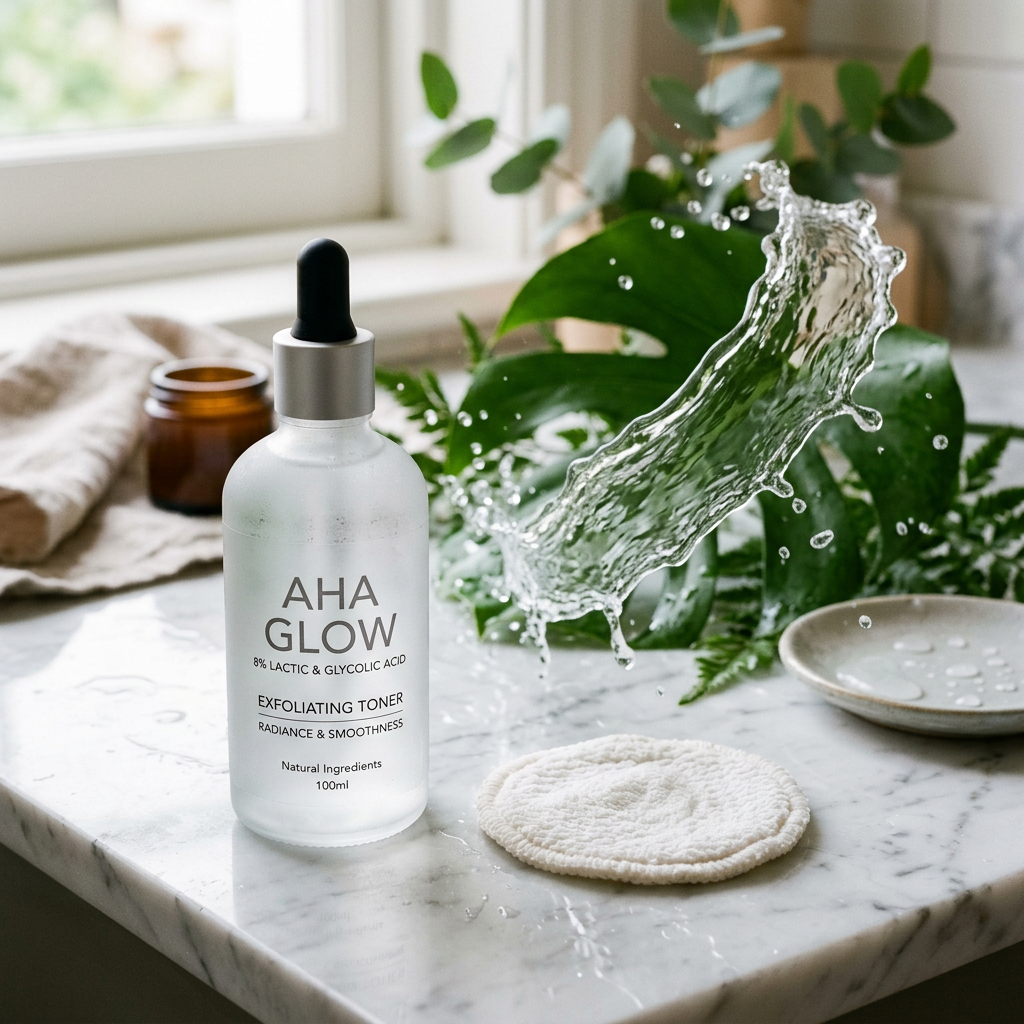
Few steps in a skincare routine offer the instant gratification of exfoliation. Done correctly, it sweeps away dull, dead skin cells sitting on the surface, revealing a bright, glass-like complexion underneath. It clears the path for your hydrating serums to penetrate deeper and stimulates healthy long-term cell turnover.
However, exfoliation is also the most frequently abused step in modern skincare. Striking the balance between sloughing away dead cells and preserving your vital moisture barrier requires understanding your skin’s underlying biology. Overdo it, and you run directly into a raw, inflamed barrier marked by localized redness, stinging, and breakouts.
If you are still scrubbing your face raw with aggressive walnut powders or wiping down your pores with harsh daily peeling pads, it is time to realign your routine with your skin’s biological blueprint. In this comprehensive guide, we break down the clinical science of exfoliation, compare physical versus chemical mechanisms, and show you exactly how to safely reveal your best skin.
1. The Biology of Glow: Why Your Face Needs Exfoliation
Your skin is constantly regenerating through a natural biological cycle known as desquamation. New skin cells are born in the deepest layers of the epidermis and gradually migrate upward to the surface. By the time they reach the top layer (the stratum corneum), these cells have hardened into flat, dead structures designed to protect your body from environmental stressors.
In a healthy skin ecosystem, your body naturally sheds these dead cells roughly every 28 days to make room for fresh ones. However, as we age—or when you consider how environmental damage degrades the skin barrier—this natural shedding process slows down significantly.
Instead of falling away naturally:
- Dead cells pile up irregularly on the surface like overlapping roof shingles.
- Light scatters off this rough texture rather than reflecting, creating a dull, lackluster appearance.
- Trapped debris mixes with natural sebum, creating plugs that clog pores and lead directly to blackheads and acne.
Controlled exfoliation steps in to mimic your skin’s youthful shedding pace, clearing away the structural traffic jam so fresh, radiant cells can surface.
Key Takeaway: Exfoliation isn’t about scrubbing skin raw; it’s about supporting your skin’s natural 28-day cellular turnover cycle.
2. The Great Debate: Physical vs. Chemical Exfoliation
Exfoliants fall into one of two primary categories based on how they break up surface dead cells: physical or chemical. Understanding the structural difference between them determines whether your skin thrives or tears.

Physical Exfoliation (The Manual Approach)
Physical exfoliation relies on friction to manually rub dead cells off the surface. This includes face scrubs containing ground shells, sugar crystals, or seed particles, as well as mechanical devices like textured brushes and rough washcloths.
While physical scrubs give an immediate smooth feeling, they carry a significant clinical drawback: micro-tears. Jagged, irregular particles create microscopic scratches across your fragile lipid barrier, triggering low-grade chronic inflammation and breaking down structural collagen networks over time. If you prefer a physical cleanse, stick strictly to gentle non-comedogenic face cleansers paired with your bare fingertips.
Chemical Exfoliation (The Molecular Approach)
Instead of scrubbing the surface, chemical exfoliation utilizes mild liquid acids or natural fruit enzymes to dissolve the microscopic “glue” (desmosomes) that anchors dead cells to healthy skin tissue.
By breaking these bonds on a molecular level, dead cells roll away effortlessly when rinsed or left to soak in. Chemical exfoliation provides a far more uniform, predictable, and gentle treatment than manual scrubbing, making it the preferred method of modern dermatologists.
3. Decoding Chemical Acids: AHA vs. BHA vs. PHA
If you choose the chemical route, selecting the right class of acid for your specific skin architecture is critical. The three main categories behave entirely differently once they make contact with your skin matrix.

| Acid Category | Mechanism & Solubility | Target Skin Concerns | Ideal Frequency |
|---|---|---|---|
| AHAs (Alpha Hydroxy Acids) (e.g., Glycolic, Lactic Acid) |
Water-soluble. Works on the surface layer to dissolve dead cells and boost surface hydration. | Surface dullness, rough texture, hyperpigmentation, fine lines. | 1–2 times / week |
| BHAs (Beta Hydroxy Acids) (e.g., Salicylic Acid) |
Oil-soluble. Penetrates deep inside pore linings to dissolve trapped oil and dead skin plugs. | Acne-prone skin, blackheads, congested T-zones, enlarged pores. | 2–3 times / week |
| PHAs (Polyhydroxy Acids) (e.g., Gluconolactone) |
Water-soluble (Large Molecule). Gently exfoliates the outer surface layer without triggering deep stinging. | Hyper-sensitive skin, rosacea-prone profiles, dry reactive skin. | 1–2 times / week |
Recommended Exfoliant Options
4. Active Ingredients: What to Mix and What to Avoid
When incorporating chemical exfoliants into your daily routine, you must pay close attention to ingredient interactions. Combining certain active ingredients can cause immediate chemical burns or compromise your skin barrier.
| Active Ingredient | Safe to Mix with Acids? | Clinical Guidance |
|---|---|---|
| Retinol / Retinoids | ❌ No | Do not layer together. Alternate on different nights using Skin Cycling. |
| Vitamin C (L-Ascorbic) | ❌ No | Using both simultaneously causes severe irritation. Use Vitamin C in the morning and acids at night. |
| Niacinamide | ✅ Yes | Excellent pairing. Niacinamide soothes redness and supports barrier lipids after acid use. |
| Hyaluronic Acid & Squalane | ✅ Yes | Highly recommended. Replenishes surface hydration immediately after exfoliation. |
| Ceramides | ✅ Yes | Essential pairing. Rebuilds the protective skin barrier after dead cells are cleared. |
5. The Skin Cycling Method: Where Exfoliation Fits
If you use high-performance ingredients like retinol or tretinoin (see our beginner’s guide to starter retinoids), you cannot exfoliate haphazardly. Mixing acids and retinoids on the same evening is a shortcut to barrier damage. To keep your skin safe, dermatologists recommend a structured 4-night schedule known as Skin Cycling.
This evening protocol spreads out active treatments to maximize results while giving your lipid barrier ample time to rebuild:
- Night 1: Exfoliation Night. Apply your chosen chemical acid (AHA or BHA) to clean, dry skin to sweep away surface dead cells. Follow with a soothing moisturizer.
- Night 2: Retinoid Night. Now that dead cell buildup is cleared, your retinoid can penetrate efficiently to stimulate collagen turnover.
- Nights 3 & 4: Recovery Nights. Put all active ingredients away. Focus exclusively on barrier repair using ceramide-rich creams to seal in lipids and lock in hydration.
The Golden Rule of Chemical Acids: Remember that Salicylic Acid is simply the scientific name for Beta Hydroxy Acid (BHA). If a product label says “BHA Pore Cleanser” or “Salicylic Acid Liquid,” they contain the exact same molecule. Avoid layering them together to prevent over-stripping your skin.
6. The Safe Exfoliation Protocol: A Step-by-Step Guide
To experience the benefits of exfoliating without triggering irritation, practice a controlled, minimalist protocol. Think of chemical exfoliation as a targeted treatment rather than a casual daily wash.
[ Step 1: Cleanse ] → [ Step 2: Dry Thoroughly ] → [ Step 3: Apply Acid ] → [ Step 4: Wait 2 Mins ] → [ Step 5: Seal Barrier ]
Step 1: Cleanse Gently
Start with a clean canvas. Wash your face using a mild, sulfate-free cleanser to remove surface dirt, excess oil, and sunscreen. Avoid harsh scrub brushes or foaming cleansers during this step.
Step 2: Pat Completely Dry (Critical Step)
Water accelerates acid penetration. Applying chemical exfoliants to damp skin causes rapid, uneven absorption that often leads to burning and stinging. Always pat your skin 100% dry with a soft towel before applying your acid.
Step 3: Apply the Exfoliant
Dispense a few drops of liquid exfoliant onto a cotton pad or directly into clean hands. Gently press or sweep the formula over your face and neck.
- Do: Focus on areas prone to congestion, such as your forehead, nose, and chin.
- Don’t: Scrub aggressively or apply near the fragile eye area and lips.
Step 4: Honor the Wait Window (2–3 Minutes)
Allow the acid to sit undisturbed on your skin for 2 to 3 minutes. This gives the formula time to break down surface cell bonds at its active pH level before you layer other products on top.
Step 5: Seal the Barrier Matrix
Never leave freshly exfoliated skin bare. Immediately follow up with a rich moisturizer packed with ceramides or hyaluronic acid to lock in moisture and reinforce fresh skin cells.
7. How to Fix Over-Exfoliated Skin
If you have used acids too frequently or combined harsh products, your skin barrier may become compromised. Recognizing the signs early prevents long-term damage.
Signs You Have Over-Exfoliated:
- A shiny, “plastic-like” skin appearance without natural oiliness.
- Stinging or burning when applying plain water or gentle moisturizer.
- Localized redness, flaking, or sudden, itchy breakouts.
The 14-Day Barrier Repair Protocol:
- Stop All Actives Immediately: Pause all AHAs, BHAs, physical scrubs, Vitamin C, and retinoids.
- Simplify Your Routine: Stick strictly to a non-foaming cleanser, a ceramide recovery cream, and a mineral (zinc oxide) sunscreen.
- Reintroduce Slowly: Wait at least 14 days until all stinging and redness completely subside. Reintroduce your exfoliant just once a week to assess tolerance.
8. Frequently Asked Questions (FAQs)
How many times a week should I exfoliate my face?
For the vast majority of skin profiles, exfoliating 1 to 2 times a week is ideal. Even if your skin feels resilient, dead cells do not accumulate fast enough to warrant daily stripping. Over-exfoliating breaks down your protective lipid barrier, leading to raw sensitivity and increased breakouts.
Why is my skin breaking out more after I started exfoliating?
If you are using an oil-soluble BHA (Salicylic Acid), your skin may be experiencing a temporary phase called purging. Because BHAs speed up cell turnover, they force hidden, deep-seated clogs to the surface all at once. This phase typically clears up within 2 to 4 weeks. However, if your skin breaks out in red, itchy patches where you don’t normally get acne, it is a sign of barrier damage rather than purging, and you should stop using the product immediately.
Do I need to change my sun protection habits after exfoliating?
Yes, this is non-negotiable. Chemical acids (especially AHAs like glycolic acid) remove the top layer of dead cells that provide a small amount of physical defense against UV rays. This leaves fresh, new cells vulnerable to sun damage. Always apply broad-spectrum mineral or chemical sunscreens with an SPF of 30 or higher every single morning.
Disclaimer: This article is for informational purposes only and does not constitute medical advice. Consult a board-certified dermatologist for personalized skincare recommendations.
Leave a Reply