

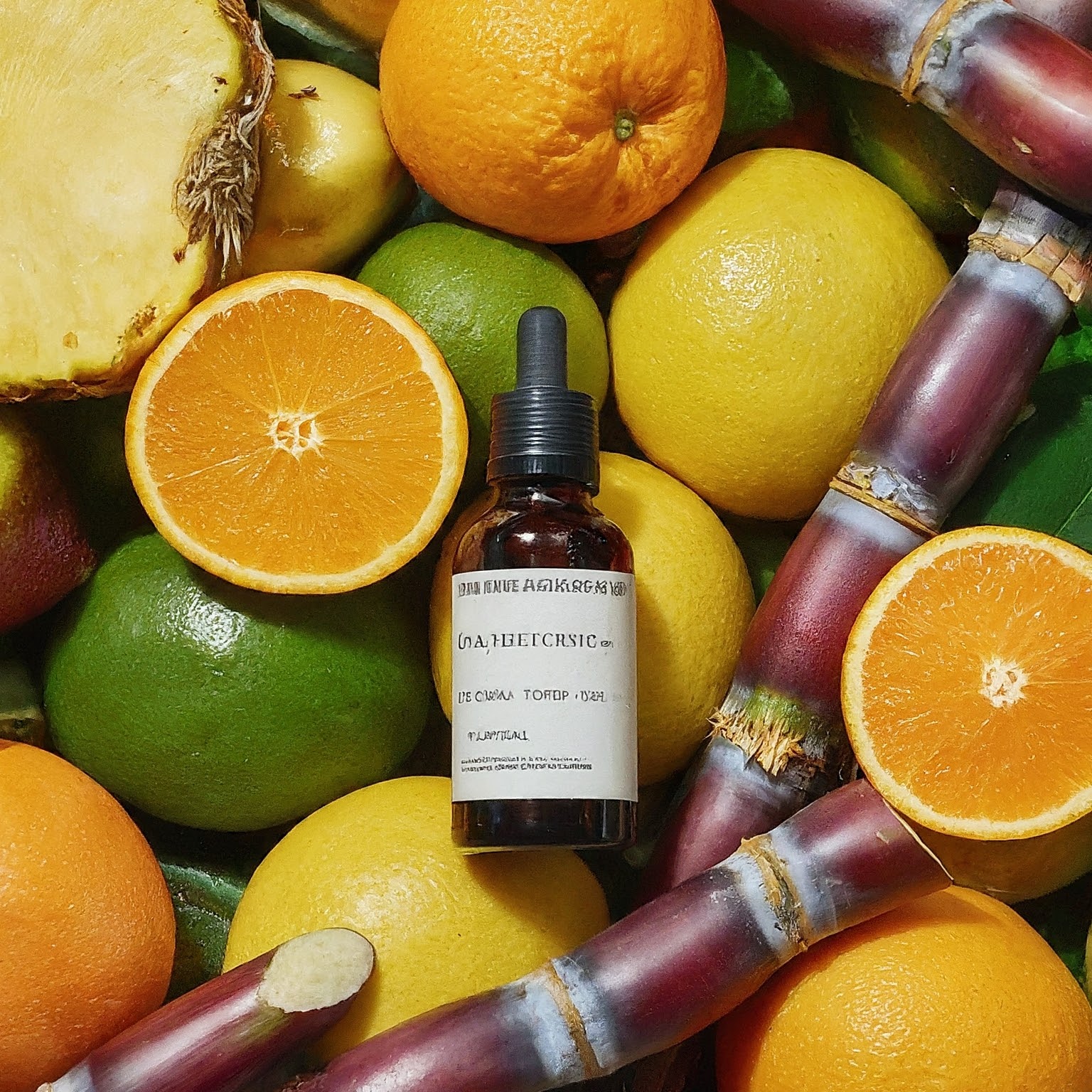
When it comes to chemical exfoliation, few ingredients boast the clinical backing and transformative reputation of Glycolic Acid. As the undisputed gold standard of Alpha Hydroxy Acids (AHAs), this powerhouse ingredient has evolved from a dermatologist-exclusive peeling agent into a cornerstone of modern, high-performance home skincare routines.
Whether you are looking to reverse severe photoaging, dissolve persistent hyperpigmentation, or clear dull skin, Glycolic Acid offers profound cellular benefits. However, because of its intense potency and highly rapid skin penetration, utilizing it effectively requires a firm grasp of its scientific mechanisms. By understanding how this molecule interacts with your epidermal layers, you can harvest maximum structural radiance while completely bypassing the pitfalls of moisture barrier disruption.
1. Molecular Mechanics: Why Glycolic Acid Dominates AHAs
To understand why Glycolic Acid is uniquely effective compared to sister acids like Lactic, Mandelic, or Citric, we must examine its physical structure at a molecular scale.

Molecular Weight Dynamics: The streamlined structure of Glycolic Acid (C₂H₄O₃) features the smallest molecular chain of any AHA, granting it unmatched depth of skin penetration.
The Smallest Molecular Weight: Glycolic Acid possesses the smallest molecular size of any Alpha Hydroxy Acid. With a molecular structure comprising just two carbon atoms, it easily slips past the hydrophobic lipid barriers of the outer skin layer. While larger molecules like Mandelic Acid slowly hover on the surface, Glycolic Acid dives deep into the microscopic gaps between skin cells within seconds of application.
The Dissolution of Desmosomes: Once inside the stratum corneum, Glycolic Acid performs its primary exfoliation mechanic: it lowers the localized pH to dissolve desmosomes. Desmosomes are tough, protein-based intercellular “cellular glue” that tightly bind dead, dull skin cells together. By breaking these bonds, Glycolic Acid triggers a uniform desquamation (shedding) process, pushing thousands of dead cells to sweep off your face simultaneously.
2. At-A-Glance: The Hydroxy Acid Selector Matrix
For perfect search intent alignment and to capture comparison rich snippets, reference this structural matrix to determine exactly which chemical exfoliant aligns with specific tissue vulnerabilities:
| Acid Class | Molecular Size | Solubility & Depth | Primary Target Concerns |
|---|---|---|---|
| Glycolic Acid (AHA) | Ultra-Small (76 Daltons) | Water-soluble; Deep epidermal penetration | Fine lines, rough skin texture, deep hyperpigmentation |
| Lactic Acid (AHA) | Medium (90 Daltons) | Water-soluble; Surface humectant properties | Mild dehydration, early texture issues, sensitive skin types |
| Salicylic Acid (BHA) | Large (138 Daltons) | Oil-soluble; Deep lipophilic pore penetration | Acne vulgaris, blackheads, excessive sebum flow |
| Gluconolactone (PHA) | Massive (178 Daltons) | Water-soluble; Restricted to topmost skin cells | Highly reactive complexions, rosacea, severe barrier compromise |
3. The 3 Primary Clinical Benefits of Glycolic Acid
Because of its deep-diving penetration mechanics, the cellular benefits of Glycolic Acid extend far beyond mere surface smoothing.
Accelerated Cellular Turnover via TRPV1 Channels: By forcefully peeling away old surface cells, Glycolic Acid triggers a deeper physiological response. It activates the acid-sensitive TRPV1 ion channels located on basal keratinocytes. This specific molecular signaling pathway prompts a localized release of cellular ATP, which commands your skin to accelerate its natural birth cycle. Fresh, well-structured keratinocytes are rushed to the surface, noticeably thickening your epidermis and creating a refined skin texture.
The Melanin Dispersal Pathway (Brightening): Hyperpigmentation, dark sun spots, and melasma are caused by clusters of excess melanin pigment trapped inside old epidermal cells. Glycolic Acid targets these clusters by rapidly breaking up the surrounding compromised cell sheets. Clinical trials show that a 5% concentration can lighten epidermal-type melasma patches by an average of 30% within 12 weeks. However, it remains ineffective for deep dermal-type melasma, which resides beneath the acid’s penetration limits.
Collagen Synthesis Upregulation (Firmness): When used consistently at clinical potencies over 8%, Glycolic Acid passes completely through the epidermis and interacts with the dermis underneath. It stimulates fibroblast cells, encouraging them to upregulate type I collagen gene expression and produce natural Hyaluronic Acid molecules. Over months of use, this deep structural remodeling noticeably increases skin elasticity and firms early sagging tissue.
4. Formulation Variables: Free Acid Value, pH, and Percentage
Many consumers buy Glycolic Acid products based purely on the percentage listed on the bottle. However, cosmetic chemists know that percentage is only half the story; the real power of an acid is dictated by its **pH scale** and **Free Acid Value**.
The Crucial pH Threshold: To pass through your cellular matrix effectively, a Glycolic Acid product must maintain an acidic environment. The optimal pKa value of Glycolic Acid is **3.8**. If a brand formulates a 10% Glycolic Acid serum but raises the product’s pH up to 5.0 to minimize stinging, the acid molecule becomes neutralized. It turns into a salt form that can no longer cross the outer barrier to exfoliate structural desmosomes.
Calculating the Free Acid Value: The Free Acid Value represents the true percentage of bio-available, active acid working on your cells. Look for dermatological formulas that explicitly balance a high concentration (between 5% and 12%) with a tightly controlled pH window ranging from **3.0 to 4.0**. Anything below a pH of 3.0 should be restricted exclusively to clinical in-office professional peels to mitigate acute chemical burns.
5. Layering Protocols: How to Safely Integrate Glycolic Acid
To capture maximum benefits without thinning your skin or inducing defensive hyperpigmentation, you must strictly follow modern skincare layering laws.
• Nighttime Application Only: Because Glycolic Acid sheds your protective outer layer of dead skin cells, it leaves your fresh underlying tissue completely vulnerable to UV radiation. This elevates your photo-sensitivity index significantly. Always apply Glycolic Acid formulas in your evening PM routine, and back it up with a broad-spectrum SPF 30+ sunscreen the following morning without exception.
• Avoid the Direct Actives Collision: Never apply Glycolic Acid in the exact same routine session as pure Retinoids, Tretinoin, Benzoyl Peroxide, or high-dose L-Ascorbic Acid. Layering these highly active molecules simultaneously creates an overwhelming chemical burden that can shatter your intercellular lipid mortar, resulting in contact dermatitis, raw patches, and severe breakouts.
• The Clean-Dry Application Law: Always apply your Glycolic toner or serum onto completely dry, cleansed skin. Damp skin contains wide open hydration channels that can accelerate the already fast penetration of Glycolic Acid to a dangerous rate, causing instant chemical hot spots and localized inflammation.
6. Beyond the Face: Treating Keratosis Pilaris and Body Hyperpigmentation
While facial applications receive the most mainstream attention, the structural properties of Glycolic Acid make it uniquely suited for treating stubborn skin conditions below the neck.
The Flattening of Keratosis Pilaris (KP): Keratosis Pilaris, commonly referred to as “strawberry skin” or rough arm bumps, is caused by a genetic overproduction of keratin that forms a hard plug over hair follicles. While manual scrubs simply irritate the surrounding tissue, leave-on Glycolic Acid body lotions smoothly dissolve the core of the keratin plug itself, flattening the hard bumps and restoring a uniform dermal profile within weeks.
Underarm Cleansing and Odor Control: A growing clinical trend involves using low-percentage Glycolic Acid toners on the underarm area. Axillary body odor is produced when native skin bacteria break down the components of your sweat. By lowering the localized underarm environment to an acidic pH, Glycolic Acid creates an inhospitable ecosystem for these odor-causing microbes, acting as a highly efficient structural deodorant while simultaneously clearing friction-induced hyperpigmentation.
7. The Glycolic Acid “Purge”: Timeline and Structural Diagnostics
Because Glycolic Acid accelerates cellular turnover so efficiently, it rapidly pushes hidden debris up to the skin’s surface. This phenomenon is known as skin purging, and understanding how to navigate it is crucial for routine success.
The Acceleration Timeline: Microcomedones—microscopic blockages hidden deep within your pores—normally take up to 8 weeks to mature into visible surface acne. When you apply Glycolic Acid, this timeline is compressed down into a matter of days. A true purging cycle typically manifests during the first **2 to 4 weeks** of use and clears cleanly without leaving structural scarring.
Purging vs. Product Irritation: It is vital to accurately diagnose whether your skin is purging or reacting defensively to a damaged barrier. Review this quick diagnostic metric to determine your tissue status:
- A Skin Purge: Occurs *only* in areas where you naturally experience frequent congestion (like your T-zone). The blemishes disappear quickly and are not accompanied by raw tissue.
- A Damaged Barrier Breakout: Occurs in areas where you never usually break out (like the cheeks or jawline). The skin feels tight, looks visibly shiny or flaky, and stings intensely even when applying gentle hydration creams. If these symptoms occur, halt your acid application immediately.
8. FAQs: Maximizing Your AHA Exfoliation Safely
Q: Does Glycolic Acid provide real clinical clear-skin results for acne?
A: Yes, clinical data demonstrates definitive clearance numbers. Data published in the Journal of Cutaneous and Aesthetic Surgery shows that serial peeling regimens utilizing glycolic configurations result in an average **40% reduction in active acne lesions within 10 weeks**, and up to a **70% total clearing inside of 12 weeks** due to rapid follicular normalization and the clearing of impacted follicular pore channels.Q: Can I use Glycolic Acid every single day?
A: Highly discouraged for most skin types. Unless you are utilizing an ultra-diluted daily micro-dose formula (under 3%), using clinical Glycolic Acid every single day will outpace your skin’s natural regeneration rate. This strips away essential healthy lipids, leading to a thin, over-exfoliated texture. For optimal structural outcomes, restrict your usage to **2 to 3 nights per week** maximum.Q: Why does Glycolic Acid sting slightly upon application?
A: It is a normal reaction to a low pH environment. Because the formula must hover around a pH of 3.5 to function, it triggers the skin’s sensory nerve receptors located just beneath the surface. A mild, transient tingling sensation that dissipates within 60 seconds is perfectly safe. However, if the stinging turns into an intense, throbbing burning sensation accompanied by stark redness, rinse the formula off with cool water immediately.Q: Is Glycolic Acid safe for deep, rich skin tones?
A: Safe only when used with caution. Richer complexions (Fitzpatrick Scale types IV–VI) possess highly sensitive pigment-producing cells called melanocytes. If Glycolic Acid penetrates too quickly and induces deep chemical irritation, it can trigger a defensive inflammatory response known as **Post-Inflammatory Hyperpigmentation (PIH)**. Those with deep skin tones should start with low percentages (5%) or opt for larger, gentler molecules like Lactic or Mandelic Acid first.
Conclusion: Engineering a Luminous Complexion
Glycolic Acid remains one of the most reliable cellular rejuvenators available in cosmetic science. By understanding its physical characteristics—its tiny molecular weight, its ability to dissolve stubborn desmosomal cellular glue, and its reliance on a low formulation pH—you can deploy it safely to build an incredibly effective routine. Focus on low-frequency consistency rather than aggressive high percentages, respect its dynamic daytime sun warnings, and always cushion its deep exfoliation effects by following up with a nourishing, lipid-replenishing ceramide moisturizer.
Ready to integrate Glycolic Acid into an actionable step-by-step regimen? Ensure you are layering your active chemical ingredients in the absolute correct order by diving into our comprehensive companion playbook: The Ultimate Anti-Aging Skincare Routine: Step-by-Step Morning & Evening Protocol.
Leave a Reply