

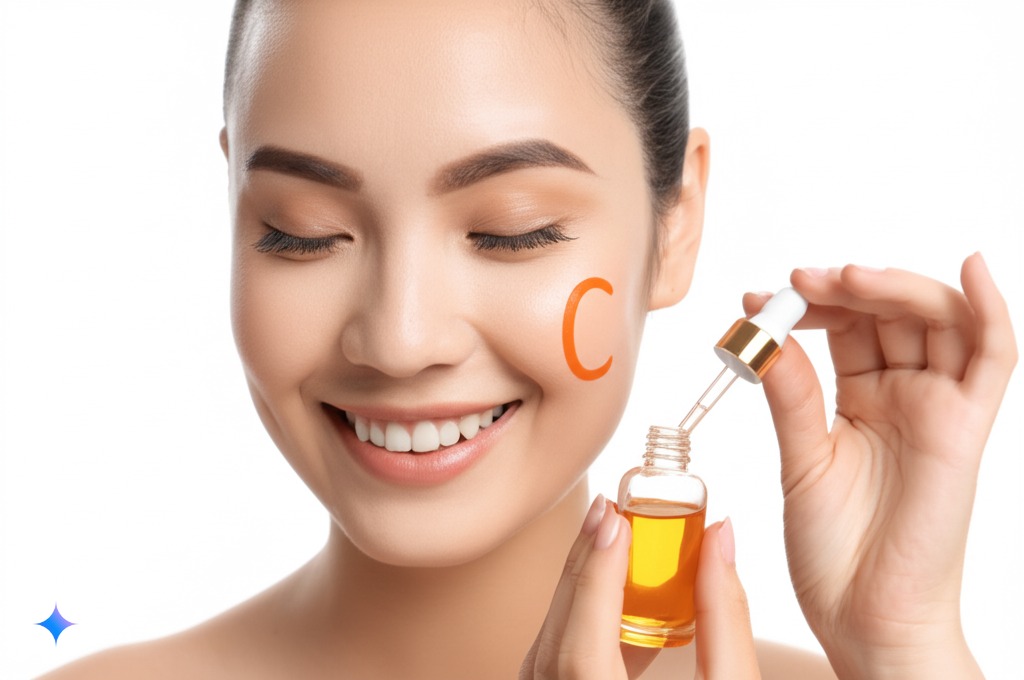
Within the modern dermatological landscape, few active ingredients boast the clinical backing and broad therapeutic utility of topical Vitamin C. Renowned as a gold-standard antioxidant, it is a foundational pillar for any evidence-based skincare routine designed to combat environmental aging and hyperpigmentation.
However, the mass market is saturated with volatile, poorly formulated products that render this potent molecule completely inert before it even touches your skin. Without understanding the strict biochemical laws governing Vitamin C stability, absorption rates, and pH parameters, you risk applying an oxidized solution that can cause skin inflammation rather than providing protection.
This comprehensive vitamin C serum guide breaks down the complex chemistry of active topical antioxidants. It provides a clear, science-backed manual to help you identify truly stable formulations, choose the right derivatives for your specific skin type, and safely layer actives to protect your epidermal barrier.
In This Guide
1. Biological Mechanisms: What Vitamin C Does for the Skin
2. Derivative Chemistry: Pure L-Ascorbic Acid vs. Stable Derivatives
3. The Stability Matrix: pH, Packaging, and Antioxidant Synergy
4. Daily Routine Integration: Tactical Layering Guidelines
5. Spotting Decomposition: The Oxidized Serum Threat
6. Clinical Troubleshooting: Resolving Common Product Issues
1. Biological Mechanisms: What Vitamin C Does for the Skin
Topical Vitamin C does not simply coat the surface of your skin; it initiates complex biochemical actions within both the epidermis and the deeper dermis. It functions through three primary biological pathways:
Free Radical Neutralization
Every single day, your skin is exposed to environmental stressors like ultraviolet (UV) radiation, ozone pollution, and airborne toxins. These elements generate highly unstable molecules called free radicals, which steal electrons from healthy skin structures, breaking down your cellular DNA and rapidly degrading collagen. Vitamin C acts as a sacrificial electron donor. It safely neutralizes these destructive molecules before they can cause deep, structural damage to your skin barrier.
Collagen Synthesis Co-Factor
Without adequate levels of Vitamin C, your body cannot physically produce collagen. It serves as an essential co-factor for the enzymes lysyl hydroxylase and prolyl hydroxylase, which stabilize and cross-link the structural fibers that keep your skin firm, bouncy, and resilient over time.
Melanogenesis Inhibition
To fade dark spots and uneven hyperpigmentation, a vitamin C serum guide must highlight its ability to regulate pigment production. Vitamin C interacts with copper ions at the active site of the enzyme tyrosinase. By inhibiting this enzyme, it prevents the overproduction of melanin, helping to clear post-inflammatory hyperpigmentation (acne marks) and sun spots without bleaching your surrounding, healthy skin cells.
2. Derivative Chemistry: Pure L-Ascorbic Acid vs. Stable Derivatives
When selecting an antioxidant formula, the specific form of the molecule used will completely dictate your results and overall skin comfort. Cleansing choices matter, but choosing active serums requires even more chemical scrutiny.
L-Ascorbic Acid (L-AA): This is the biologically active form of Vitamin C. It requires no cellular conversion steps to work, making it incredibly potent and effective. However, it is highly unstable in water-based solutions and requires a very low, acidic pH to cross the skin barrier, which can easily irritate sensitive or reactive skin types.
Clinical Derivatives: To solve these stability issues, cosmetic chemistry has developed modified forms of Vitamin C. These derivatives remain stable at neutral pH levels, making them exceptionally gentle for sensitive skin. Once absorbed, your skin cells slowly convert them into pure L-Ascorbic Acid, delivering a controlled release of antioxidants deep within the tissue.
| Vitamin C Variant | Optimal Delivery pH | Dermal Conversion | Best Skin Match |
|---|---|---|---|
| Pure L-Ascorbic Acid | Highly Acidic (2.5 – 3.5) | Directly Active | Resilient, Normal, and Oily Profiles |
| Sodium Ascorbyl Phosphate (SAP) | Neutral (~6.0 – 6.5) | Requires Cleavage Step | Acne-Prone & Oily Skin (Antimicrobial) |
| Tetrahexyldecyl Ascorbate (THD) | Neutral-Lipophilic (~5.5–6.0) | Deep Lipophilic Cleavage | Severely Dehydrated & Sensitive Profiles |
The Concentration Scale: Finding Your Threshold
More is not always better when dealing with active L-Ascorbic Acid. Clinical studies demonstrate that topical Vitamin C absorption in the skin peaks exactly at a 20% concentration. Exceeding this threshold does not increase cellular benefits; instead, it dramatically heightens the risk of chemical irritation, redness, and barrier disruption.
- 5% to 10% (Beginner/Reactive Profiles): Ideal for individuals with a compromised skin barrier, rosacea, or those completely new to highly acidic topical treatments.
- 15% (The Clinical Sweet Spot): The gold-standard concentration for maximizing collagen synthesis and evening out stubborn hyperpigmentation while minimizing daily tissue irritation.
- 20% (Maximum Threshold): Reserved exclusively for resilient, oily, or heavily sun-damaged skin types that have successfully built up a tolerance over time.
3. The Stability Matrix: pH, Packaging, and Antioxidant Synergy
When dealing with pure L-Ascorbic Acid, a stable formulation requires a very specific chemical environment to prevent rapid degradation:
- The Acidic Threshold: To successfully penetrate the lipophilic skin barrier, pure L-Ascorbic Acid must be formulated at a pH below 3.5. At this highly acidic level, the molecule drops its electrical charge, allowing it to easily pass through your skin cells and absorb deeply into the tissue.
- The Golden Synergy: Look for formulas that combine Vitamin C with Vitamin E (Tocopherol) and Ferulic Acid. Ferulic acid is a potent plant-based antioxidant that actually doubles the photoprotective benefits of the formula while anchoring and stabilizing the volatile Vitamin C molecule.
- Minimalist Protective Packaging: Because oxygen and light rapidly destroy active antioxidants, completely avoid clear glass bottles or open screw-top jars. Truly effective formulas use dark amber glass, opaque bottles, or airtight pump containers to keep your serum potent and fresh.
🧪 Formulation Pick: Stable Minimalist Antioxidant Complex
Featuring an opaque, airtight glass shield to protect and stabilize active molecules against light-driven oxidation.
[Insert Affiliate Link / Product Showcase Block for Minimalist Vitamin C Serum Here]
4. Daily Routine Integration: Tactical Layering Guidelines
Biochemical Compatibility: Synergies and Conflicts
To keep your skin barrier intact, your active serums must work in harmony. Pair your formulations using these strict scientific rules:
✓ Perfect Pairings (Synergy): Combine Vitamin C with Hyaluronic Acid or Glycerin to immediately soothe the skin and pull deep hydration into the cells, offseting the drying nature of acidic formulas.
✗ Critical Conflicts (Incompatibilities): Avoid applying pure L-Ascorbic Acid in the same step as Copper Peptides or AHA/BHA chemical exfoliants. Copper peptides can oxidize the Vitamin C molecule, rendering it completely useless, while stacking multiple acids will rapidly strip your skin’s protective lipid matrix.
💡 Related Clinical Deep-Dives from Our Labs:
- Before applying active treatment steps, ensure your canvas is perfectly prepped by reviewing our step-by-step tutorial on how to wash your face properly.
- Looking to establish a balanced chemical strategy? Read our guide on optimizing your comprehensive facial cleansing routine mechanics.
To unlock the full potential of your products without causing skin irritation, follow this precise sequence for your daytime routine:
Step 1: Cleanse — Wash away morning oils using a gentle, low-pH syndet cleanser. Pat the skin completely dry.
Step 2: Apply Vitamin C — Drop 3 to 4 drops of your serum onto dry skin. Smooth it evenly across your face, neck, and chest. Allow the formula to fully absorb for 60 seconds before moving to the next step.
Step 3: Moisturize — Layer on a lightweight hydrator containing ceramides, niacinamide, or glycerin to seal in moisture and preserve your skin barrier.
Step 4: Protect (Sunscreen) — Apply a broad-spectrum SPF 30+ sunscreen. Vitamin C and sunscreen work in perfect harmony: your sunscreen blocks harmful UV rays, while your Vitamin C serum neutralizes any free radicals that manage to slip through.
5. Spotting Decomposition: The Oxidized Serum Threat
Because of its molecular vulnerability, you must consistently monitor the appearance of your serum. When L-Ascorbic Acid is exposed to air, light, or warmth, it undergoes oxidation, transforming into dehydroascorbic acid (DHAA). This chemical breakdown completely destroys its beneficial antioxidant properties.
As your serum shifts across this color spectrum, it transitions from a highly beneficial treatment into a pro-oxidant solution. Applying a completely oxidized brown serum can cause mild chemical surface irritation and skin yellowing, entirely reversing the goals of your active routine.
6. Clinical Troubleshooting: Resolving Common Product Issues
Issue A: Darkened Pores or “Orange Blackheads”
If you notice that the pores on your nose or cheeks look darker after a few days of use, your serum isn’t causing new blackheads. Instead, the clear liquid is simply pooling in your pores and oxidizing when it comes into contact with the air, turning a noticeable orange-brown color.
The Fix: Gently massage your skin using your daily face wash routine, and ensure you apply a lightweight moisturizer over your serum to seal the pores and block air exposure.
Issue B: Product Pilling or Flaking
When a serum rolls off your skin in tiny flakes when you apply sunscreen or makeup, it means the product’s large synthetic polymers are sitting on the surface rather than absorbing into the tissue.
The Fix: Apply your serum to completely dry, clean skin, use fewer drops, and wait a full 60 to 90 seconds for the formula to completely dry before layering your next moisturizer or sun shield on top.
7. Antioxidant Longevity: Frequently Asked Questions
Can I layer Vitamin C and Retinol together in the same step?
No, it is highly recommended to separate these two ingredients. Pure Vitamin C thrives in a highly acidic environment (pH 2.5 to 3.5), whereas Retinol requires a more neutral pH (~5.5 to 6.0) to convert into its active form inside the skin. Applying them at the exact same time can disrupt their optimal pH levels, rendering both products less effective and increasing skin irritation. To get the best results, apply your Vitamin C serum during the day for maximum sun protection, and save your Retinol for your evening routine to support nighttime cellular turnover.
Why does my Vitamin C serum leave a slight tingling sensation on my skin?
A mild tingling sensation is completely normal when using pure L-Ascorbic Acid, and it is simply caused by the highly acidic pH required to keep the formula stable. This sensation should fade within a few minutes as your skin naturally rebalances its pH levels. However, if the tingling turns into a persistent burning sensation, causes redness, or breaks out into a rash, it means the acidic formula is too aggressive for your skin barrier. If that occurs, switch to a gentler, neutral-pH derivative like Tetrahexyldecyl Ascorbate (THD) or Sodium Ascorbyl Phosphate (SAP).
What is the best way to extend the shelf life of an unstable serum?
To maximize the potency and longevity of your serum, store the bottle inside a dark drawer, a closed cabinet, or even your refrigerator. Keeping your formula chilled slows down the oxidation process, helping to maintain its strength for months. Always twist the cap tightly right after use to limit oxygen exposure, and never leave the bottle sitting on a bright bathroom counter where direct sunlight and high humidity can rapidly degrade the active ingredients.
8. Conclusion: Science-Backed Radiance
Adding a high-performance active to your skincare routine shouldn’t involve guesswork. By implementing the principles outlined in this vitamin C serum guide—and treating your topical treatments with precise, scientific discipline—you can unlock the true power of cellular antioxidants.
When you select a stable, well-packaged formula with optimal pH levels and support it with a daily application of broad-spectrum sunscreen, you give your skin an unshakeable shield against environmental aging. Be consistent with your application, pay close attention to your product’s structural stability, and enjoy the radiant, healthy, and beautifully balanced complexion that scientific consistency brings.
Leave a Reply