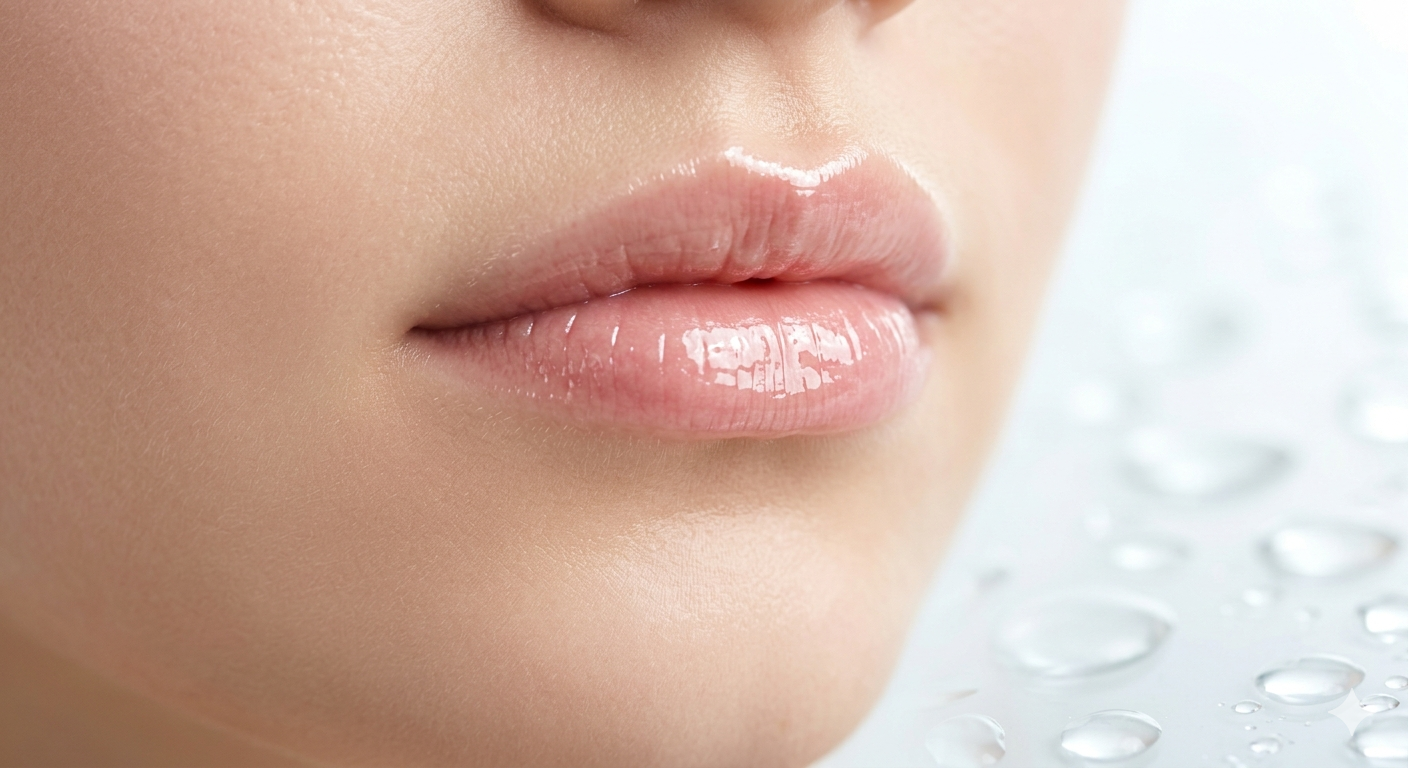
The lips are one of the most expressive and delicate features of the face, yet they are frequently neglected in standard routines. Because the skin on your lips is structurally different from the rest of your face—it is significantly thinner and contains zero sebaceous (oil) glands—it lacks the ability to self-moisturize. This anatomical vulnerability is why lips are the first area to suffer from seasonal changes, dehydration, and the visible signs of a compromised [healthy skin barrier].
Achieving smooth, plump, and healthy lips requires a strategy that moves beyond basic waxy balms. To truly resolve chronic dryness and protect against environmental damage, you must adopt a protocol of deep hydration and structural repair. This guide breaks down the science of lip health, reveals the professional “Lip Basting” method for total transformation, and explains how to prevent and treat darkening of the lip borders for a truly [refined complexion].
1. Lip Biology: Why Your Lips Can’t Hydrate Themselves

To care for your lips effectively, you must first understand their unique anatomy. The lips are technically a “Transition Zone” between the mucous membrane of your mouth and the standard skin on your face. This unique position makes them beautiful, but it also means they lack almost all the natural defense systems found on the rest of your body. While your cheeks and forehead have a complex network of sweat and oil glands to maintain a [healthy skin barrier], your lips are essentially defenseless against the environment.
Zero Lipid Production: Unlike your T-zone, the lips have zero sebaceous (oil) glands. This means they cannot produce the natural sebum needed to create an occlusive seal, leading to constant TEWL (moisture loss) and chronic tightness.
The Melanin Deficiency: Lips contain almost no melanin—the pigment that protects skin cells from UV radiation. This lack of natural “sunscreen” is why the lips are the first area to lose collagen and develop deep “smoker’s lines” from sun exposure.
The Saliva Conflict: Saliva contains digestive enzymes (like amylase) that are designed to break down food. When you lick your lips to soothe dryness, those enzymes stay on the surface and begin to “digest” your fragile skin barrier, worsening the irritation cycle.
2. Resolving Chronic Dryness: The Lip Basting Method

Most people try to fix chapped lips by applying more wax-based balm on top of dry flakes. This is a common mistake that simply “traps” the dryness underneath. To achieve a perfectly smooth surface, you must use Lip Basting—a professional technique that focuses on chemical softening and deep water saturation. This method is the secret to erasing the “sandpaper” texture and achieving a plump, dewy glow.
Action: The acid dissolves the “glue” holding the dry flakes together, making them easy to wipe away without causing redness or physical trauma.
The Water Saturation (Step 2): While your lips are still damp, apply a thick layer of a Hyaluronic Acid serum.
Action: Because lips have no internal oil to hold water, the HA acts like a sponge, pulling moisture deep into the vermilion tissue to instantly plump the skin cells.
The Barrier Seal (Step 3): Immediately after the HA, follow with a moisturizer rich in Ceramides. This acts as the “Mortar” to fix the gaps in your thin barrier.
The Glossy Finish: Finish with a rich occlusive like [Squalane Oil]. This creates the 100% waterproof seal needed to stop the TEWL (moisture loss) while your lips reset.
Frequency for Results: For chronic dryness, perform the full “Lip Basting” method 3 nights in a row. Once your lips are smooth, once a week is sufficient for maintenance. This protocol ensures your lipstick glides on effortlessly and your [refined complexion] stays balanced
3. Fading Dark Marks: How to Treat Lip Hyperpigmentation
Persistent brown spots, “shadows” at the corners of the mouth, or a darkening of the lip borders are all forms of [hyperpigmentation]. Because the skin here is so thin, even minor irritation can trigger your pigment cells to overreact. Achieving a truly [refined complexion] requires addressing these tonal shifts with ingredients that calm the skin while they brighten.
The Natural Regenerator (Rosehip Oil): While facial Retinol is too harsh for the mouth, Rosehip Oil provides a gentle dose of natural Vitamin A. This accelerates skin regeneration, helping to lift and shed the dark spots that make the lips look dull or aged.
The Saliva Warning: Chronic lip licking is a primary cause of darkening. The digestive enzymes in your saliva cause “Licker’s Dermatitis,” a state of constant inflammation that signals your skin to produce more melanin as a defense. Breaking this habit is mandatory for tonal clarity.
4. The SPF Rule: Preventing Premature Lip Aging and Volume Loss
Most people apply sunscreen to their face but completely forget their lips. This is a critical mistake in any anti-aging routine. Because the lips have almost no melanin, they have zero natural defense against UV rays. When sunlight hits your lips, it acts like a “Collagen Eraser,” snipping the elastic fibers that keep your smile looking full and smooth.
The Antioxidant Shield (Vitamin C): To boost your protection, apply a tiny drop of a stable [Vitamin C] serum under your lip balm in the morning. This neutralizes the free radicals that get past your sunscreen, providing an extra layer of structural defense.
The Mandatory Step: A broad-spectrum SPF 30 or higher designed specifically for the lips is a non-negotiable daily requirement. It preserves your collagen and ensures your brightening treatments actually work.
5. Nighttime Repair: The Lip Slugging Protocol for Plump Morning Results

Nighttime is the “Golden Window” for repairing your [healthy skin barrier]. While you sleep, your body enters a state of high repair, but it is also when TEWL (moisture loss) is at its peak. Traditional lip balms often evaporate within an hour, leaving your lips vulnerable for the rest of the night. Lip Slugging is the clinical secret to stopping this leak, using a heavy “Safety Seal” to trap water and repair ingredients into your skin for 8 hours straight.
Step 2: The Mortar (Repair): Apply a small amount of a cream rich in Ceramides. This acts as the “glue” to physically fix the microscopic cracks in your lip barrier.
Step 3: The Seal (Occlusion): Lock everything in with a thick layer of Squalane Oil or a petrolatum-based ointment. This creates a 100% waterproof shield that allows your skin cells to heal undisturbed while you sleep.
The Results: By following this “Hydration Sandwich,” you prevent the dry, shriveled look of morning lips and instead wake up to a surface that is soft, remarkably plump, and ready for your morning routine.
6. FAQs: Pro-Tips for Mastering Lip Health and Volume
Achieving perfectly soft lips often requires moving past common habits and traditional products. Here are the most frequent concerns our readers have about their lip routine:
A: Check for “Cooling” irritants. Many standard balms contain Menthol, Camphor, or Salicylic Acid. While they feel refreshing, these are actually irritants that cause your thin barrier to peel more, creating a “cycle of addiction” to the product.
The Pro-Tip: Switch to a minimalist, Ceramide or Lanolin-based balm that focuses on repair rather than a sensory cooling effect.
A: No, it is too aggressive. Facial Retinol is designed for 16 layers of skin; your lips only have 3–5. Using it on your mouth will lead to severe stinging and chronic redness.
The Alternative: Use Rosehip Oil at night. It provides a natural, gentle form of Vitamin A that helps with skin regeneration and smoothing lines without the burn.
How to Get Plumper Lips Naturally
A: Not necessarily. Most “flatness” is actually dehydration of the internal tissue. By using Hyaluronic Acid under a seal (Lip Slugging), you physically pull water into the skin cells, creating a natural, hydrated “swell.”
The Verdict: Consistent hydration layering can increase your lip volume and smooth out surface lines significantly without injections.
A: Only if you use the wrong oils. Avoid heavy oils like Coconut. Stick to non-comedogenic lipids like [Squalane Oil] or [Jojoba Oil]. Because these mimic your natural oils, they won’t lead to clogged pores or “Perioral Dermatitis” breakouts.
7. Conclusion: Total Lip Care for a Radiant Smile

Effective lip care is a combination of consistent protection and structural repair. Because your lips lack the natural oil glands found on the rest of your face, they are entirely dependent on the strategic protocol you provide. By moving past the “lick-and-dry” cycle and utilizing advanced techniques like Lip Basting and Nightly Slugging, you give this delicate zone the support it needs to stay resilient against time and the elements.
Treat your lips with the same scientific precision you apply to your [refined complexion]. Prioritize Hyaluronic Acid for volume, Ceramides for repair, and daily SPF for long-term preservation. When you master the balance of hydration and occlusion, you unlock a healthy, radiant smile that reflects your total commitment to comprehensive skin health.
Ready to Achieve Soft, Plump Lips?
Find the perfect tools and specialized treatments to complete your zone routine:
👉 [Shop The Best Repairing Lip Masks and Barrier-Safe Hydrators Now!]
👉 [The Skin Barrier: Your Ultimate Guide to Function and Repair]
👉 [The Ultimate Eye Care Guide: Fading Lines and Dark Circles Safely]
Discover more from Beauty Cares Inc
Subscribe to get the latest posts sent to your email.


Leave a Reply