

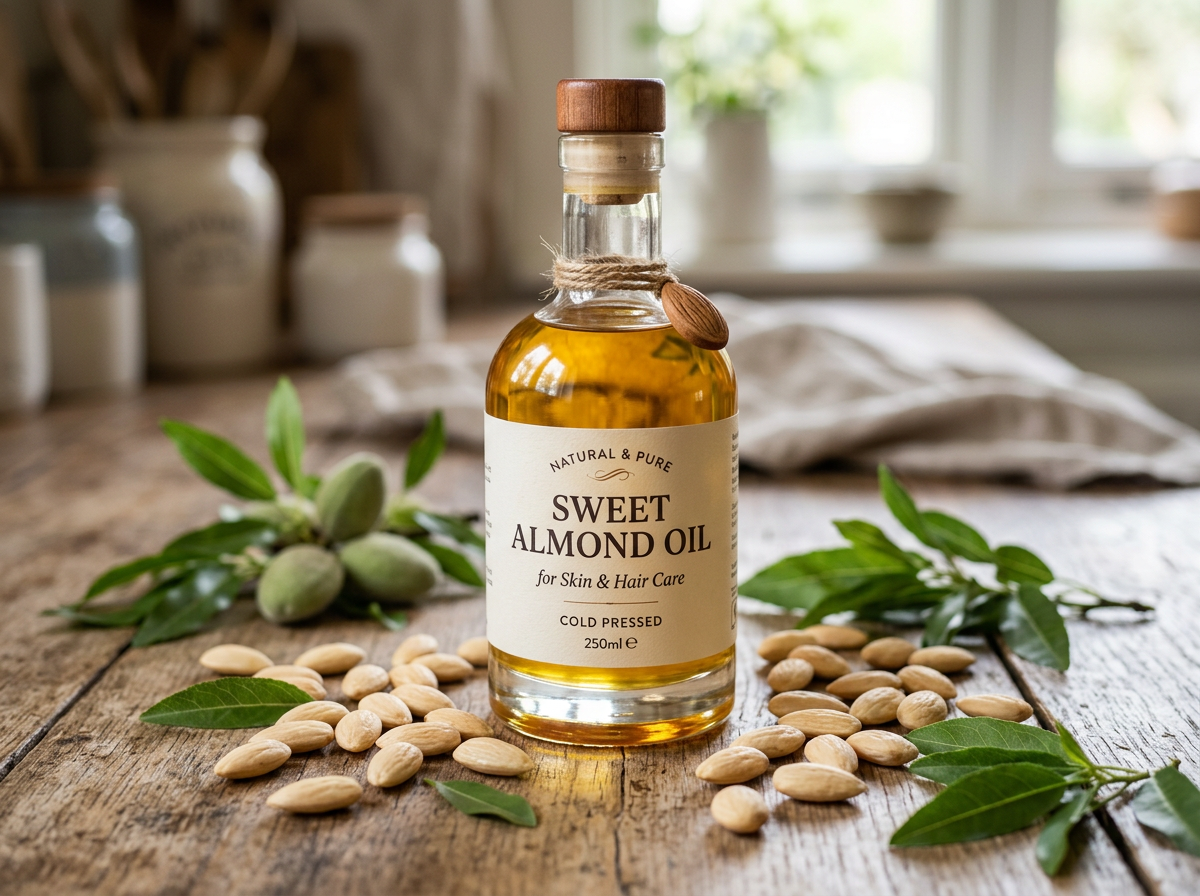
If your skin feels perpetually tight, flaky, or easily irritated after applying active serums, your skin barrier may be crying out for lipid support. Enter sweet almond oil (Prunus dulcis)—a lightweight, vitamin-rich botanical oil clinically valued for its ability to restore suppleness, calm redness, and lock in moisture without a heavy, greasy residue.
Extracted from the kernels of sweet almonds, this nutrient-dense lipid is packed with Vitamin E, essential fatty acids, and phytosterols. Whether used as an everyday facial seal, a buffer for active retinoids, or a soothing treatment for compromised skin, sweet almond oil offers versatile protection for almost every skin routine.
In this guide, you’ll learn exactly how sweet almond oil works, how it compares to popular alternatives like jojoba and rosehip oil, and the precise step-by-step layering methods to combine it with hyaluronic acid, vitamin C, and retinol for maximum results.
Table of Contents
- What Makes Sweet Almond Oil Unique?
- 4 Proven Benefits of Sweet Almond Oil for Skin
- How to Layer Sweet Almond Oil with Skincare Actives
- Sweet Almond Oil vs. Jojoba Oil vs. Rosehip Oil
- Skin Type Compatibility Guide
- Recommended Products & Formulations
- Frequently Asked Questions (FAQ)
- Conclusion: Should You Add Sweet Almond Oil to Your Routine?
What Makes Sweet Almond Oil Unique?
Unlike bitter almond oil (which is volatile and used primarily for fragrance), sweet almond oil is a fixed oil extracted via cold-pressing fresh almond kernels. It acts primarily as an emollient, filling in micro-fissures in the stratum corneum to smooth texture, lock in moisture, and prevent trans-epidermal water loss (TEWL).
Key Takeaway: Sweet almond oil does not directly add water to the skin; rather, it creates a flexible protective shield that traps existing hydration inside.
Chemical Composition Breakdown
- Oleic Acid (Omega-9): ~60–70% — Provides rich nourishment and improves skin permeability.
- Linoleic Acid (Omega-6): ~20–30% — Essential for maintaining cell membrane structure and supporting barrier repair. To explore more about repairing damaged barriers, read our complete guide to skin barrier repair.
- Vitamin E (α-tocopherol): A potent lipid-soluble antioxidant that protects against free radical damage and oxidative stress.
- Phytosterols & Zinc: Help soothe inflammation, calm irritation, and assist in skin recovery.
4 Proven Benefits of Sweet Almond Oil for Skin
1. Deep Moisture Retention & Barrier Repair
When applied over damp skin or a hydrating serum, sweet almond oil reinforces the lipid matrix of the skin barrier. This prevents environmental stressors from penetrating while keeping moisture locked in for hours.
2. Soothes Irritation and Redness
Thanks to its high concentration of linoleic acid and anti-inflammatory phytosterols, sweet almond oil helps soothe symptoms associated with eczema, psoriasis, and general dry-weather reactivity. Check out our soothing ingredients for sensitive skin for more calming options.
3. Antioxidant Defense
Everyday exposure to UV radiation and pollution generates reactive oxygen species (ROS). The natural Vitamin E in cold-pressed sweet almond oil neutralizes these free radicals, helping to prevent premature signs of aging like fine lines and loss of elasticity.
4. Improves Skin Tone and Texture
Regular use helps soften rough patches on body areas prone to dryness (such as elbows, knees, and cuticles) while leaving a non-greasy, satin finish on the face.
How to Layer Sweet Almond Oil with Skincare Actives
Botanical oils should generally be applied after water-based treatments because oil creates a hydrophobic barrier that thicker molecules cannot easily penetrate. Here is how to safely integrate sweet almond oil into your active routines:

1. Hyaluronic Acid + Sweet Almond Oil (Morning or Night)
- Apply your hyaluronic acid serum onto damp skin to pull moisture into the epidermis.
- Follow immediately with a light water-based moisturizer.
- Seal everything in with 2–3 drops of sweet almond oil pressed gently into the face. The oil acts as an occlusive lock, stopping bound water from evaporating.
2. Vitamin C + Sweet Almond Oil (Morning Routine)
- Apply your L-Ascorbic Acid or Vitamin C derivative serum directly to clean, dry skin.
- Allow 1–2 minutes for full absorption.
- Apply moisturizer, then press a small drop of sweet almond oil on top. The natural Vitamin E in sweet almond oil works synergistically with Vitamin C to bolster protection against oxidative damage.
3. Retinol / Retinoids + Sweet Almond Oil (Evening Routine)
- Buffer Method (For Sensitive Skin): Apply moisturizer, apply retinoid, and finish with sweet almond oil as the final step. The oil layer helps reduce retinoid-induced dryness, peeling, and redness. Discover more about minimizing side effects in our retinol buffer guide.
- Standard Method: Apply retinoid serum to completely dry skin, wait 5–10 minutes, follow with moisturizer, and seal with 2 drops of sweet almond oil.
Sweet Almond Oil vs. Jojoba Oil vs. Rosehip Oil
Choosing the right facial oil depends heavily on your specific skin goals and moisture needs:
| Feature | Sweet Almond Oil | Jojoba Oil | Rosehip Seed Oil |
|---|---|---|---|
| Comedogenic Rating | 2 (Low) | 2 (Low) | 1 (Very Low) |
| Primary Fatty Acids | Oleic Acid, Linoleic Acid | Liquid Wax Esters | Linoleic Acid, Alpha-Linolenic Acid |
| Best Skin Type | Dry, Normal, Sensitive | Oily, Combination, Acne-Prone | Aging, Hyperpigmented, Dull |
| Key Benefit | Barrier sealing & soothing | Sebum balancing & hydration | Cell turnover & brightening |
| Texture / Finish | Medium weight, satin finish | Lightweight, skin-identical finish | Dry-oil, rapid absorption |
For a deeper dive into facial oils, check out our comparative article on how to choose the best oil for your skin type.
Skin Type Compatibility Guide
Sweet almond oil registers at a 2 on the Comedogenic Scale (ranging from 0 to 5), making it moderately lightweight and low-risk for clogging pores for most individuals.
- Dry / Dehydrated: Exceptional — Use as a daily occlusive layer over moisturizer.
- Sensitive / Reactive: High — Excellent soothing facial oil or cleansing base.
- Combination: Moderate — Ideal for targeted application on dry areas or cheekbones.
- Oily / Acne-Prone: Caution — Best utilized as step one of double cleansing (rinse thoroughly). If you struggle with clogged pores, read our breakdown of non-comedogenic skincare ingredients.
Recommended Products & Formulations
If you want to add sweet almond oil to your daily routine, consider these top-tier pure oils and formulated products:
1. Pure Cold-Pressed Sweet Almond Oil (100% Unrefined)
Best For: Multipurpose face sealing, body moisturizing, and cuticle care.
Why We Love It: Cold-pressed without high heat or solvents, keeping the natural Vitamin E and phytosterol content fully intact for maximum antioxidant protection.
2. Weleda Skin Food Original Ultra-Rich Cream
Best For: Intensely dry patches, winter weather recovery, and barrier repair.
Why We Love It: Combines sweet almond oil with organic beeswax, pansy extract, and soothing chamomile for a cult-favorite protective moisture shield.
3. L’Occitane Cleansing & Softening Shower Oil
Best For: First step body cleansing without stripping natural lipids.
Why We Love It: Transforms from a rich sweet almond oil texture into a silky milk upon contact with water, leaving body skin deeply hydrated and soft.
Frequently Asked Questions (FAQ)
Can sweet almond oil unclog pores or cause breakouts?
With a comedogenic rating of 2, sweet almond oil is considered low-risk for most people. However, because it is rich in oleic acid, individuals with very severe acne or active fungal acne (malassezia folliculitis) should exercise caution, as heavy lipids can sometimes trigger breakouts in acne-prone skin.
Is sweet almond oil safe to use around the delicate eye area?
Yes, sweet almond oil makes an effective, gentle eye oil. Its Vitamin E and fatty acid content help soften fine lines and keep the thin under-eye skin hydrated. Warm half a drop between your ring fingers and gently pat around the orbital bone—avoid getting it directly in the eyes.
Can I use sweet almond oil every day?
Absolutely. It can be used once or twice daily. For dry or dehydrated skin types, applying it as the last step in your evening routine yields the best results for waking up with soft, plump skin.
How does cold-pressed sweet almond oil differ from refined almond oil?
Cold-pressed oil is extracted without high heat or chemical solvents, keeping the natural Vitamin E, phytosterols, and delicate fatty acid profile intact. Refined versions undergo heating processes that lower these active antioxidant levels. Always look for 100% pure, cold-pressed, unrefined on the label.
Conclusion: Should You Add Sweet Almond Oil to Your Routine?
Sweet almond oil remains one of the most versatile, budget-friendly, and clinically proven natural emollients available. By sealing in hydration, protecting against environmental oxidants with natural Vitamin E, and cushioning potent active ingredients like retinoids, it serves as an indispensable tool for maintaining a healthy skin barrier.
If your skin leans dry, sensitive, or weathered, incorporating a few drops of pure cold-pressed sweet almond oil into your evening routine can yield noticeable improvements in skin softness and resilience within days. Always remember to perform a patch test first, store your oil in a cool dark place, and layer it over your hydrators for maximum benefits.
Discover more from Beauty Cares Inc
Subscribe to get the latest posts sent to your email.
Leave a Reply