

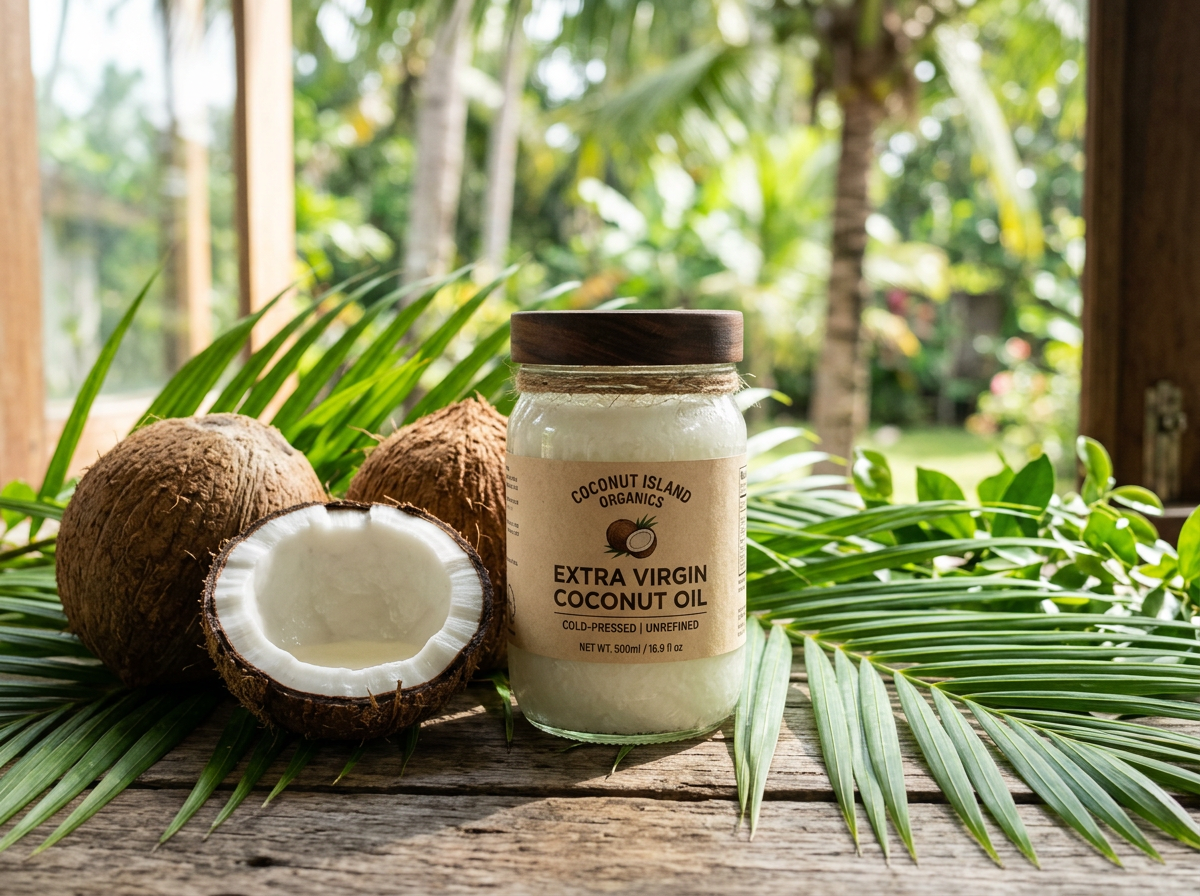
Few natural ingredients polarize cosmetic chemists and clinical dermatologists quite like coconut oil for skin. Mainstream wellness platforms frequently champion it as a flawless, all-natural cure-all capable of replacing everything from your daily facial cream to your makeup remover. Conversely, acne specialists routinely warn against it, citing its high potential to induce severe follicular occlusions. To find the truth, we have to look past the marketing hype and examine its underlying fatty acid profile.
From a strict biochemical perspective, unrefined coconut oil (derived from Cocos nucifera) is a uniquely structured substance composed predominantly of saturated medium-chain fatty acids. Unlike fluid botanical oils that are high in linoleic acid, coconut oil remains solid at room temperature because of its dense molecular packing. When applied topically, this specific lipid configuration behaves uniquely depending on where it is applied on the body and your specific skin profile.
This clinical guide explores the objective science behind the benefits of coconut oil on skin. We will break down its molecular composition, analyze its comedogenic structural risks, detail a safe application protocol for body tissue, and establish exactly who should integrate this botanical lipid into their routine—and who must strictly avoid it.
Table of Contents
1. Chemical Anatomy of Cocos Nucifera
To understand how coconut oil interacts with the stratum corneum, we must analyze its raw chemical components. It is not a single, isolated active ingredient, but rather a complex arrangement of saturated triglycerides. Its unique topical performance is driven by three distinct fatty acid categories:
Lauric Acid (49% – 52%)
Acts as a potent, proven antimicrobial agent that destabilizes the cellular walls of harmful surface bacteria. Because of its dense saturated structure, it creates a highly effective, resilient occlusive layer that seals in hydration.
Myristic & Palmitic Acids (21% – 23%)
These heavy, structured saturated fats closely mimic the natural emollient components found within your skin’s own sebum. They work primarily to fill in the microscopic gaps between flaky surface cells, instantly softening rough skin.
Oleic & Linoleic Acids (7% – 10%)
Present only in trace, unoptimized amounts. Because it lacks a dominant presence of these fluid, flexible unsaturated lipids, pure coconut oil cannot absorb quickly into facial skin, resulting in its famously heavy and slow-to-sink-in finish.
Because nearly half of its molecular structure consists of Lauric Acid, coconut oil acts as a powerful antimicrobial agent. Clinical studies demonstrate that pure lauric acid can inhibit the proliferation of various skin pathogens. However, this dense concentration of saturated fats also creates a heavy, non-permeable layer over the skin’s surface, which brings us to its primary cosmetic drawback.
2. The Comedogenicity Conflict & Pore Occlusion
The primary debate surrounding topical coconut oil for skin centers entirely on its high level of comedogenicity. In clinical dermatology, ingredients are graded on a standardized comedogenic index from 0 (completely non-pore-clogging) to 5 (highly likely to cause severe follicular blockages). Pure, unrefined coconut oil carries a Comedogenic Rating of 4 out of 5, making it a highly occlusive lipid that demands strategic caution.
⚠️ Clinical Safety Alert: Face vs. Body
FACIAL SKIN PROFILE: High comedogenic risk. Do not apply raw coconut oil to your face if you struggle with persistent blackheads, congestion, or hormonal acne.
BODY SKIN PROFILE: Low comedogenic risk. Highly therapeutic for the thicker, lipid-depleted skin on the arms, legs, shins, and heels where oil glands are scarce.
The Mechanical Process of Pore Occlusion
To understand why this lipid profile is so polarizing, we have to examine the physical mechanics of a breakout. Your pores—technically known as pilosebaceous units—are continuously shedding dead skin cells while secreting fluid sebum to lubricate the surface of your face.
When you apply a heavy level-4 oil dominated by long-chain saturated fats like lauric and myristic acids, the oil does not sink into the deeper cellular layers. Instead, it forms a thick, rigid hydrophobic blanket over the pore opening. This blanket physically glues down the shedding, dead keratinocyte cells, preventing them from naturally sloughing off into the atmosphere. The result is an immediate, hardened structural plug called a microcomedone.
Once the pore is mechanically sealed, the continuous flow of natural sebum becomes trapped beneath the heavy coconut oil barrier. This creates an anaerobic, oxygen-deprived pocket inside the follicle. This specific environment acts as an ideal breeding ground for Cutibacterium acnes (the bacteria responsible for inflammatory blemishes). Within 48 to 72 hours, this bacterial overgrowth triggers a localized immune response, transitioning a silent pore blockage into an angry, red papule or deep, painful cyst.
For this reason, utilizing pure coconut oil as a leave-on coconut oil face moisturizer is strongly discouraged for combination, oily, or acne-prone skin types. If your face requires deep emollient nourishment, your barrier will be far safer utilizing lightweight, high-linoleic botanical fluids or modern, water-based creams formulated with bio-identical ceramides.
2. The Face vs. Body Dilemma: Comedogenic Ratings
The biggest issue with using pure coconut oil face moisturizer configurations is its high comedogenic rating. In dermatology, ingredients are graded on a scale from 0 (completely non-pore-clogging) to 5 (highly likely to cause severe acne lesions).
Clinical Warning: Pure unrefined coconut oil carries a Comedogenic Rating of 4 out of 5. Its heavy saturated fatty acids easily become trapped inside the hair follicle, binding with dead skin cells to create deep sebaceous plugs.
Because facial skin features the highest density of sebaceous glands on the human body, applying a heavy level-4 comedogenic oil directly to your face is highly risky if you are prone to breakouts. It physically glues down dead skin cells inside the pore, creating an oxygen-deprived environment where acne-causing bacteria thrive.
However, the skin on your body—specifically your legs, arms, and elbows—has a significantly lower density of oil glands and is far more prone to extreme moisture loss. This makes coconut oil an exceptional, low-cost option for treating severe body dryness and flaking, as it creates an intense physical shield that locks in deep hydration.
3. The Application Protocol: Body Barrier Reconstruction
To safely unlock the intensive moisture-sealing benefits of coconut oil without inducing body breakouts along your back or chest, you should treat it strictly as a post-bath body occlusive. Follow this simple sequence to maximize skin suppleness and eliminate flaking:
Step 1: The Hydration Baseline Phase
Phase 1: Deep Thermal Saturation (PM Only)
Step out of a warm shower or bath, but do not fully dry your skin. Leave a thin layer of water droplets visible across your body. Pure oils do not contain any water, meaning they cannot add new hydration to dry tissue; they can only trap what is already present on the skin’s surface.
Step 2: The Emollient Melting Phase
Phase 2: Thermal Activation (PM Only)
Scoop a dime-sized amount of raw, cold-pressed unrefined coconut oil into the palms of your hands. Rub your hands together vigorously for 5 seconds. The friction and natural body heat will instantly melt the solid fat into a lightweight, fluid emollient liquid that is ready for smooth application.
Step 3: The Occlusive Massaging Phase
Phase 3: Stratum Corneum Insulation (PM Only)
Massage the melted oil over damp skin, focusing heavily on naturally dry zones like your elbows, knees, heels, and shins. Avoid applying it to your chest or upper back, where oil glands are dense. The oil will emulsify with the surface water droplets, sealing the hydration deep inside your skin barrier.
4. Frequently Asked Questions (FAQs)
Is fractionated coconut oil better for facial skin than unrefined oil?
Yes, fractionated coconut oil is significantly safer for facial skin. During the fractionation process, the heavy, long-chain saturated fats (like lauric acid) are chemically removed, leaving behind only the lightweight liquid caprylic and capric triglycerides. This process alters its structure, dropping its comedogenic rating down to a 2, which allows it to absorb quickly without leaving a heavy, pore-clogging film.
Can coconut oil completely eliminate eczema flares?
While it cannot cure the underlying genetic causes of eczema, unrefined coconut oil is highly effective at managing symptoms. Eczema-prone skin lacks a functional lipid barrier and is highly vulnerable to staph infections. The high concentration of lauric acid in unrefined coconut oil provides both an occlusive seal to prevent moisture loss and natural antimicrobial properties to help reduce surface pathogens that exacerbate eczema patches.
Will applying coconut oil help heal a fresh sunburn?
No, you should never apply heavy, pure oils to a fresh, hot sunburn. Coconut oil acts as an intense physical insulator. If applied immediately after sun exposure, it traps the deep residual heat inside your skin tissue, which can worsen the burn and prolong inflammation. Instead, use lightweight, water-based aloe vera gels for the first 48 hours, and only apply coconut oil once the skin has completely cooled and begun to flake.
Master Your Skincare Ingredient Biochemistry
Building a resilient, radiantly calm complexion requires a deep understanding of how different active ingredients alter your skin’s protective lipid envelope. Continue expanding your clinical skincare literacy with our expert educational blueprints:
- Everyday Moisturizer Mechanics: How to Moisturize Dry Skin: The Clinical Guide to Cream vs. Lotion
- Deep Lipid Layer Care: Ceramide Skincare: The Complete Guide to Skin Barrier Repair
- Botanical Emollient Balance: Sweet Almond Oil for Skin: The Clinical Guide to Prunus Amygdalus Dulcis
Conclusion: Strategic Placement Yields Optimal Results
Ultimately, coconut oil is neither a flawless miracle worker nor a dangerous cosmetic ingredient to be feared. It is simply a highly specialized, heavy saturated lipid that delivers incredible results when applied with proper anatomical strategy. By recognizing its structural limitations and keeping it away from acne-prone facial zones, you can safely utilize its rich lauric acid profile to eliminate body flaking and restore deep comfort to compromised skin.
Leave a Reply